The outfits here run from a wool blazer over a dark turtleneck to a puffer jacket over sweatpants, so the real question is how much dressing up your day asks for.
For an office or a date, the wool blazer or a sweater layered over a collared shirt reads as put together; for everything else, the puffer with relaxed jeans or the matching sweatsuit is the easier call.
Whichever you pick, the warmth comes from 3 layers underneath, and merino is the base I’d choose.
1. Wool Blazer
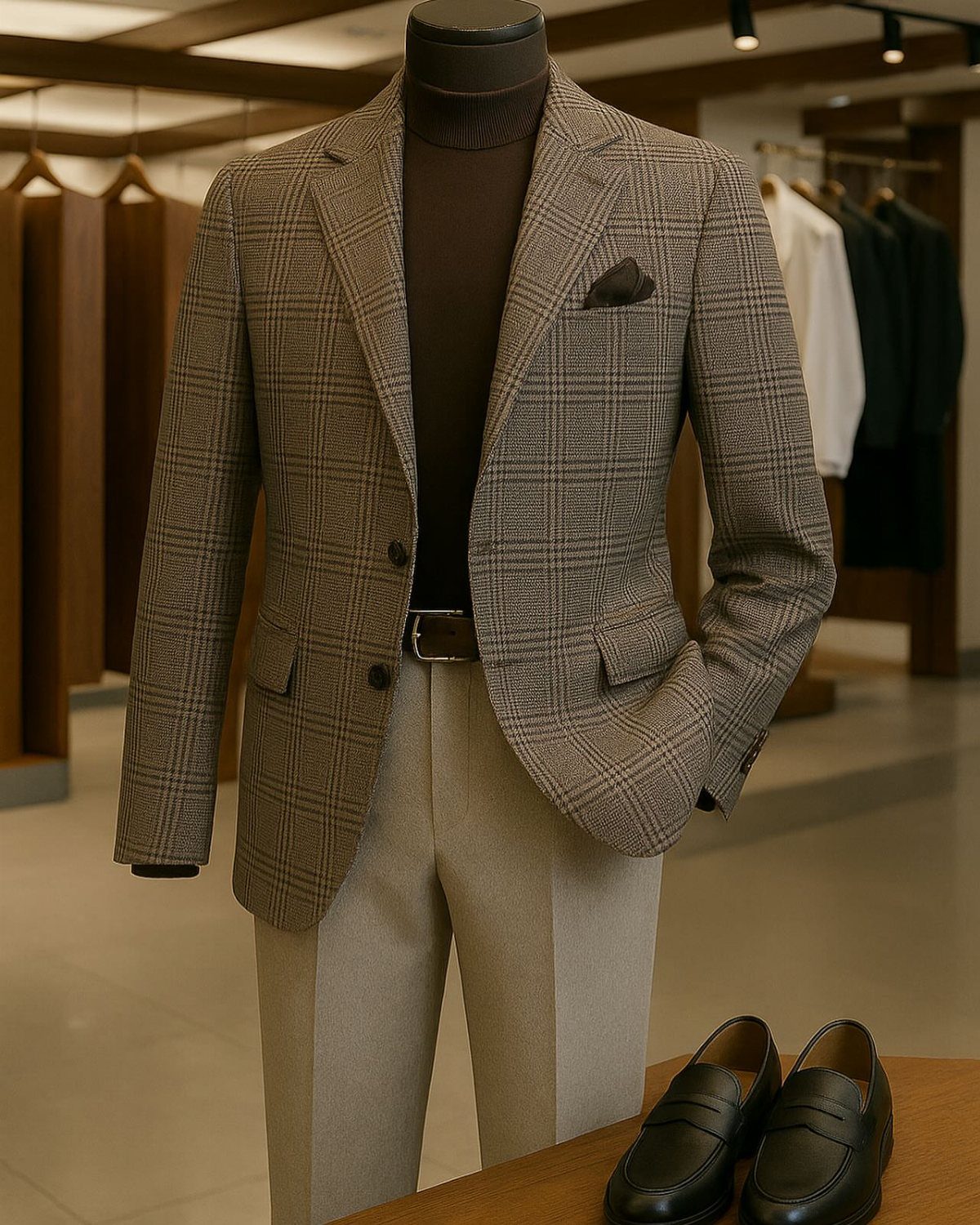
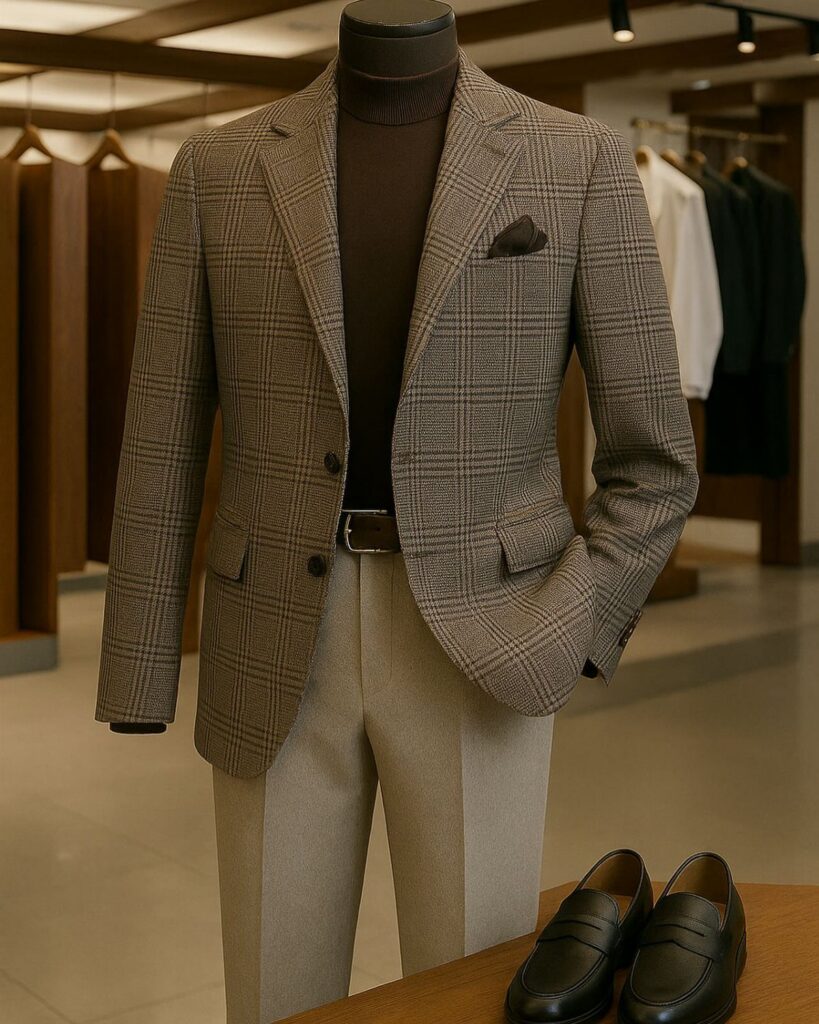
Grey patterned wool over a dark turtleneck is a quiet combination, and the light trousers keep it from feeling heavy. A turtleneck stands in for a shirt and tie, so the blazer reads relaxed instead of office.
Loafers finish it better than sneakers here. Keep the pattern on the blazer only; the turtleneck and trousers should stay plain so the jacket does the talking.
2. Puffer Jacket with Sweatpants
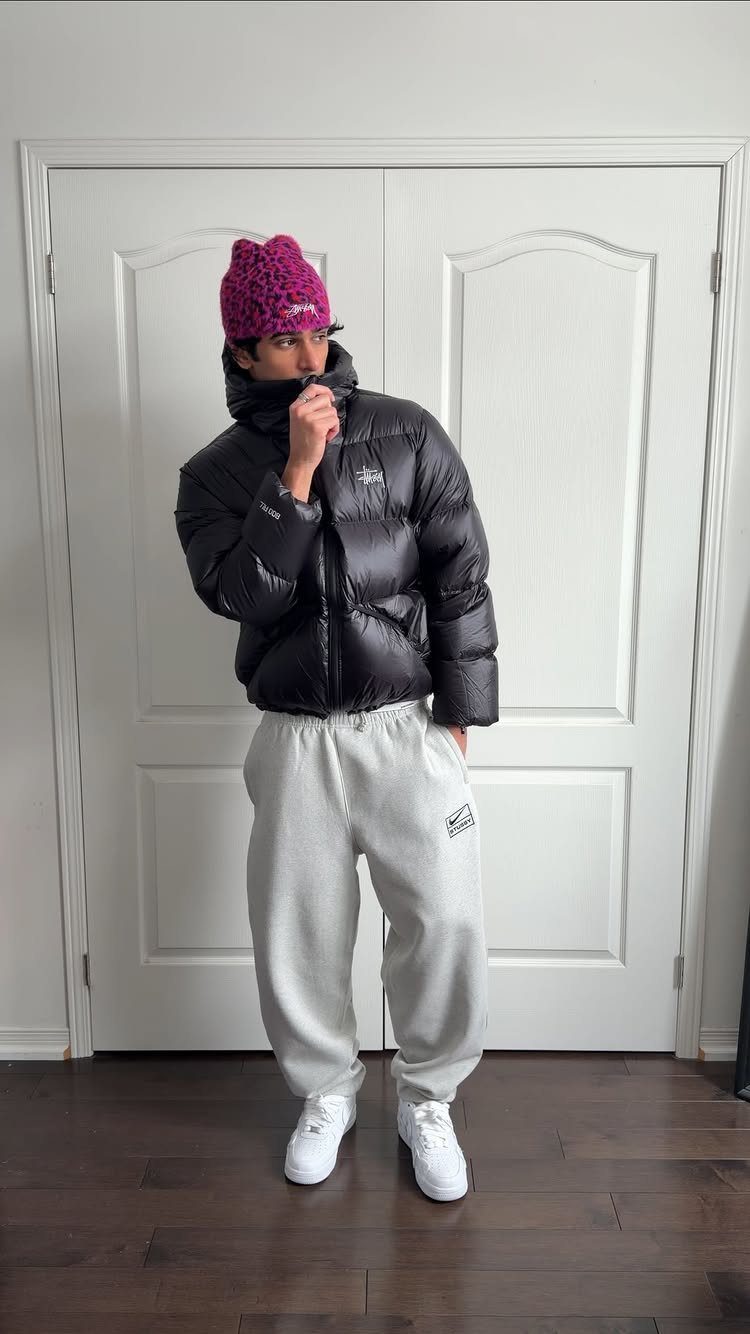
Black puffer, grey sweatpants, white sneakers: this is the easiest winter outfit to repeat, and it works because each piece stays in its lane. The dark top and lighter bottom give it a clear split.
A beanie is where I would add color. Pink is a bold pick, and one accent like that is plenty, so let the sweatpants and shoes stay plain.
The one cost is that logos on both jacket and pants get loud, so I would choose one logo piece and leave the other blank.
When it comes to casual winter outfit ideas it can be easy to prioritise warmth, making a stylish proposition an afterthought.
— Elle
3. Matching Sweatsuit
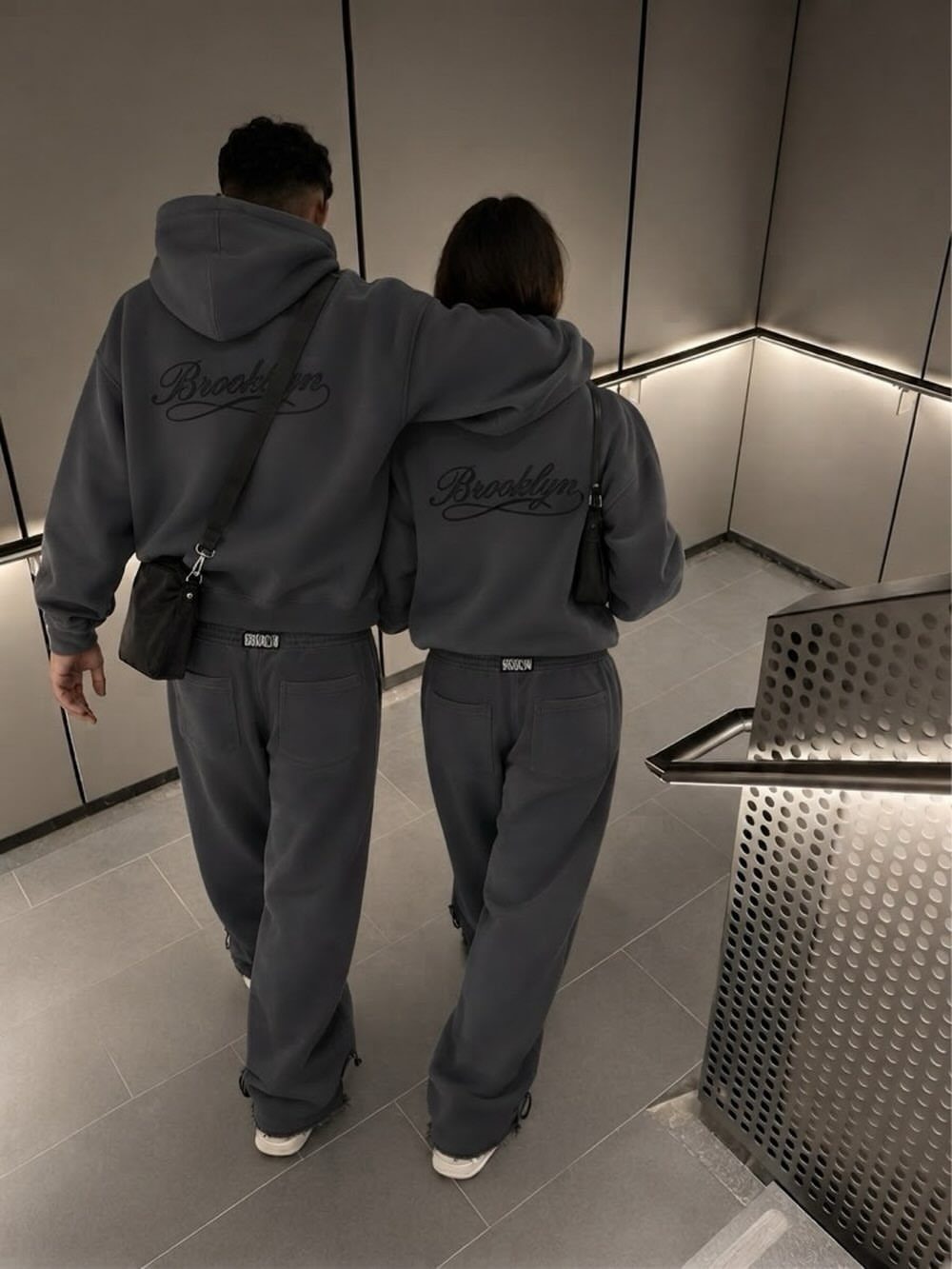
A matching hoodie and sweatpants in the same dark grey looks planned, and that is the entire trick. Because the color is identical, the eye reads one outfit rather than two pieces.
Wearing it as a pair with a partner is optional; it works solo too.
I would stay with a solid, mid-to-dark grey, since it hides wear better than pale shades. Add a coat on top when it gets truly cold, and clean white sneakers sharpen the whole thing.
4. Puffer Jacket and Relaxed Jeans
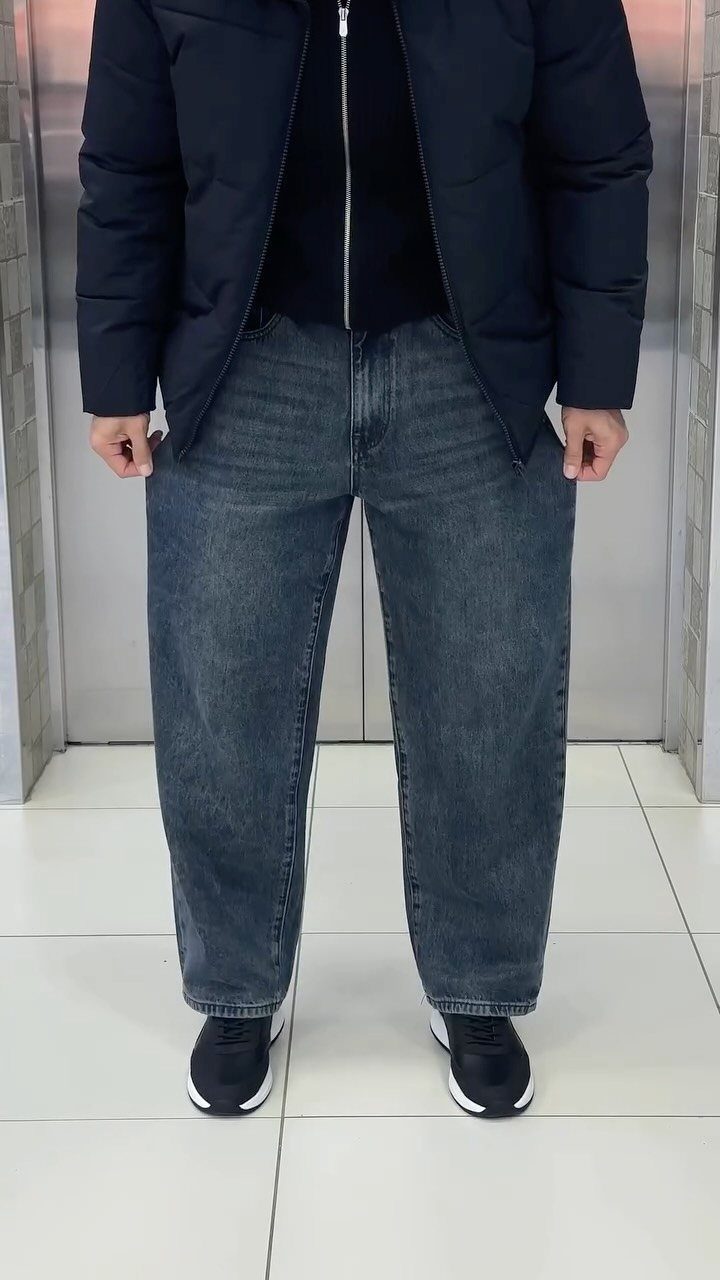
Loose jeans pair well with a puffer because both have volume, so neither looks like it is fighting the other.
A dark puffer over a black zip-up top keeps the upper half tonal, and faded blue denim gives the lower half some contrast.
Black sneakers tie back to the top. Let the jeans break slightly over the shoe instead of pooling; stacked fabric gets sloppy fast.
5. Sherpa-Lined Denim Jacket
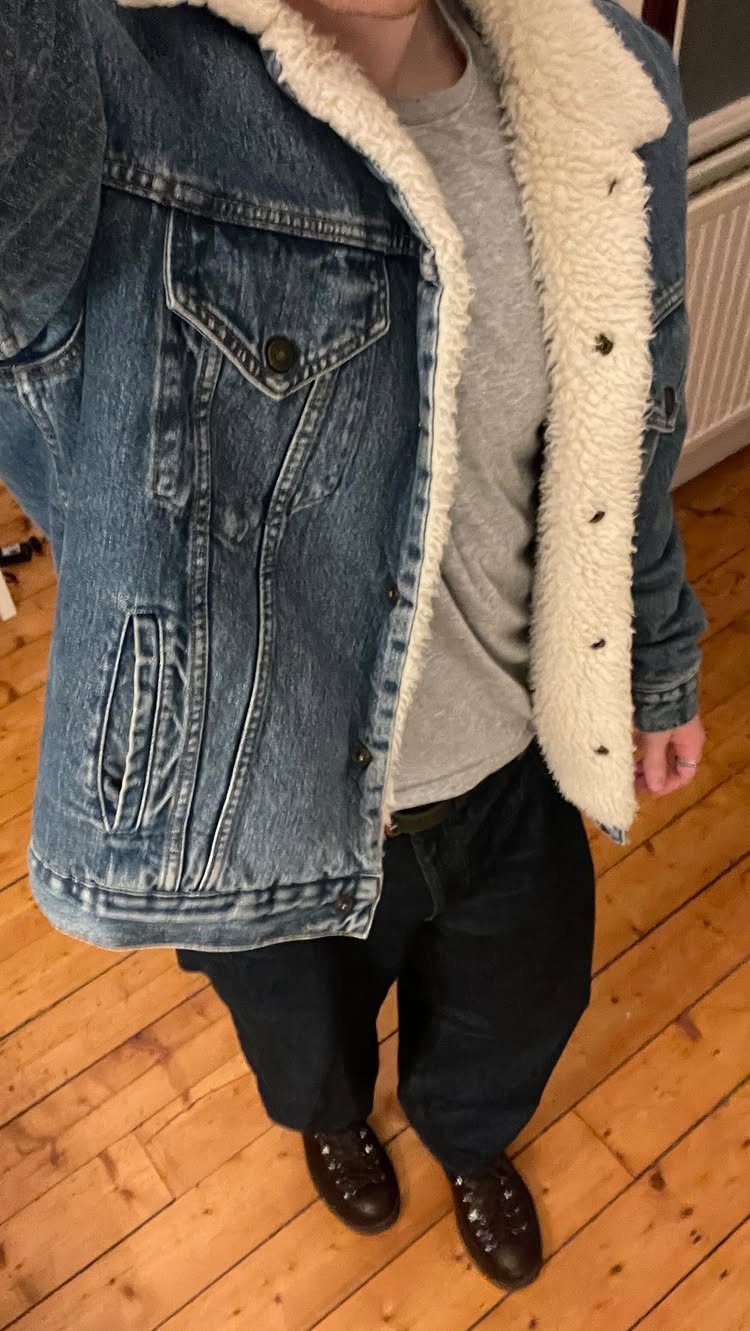
A sherpa-lined denim jacket gives you a jacket that looks like a normal denim one but adds warmth through the collar and chest. Brown boots, dark pants and a plain grey tee keep it grounded.
I prefer a plain tee underneath so the lining stays the focus.
If the day turns colder, a thicker knit under it works, though a heavy sweater can make the fit snug through the shoulders. Try it on with your layers.
6. Layered Sweater Over Collared Shirt
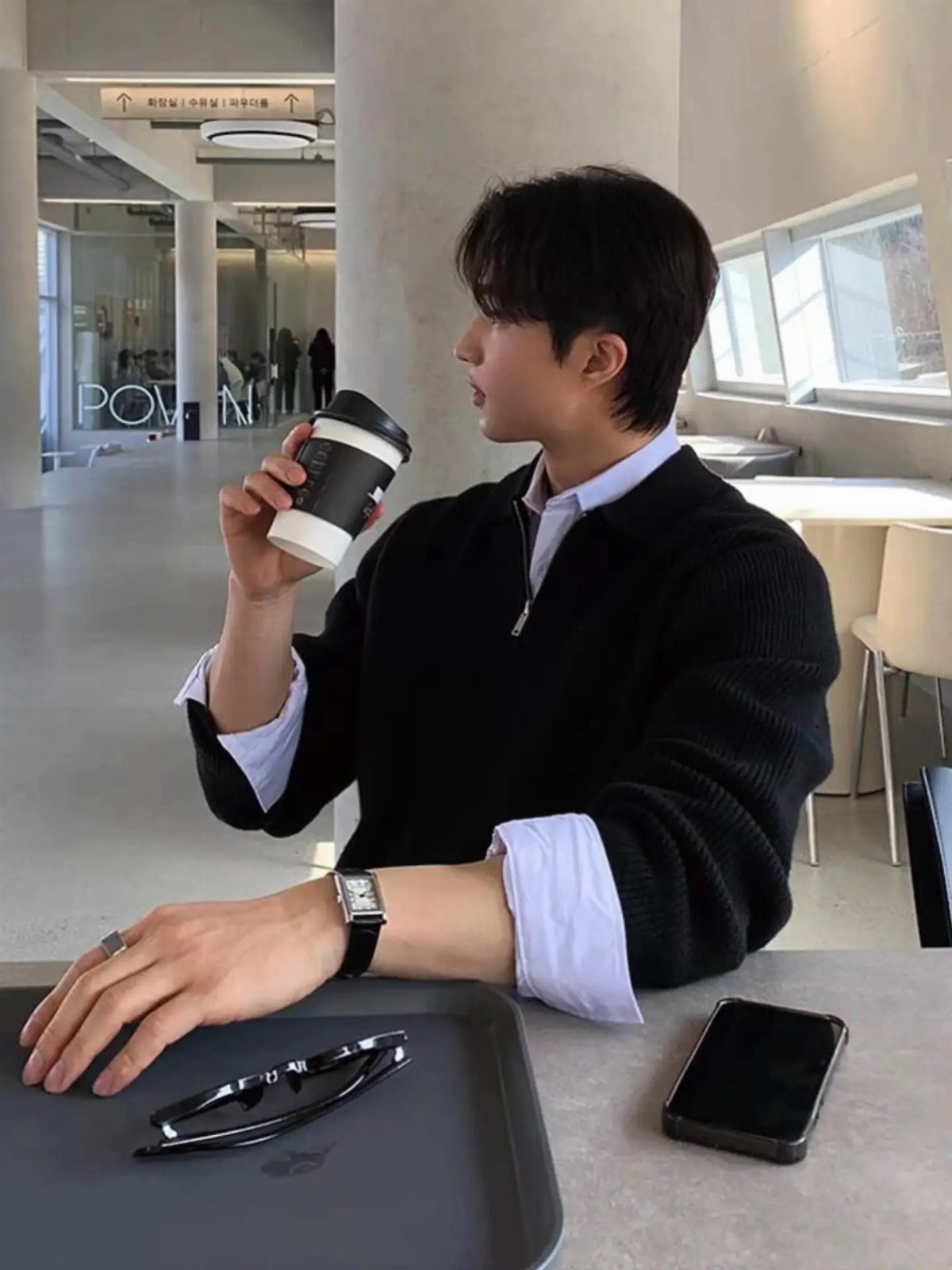
A black quarter-zip over a white collared shirt is the neatest way I know to dress up a sweater without adding a jacket. Only the collar and a bit of shirt show, which is all you need.
Wear the shirt untucked or tucked, but keep the collar flat under the knit.
Glasses and a coffee fit the mood, and dark jeans or chinos complete it. It suits work, dates and everything between.
Layering for Warmth
3 layers do the work, and each has a different job. Closest to the skin goes a snug layer whose real job is moving sweat away from your body, because damp fabric is what makes you cold.
Keep it thin; lightweight merino is the one I’d pick, since it wicks well and doesn’t hold odor the way polyester does.
Next comes the layer that traps warm air around you.
A light sweatshirt does the job, but wool or a wool blend holds heat best of the natural fibers, so I’d try that first. A plain sweater or a vest does the job if you own nothing else.
The outer layer blocks rain, wind and snow, so it should handle every kind of weather without being heavy. Scarves and hats finish the system, and they are the easiest layers to add or drop during the day.
Choosing Versatile Pieces
A black or gray coat is the safest first buy, since it goes over nearly everything you own. Oversized, loose-fitting coats look good in those neutral colors, and neutrals pair with nearly everything else you own.
Knits are the second place to spend.
Chunky oversized sweaters and textured cable knits stack well, and a thin knit underneath slides beneath either without adding bulk. A roomy sweater over slimmer pants keeps the proportions balanced.
Buy pieces that work with at least 3 other things in your closet. If a sweater only goes with one pair of pants, it will sit unworn.
Accessorizing Winter Outfits
Accessories are the difference between clothes you put on and an outfit you chose, and in winter they also keep you warm. Pick ones that do both.
Scarves add texture.
A chunky knit feels cozy, while a sleek wool one looks more tailored. Leather gloves in a neutral tone go with almost any coat.
Earmuffs are worth a look if hats flatten your hair. They keep your ears warm, and fur or knit versions suit most outerwear.
Match socks to shoes: thick pairs with ankle boots, thinner pairs with loafers, and knee-high socks under tall boots for extra warmth.
Frequently Asked Questions
How to dress casual in winter?
Layer 3 pieces that each have a job: a thin merino base that wicks sweat, a wool or wool-blend middle that traps heat, and an outer coat that blocks rain, wind and snow.
Hats and scarves go on at the end, because you can pull them off in a warm office or tuck them in a pocket without rebuilding the outfit.
What is the 3-3-3 rule for clothes?
I don’t know of a fixed rule with that name; my own version is simpler: a piece earns its spot only if it pairs with at least 3 things you already own.
Neutral coats and knits in black or gray pass that test easily.
What to wear in winter instead of jeans?
Tailored trousers are the best swap.
Light-colored trousers under a dark wool blazer and turtleneck look relaxed without feeling heavy, and loafers finish the outfit. Matching grey sweatpants also work for a lazy day, especially under a puffer jacket with white sneakers.