Build and occasion pick your pair from this list: a slim frame suits Slim Fit Casual Trousers, broad thighs do better in a straight leg like the Straight Leg Black Pants, and a dressy day calls for the smooth face of Dress Pants over anything with a plush nap.
This list runs from Drawstring Casual Pants for a day off to Straight Leg Black Pants and Dress Pants for the office, and fabric does as much of the work as color.
1. Jeans
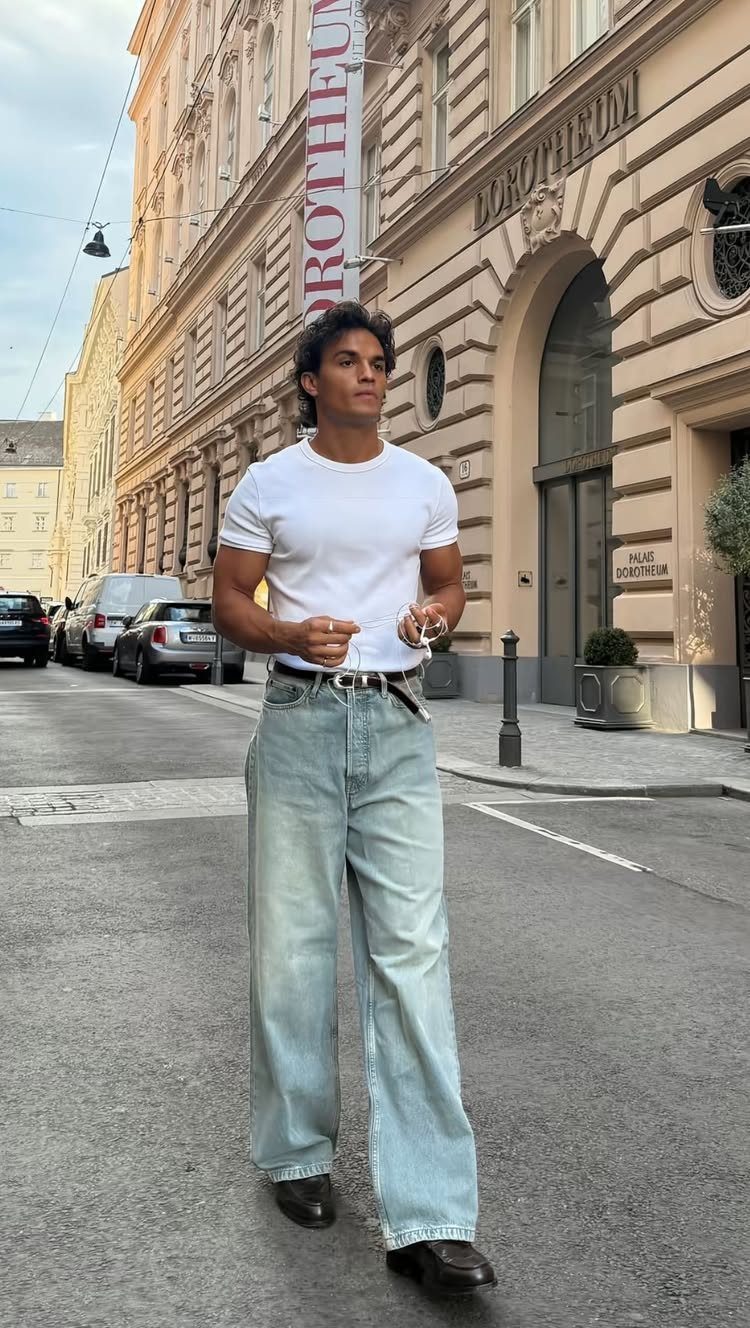
Light-wash wide-leg jeans read as relaxed without looking sloppy, as long as the rest of the outfit stays clean. Light-wash jeans want little else, and a white tee with a pair of loafers covers it without any fuss.
Add a belt. It keeps the waist defined so the loose leg looks intended rather than oversized.
I’d pick a hem that just grazes the top of the shoe, so the loafers still show. If you only own one pair of jeans, a wash this light is the easiest way to make a plain tee look finished.
2. Cargo Pants
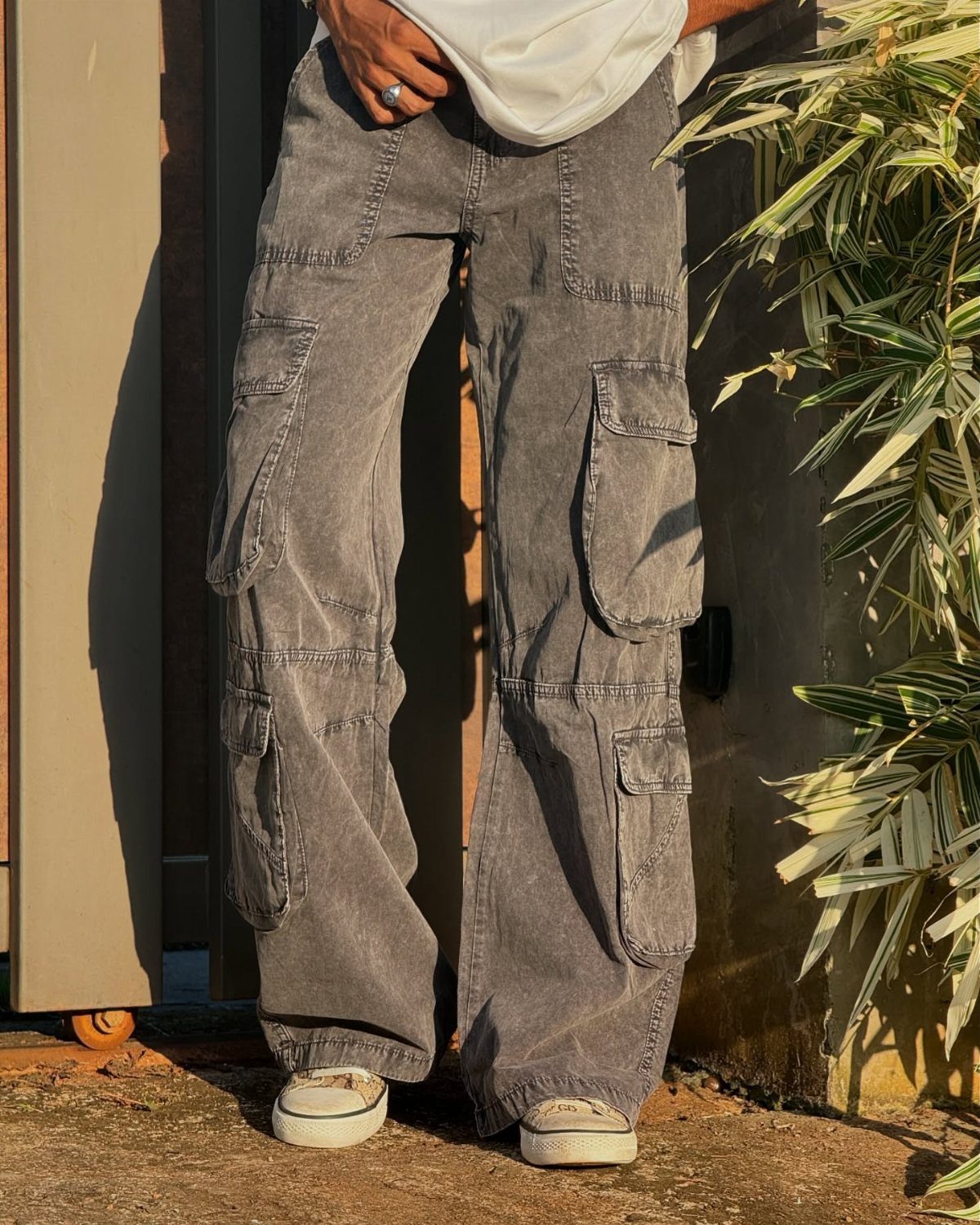
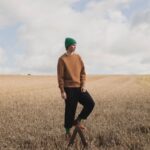
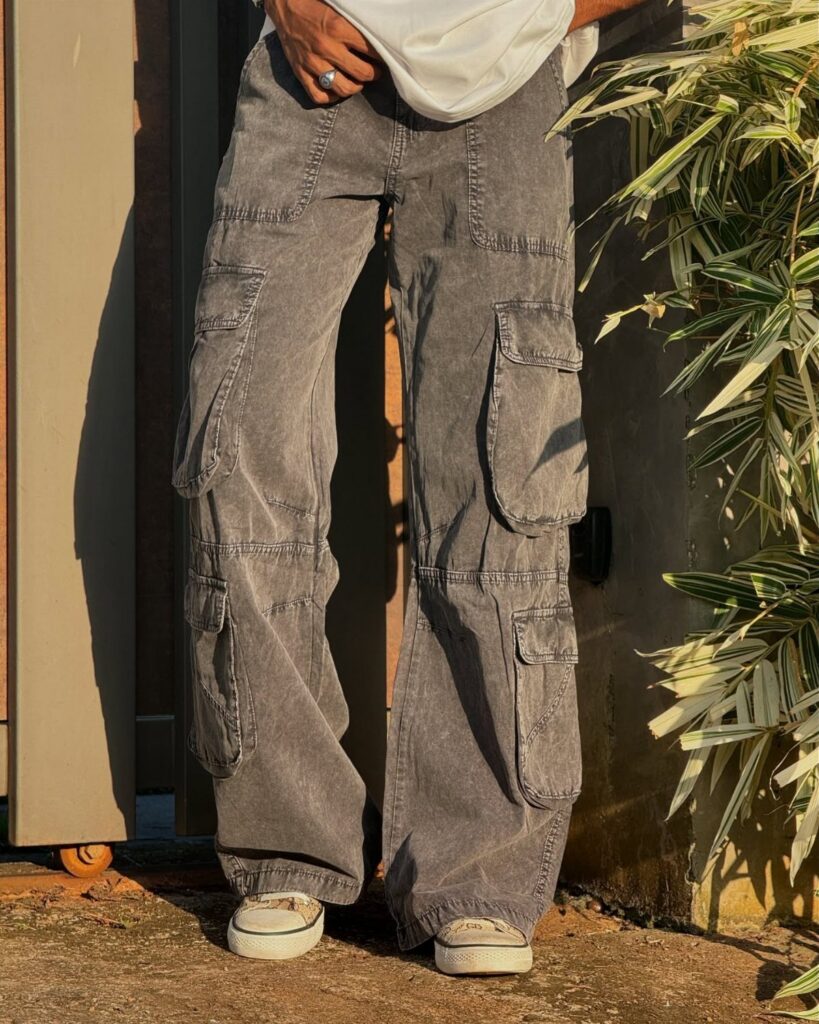
Faded dark grey cargos with big utility pockets work best when everything around them is quiet. Low-top sneakers in white keep the look light, and a plain tee or knit on top lets the pockets be the only busy part.
A wide leg adds to that: the fabric falls straight instead of clinging, so the pockets sit flat rather than bulging.
My advice is to keep the pockets empty. A phone and keys are fine; a full load ruins the line.
3. Dress Pants
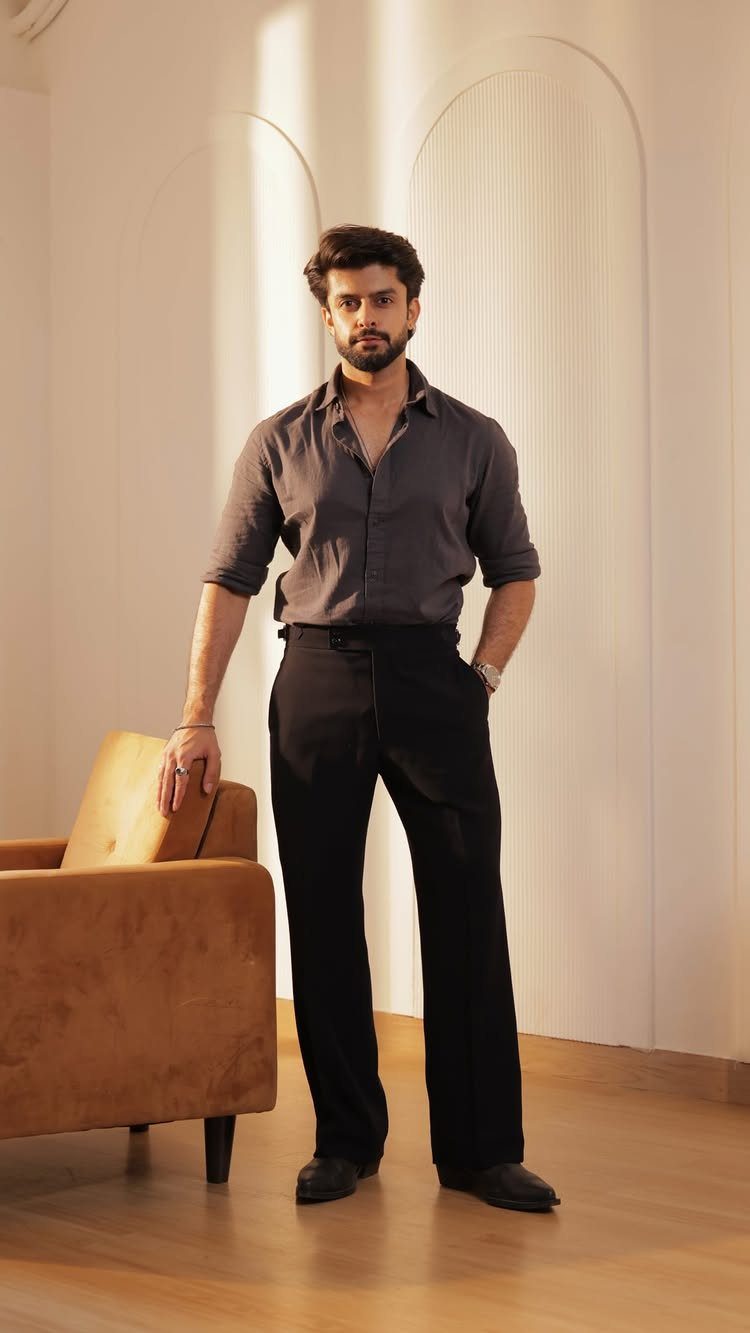
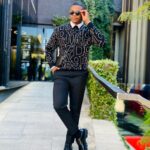
Black dress pants are the piece that makes a casual shirt look planned. Worn with a grey button-up, they give you a sharp outfit with only 2 items and no jacket.
Pick a flat front with a clean, straight line from hip to hem. Wear the shirt tucked, and add a belt that matches your shoes.
Black pants also pair with almost any shirt color, which is why one good pair earns its place.
4. Pleated Trousers
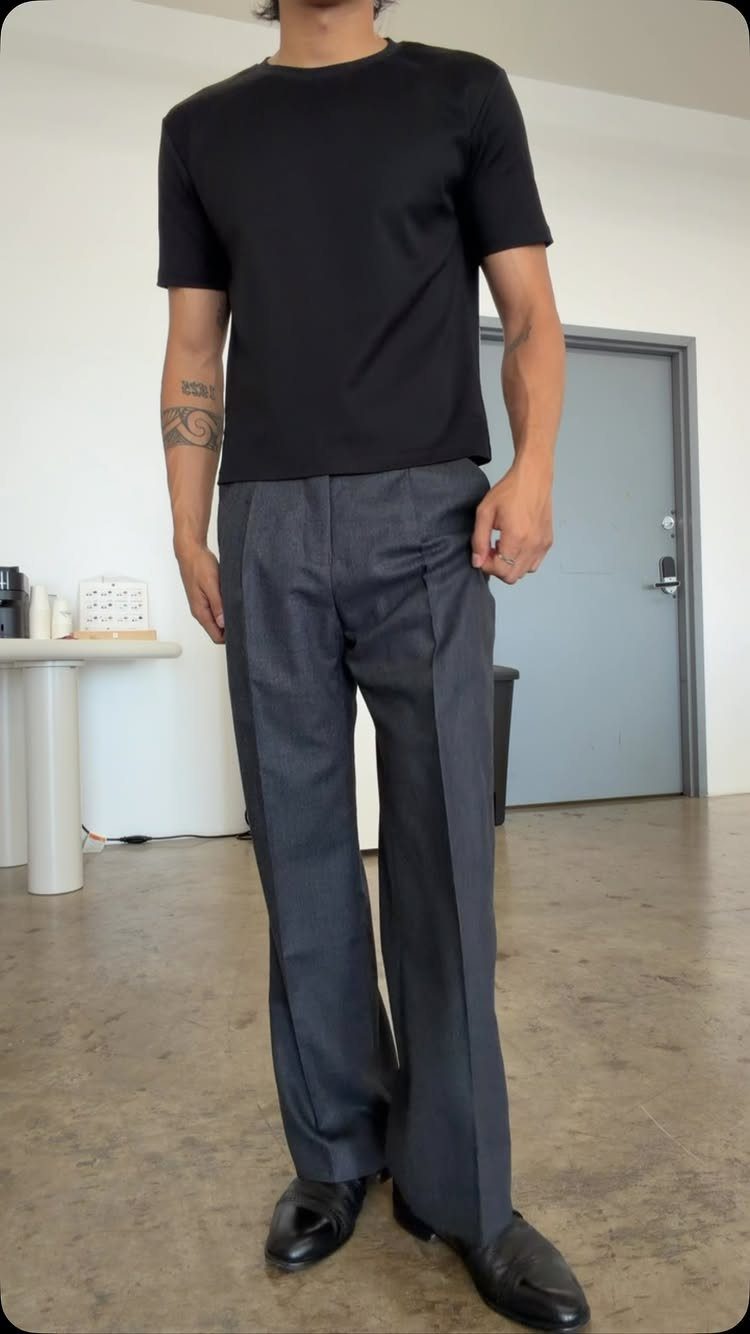
Pleats give the thigh extra room, and in a wide charcoal leg that room turns into drape. That’s why pleated trousers feel easier to wear than flat-front pants.
Keep the top simple. A black crew-neck tee and black leather dress shoes make the trousers the focus without looking formal.
I like charcoal better than black for this cut, since the folds of fabric stay visible. Choose a waist that sits at your natural waist, not on your hips.
5. Cropped Pants
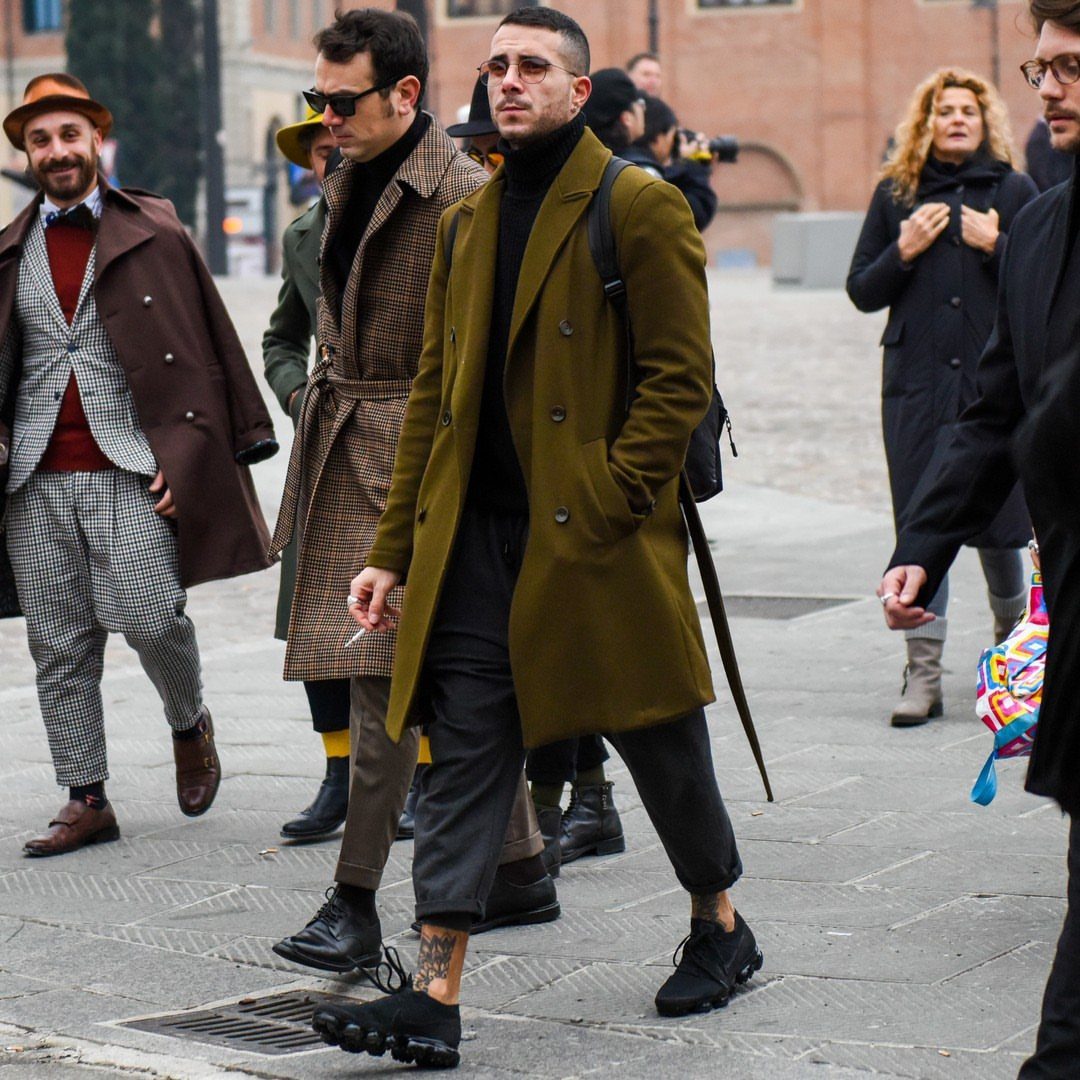
Cropped trousers stop above the ankle, so shoes and a bit of skin become part of the outfit. Charcoal with black sneakers keeps that gap looking deliberate.
They suit longer coats well. An olive overcoat and a black turtleneck, as seen here, give the shorter hem a strong upper half to balance against.
Check the length in a mirror. A hem that lands just short of the ankle bone looks planned; a hem that stops halfway up the shin looks like a mistake.
6. Cavalry Twill Pants
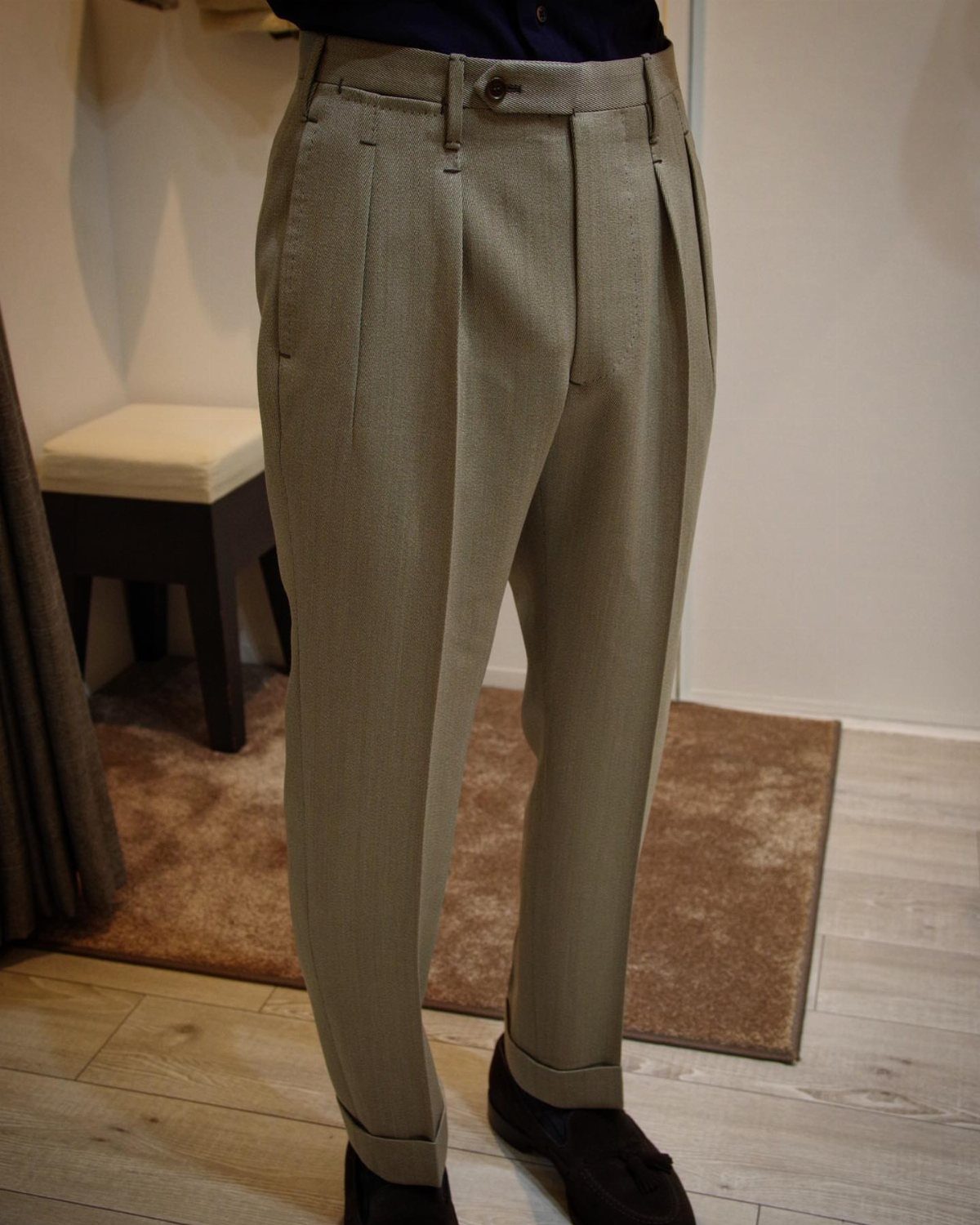
Cavalry twill is a sturdy, ribbed fabric, and in beige it looks dressy without a stiff crease. High-waisted, pleated and cuffed, these trousers lean classic.
Dark suede loafers are the right match: the contrast in color and texture is the whole look. Wear them with a simple knit or an oxford shirt.
The cuff adds weight to the hem so the trouser hangs cleanly. Beige shows dirt, so I’d keep them for days you’re not sitting on the ground.
7. Wide Leg Trousers
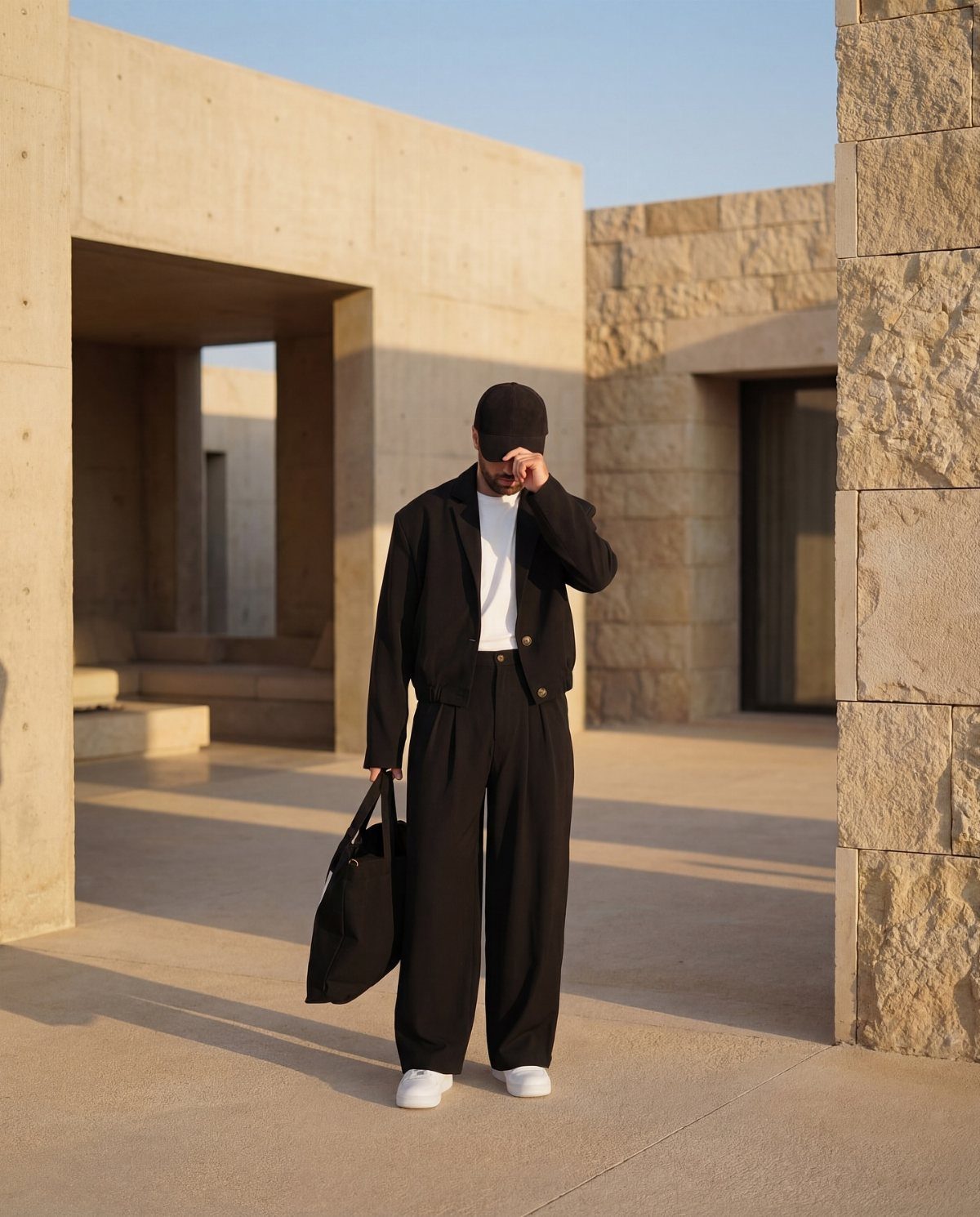
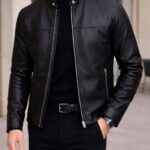
Wide-leg black trousers with pleats keep the shape loose through the thigh and let the fabric fall in one long line. A cropped black jacket sits well on top, since a short hem stops the outfit from swallowing you whole.
White sneakers and a white tee break up all that black without adding fuss. I’d keep the jacket short enough to show the waistband, so the trouser rise stays visible.
If the leg is this wide, let the hem fall to the top of the shoe and no lower.
8. Drawstring Casual Pants
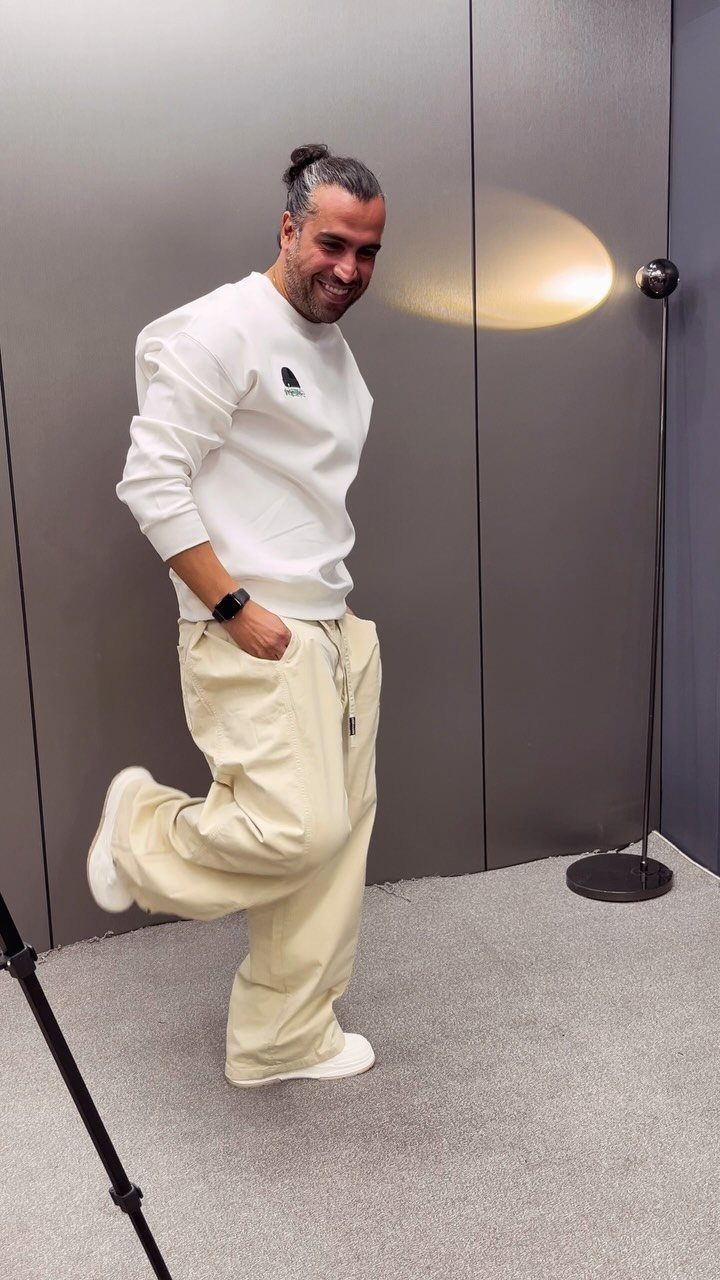
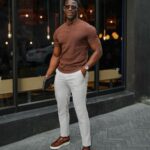
Cream drawstring pants and a white sweatshirt make a soft, one-tone outfit that asks almost nothing of you. White sneakers finish it, and the whole thing reads as clean rather than lazy.
Stay within one color family, as here. Cream against bright white looks deliberate; cream against a loud print does not.
A loose leg suits the drawstring best, because the fabric gathers at the waist without pulling.
I’d skip a belt entirely. These are the pants for a day off, and they look best when they stay that way.
9. Slim Fit Casual Trousers
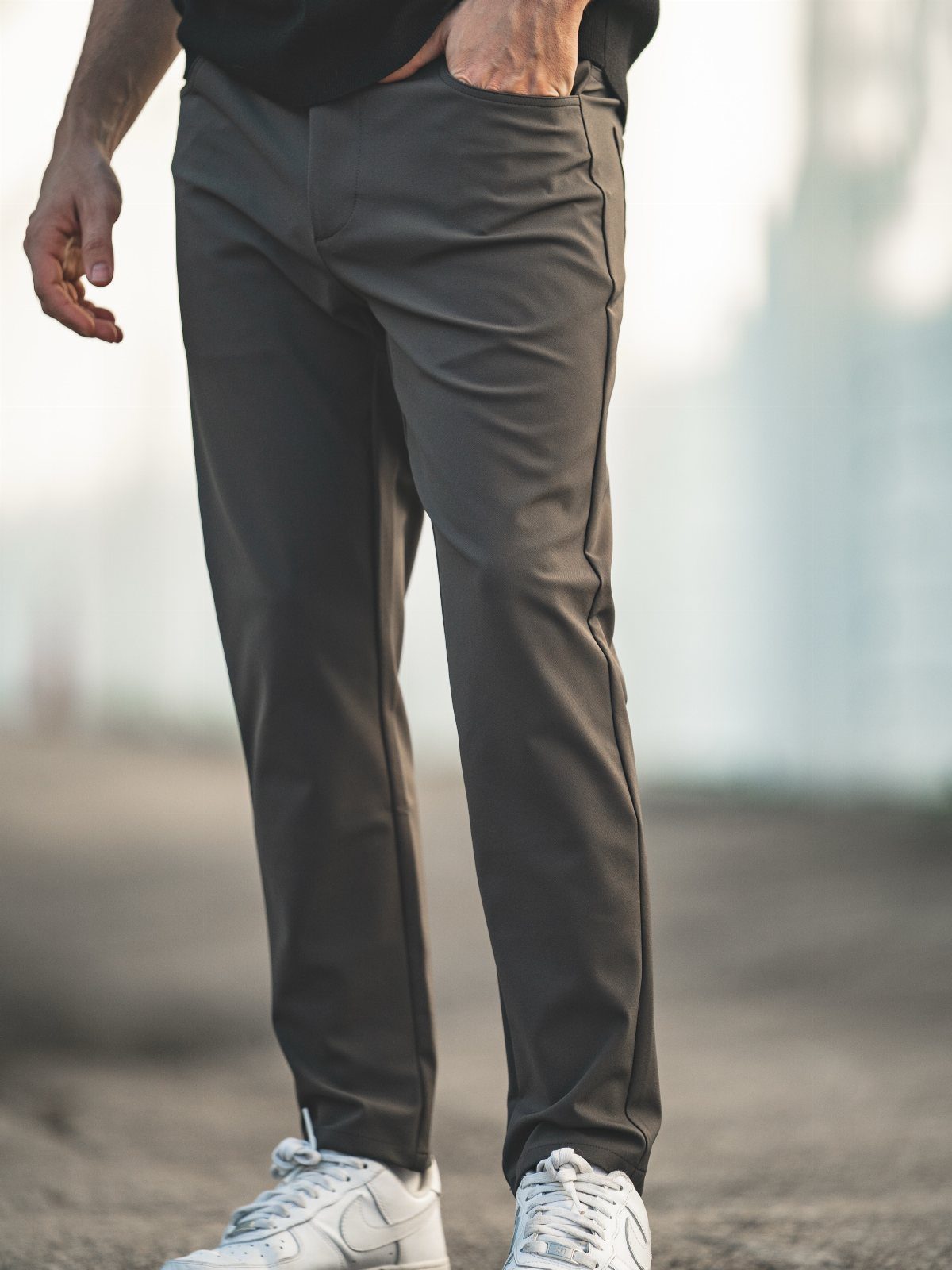
Dark grey slim-fit trousers are the quiet option, the pair that works with almost anything and never draws a second look. They taper without clinging, and white sneakers keep the look casual enough for a weekend.
Slim should still leave room to sit and walk. If the fabric pulls across the thigh or the knee, go up a size.
I’d choose dark grey over black here, since it pairs with white, navy and olive without looking harsh. Let the hem finish at the shoe or just above it, so the narrow leg looks neat rather than stacked.
10. Straight Leg Black Pants
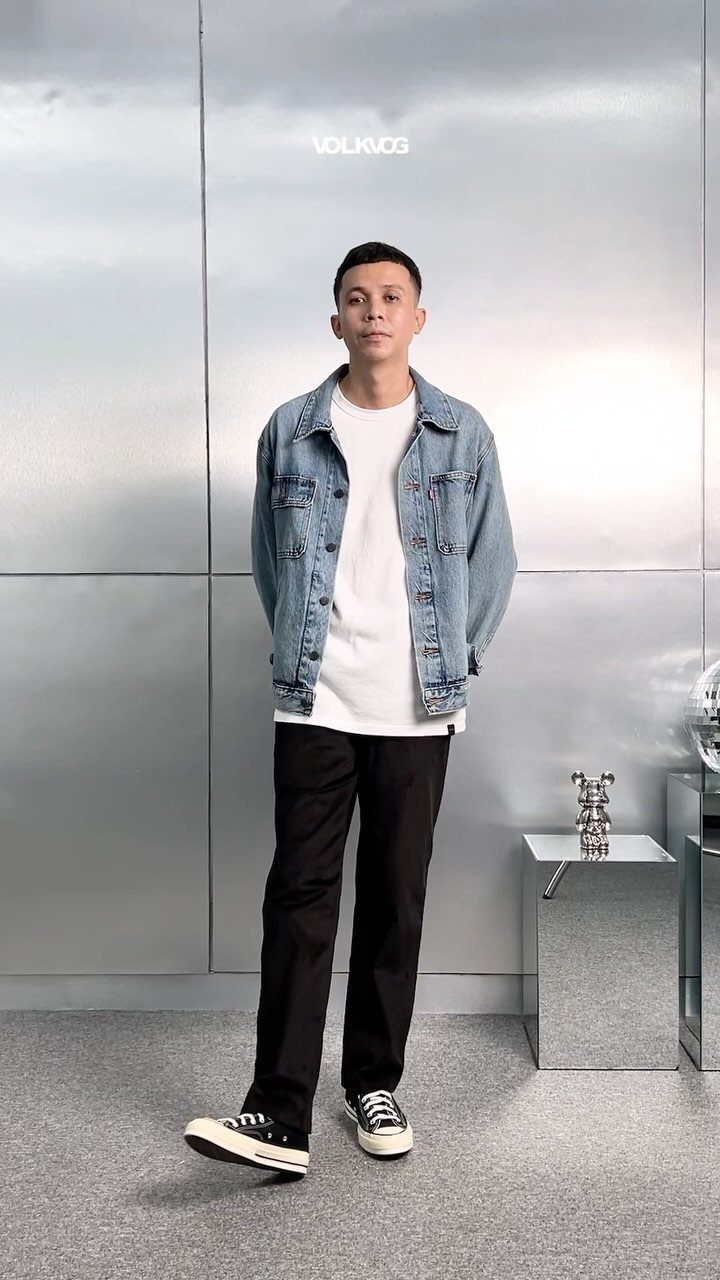
Straight-leg black pants hang the same width from knee to hem, which makes them the easiest black trouser to wear every day.
A light-wash denim jacket and a white tee turn them casual, and black low-top sneakers keep the bottom half sharp.
The pale jacket against black pants gives you contrast without a third color. I like that the formula stays simple, with just the pants, a shirt, a layer and a pair of shoes.
Pick a leg that doesn’t taper and a hem that just touches the sneaker. That line is what makes the pants look classic.
Choosing the Right Fit
Body type decides which cut works, and the rule is simple: match the leg to your frame so the pants neither cling nor swallow you.
On a slim frame, a slim cut in jeans or chinos gives the leg some shape, where a looser pair tends to hang and swallow you.
Bigger thighs and shoulders need room below the hip, so straight-leg and bootcut pants keep the legs in balance with the upper body. Broad frames do well in relaxed-fit chinos and loose-fit jeans, which give comfort without looking oversized.
For plus-size men, regular-fit chinos and straight-leg pants make the most flattering shape.
If your waist or rise gives you trouble, look at adjustable-waist or high-waist pants. They can fix fit problems that a size change won’t.
I’d put comfort and movement ahead of whatever is trending. Pants you can sit, walk and reach in are the ones you’ll wear for years.
Color and Texture Considerations
Fabric texture changes formality as much as color does.
Navy worsted wool has a flat, smooth face that reads as dress, while navy cotton corduroy has a soft, plush nap that sits much closer to weekend wear. Same color, very different occasion.
Texture also signals the season.
Donegal tweed is coarse and heavy, built to keep you warm, so it belongs in fall and winter. Linen has a loose, breezy weave that suits summer heat.
Before buying, run your hand over the cloth.
Smooth and fine reads dressier; rough, plush or open-weave reads casual. Pick the texture for the weather first, then adjust the color for the occasion.
Styling Tips
Variety in pants matters as much as variety in shirts. Many men own a dozen shirts and wear jeans every day, and that’s the habit to break.
Starting from zero, I’d buy only 3 pairs: chinos, jeans and joggers. Add more once you feel like experimenting.
Choose versatile pieces first. Neutral chinos, dark jeans and a pair of corduroys cover most of what a week throws at you, and that range is why I’d keep all three.
Chinos work with polos, and jeans work with casual shirts; swapping the top is the quickest way to change the mood of the same pair of pants.
For travel or changing weather, convertible zip-off pants give you flexibility that regular pants can’t.
Frequently Asked Questions
What pants do Gen Z men wear?
Joggers, cargo pants and slim-fit jeans are the usual picks. Cargos work best in a faded dark grey with a wide leg, so the pockets sit flat, and with a plain tee and white low-top sneakers.
Light-wash wide-leg jeans with a belt are another easy way to look relaxed without looking sloppy.
What are the men’s pant trends for 2026?
Slim-fit jeans, cargo pants and Korean-inspired trousers lead the trends, and wide legs and pleats are part of the mix too.
Colors lean toward earthy tones like olive, khaki, tan and brown, plus deep blues, charcoal, soft neutrals like cream and beige, and classic black. I’d choose the cut that fits your frame before the trend.
What pants should men have?
3 pairs cover the basics: chinos, jeans and a pair of joggers for off days.
Add corduroys to dark jeans and neutral chinos, and a normal week of work, errands and dinners is handled. Dress pants and cargos are good additions, and pleated trousers make sense once the basics are covered.
Which type of pants is best for everyday wear?
For daily wear, I pick chinos or jeans over everything else. A plain tee or an easy button-up goes with either, and changing the top is enough to shift the same pair from relaxed to a bit sharper.
Pick a cut that lets you sit, walk and reach comfortably, since those are the pants you’ll keep wearing.
What pant colors should every man own?
Black, navy, grey, khaki and olive work for almost every occasion.
Black pairs with nearly any shirt color. Dark grey is gentler than black, and it sits well beside white, navy and olive.
What pants suit my body type?
Pick a leg shape that follows your frame, so the fabric skims your legs instead of squeezing or drowning them.
Slim frames look best in slim chinos or jeans, while bigger thighs and shoulders do better in straight-leg or bootcut pants. Broad frames and plus-size men look good in relaxed-fit or regular-fit chinos and straight legs.