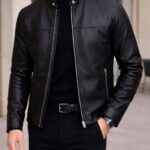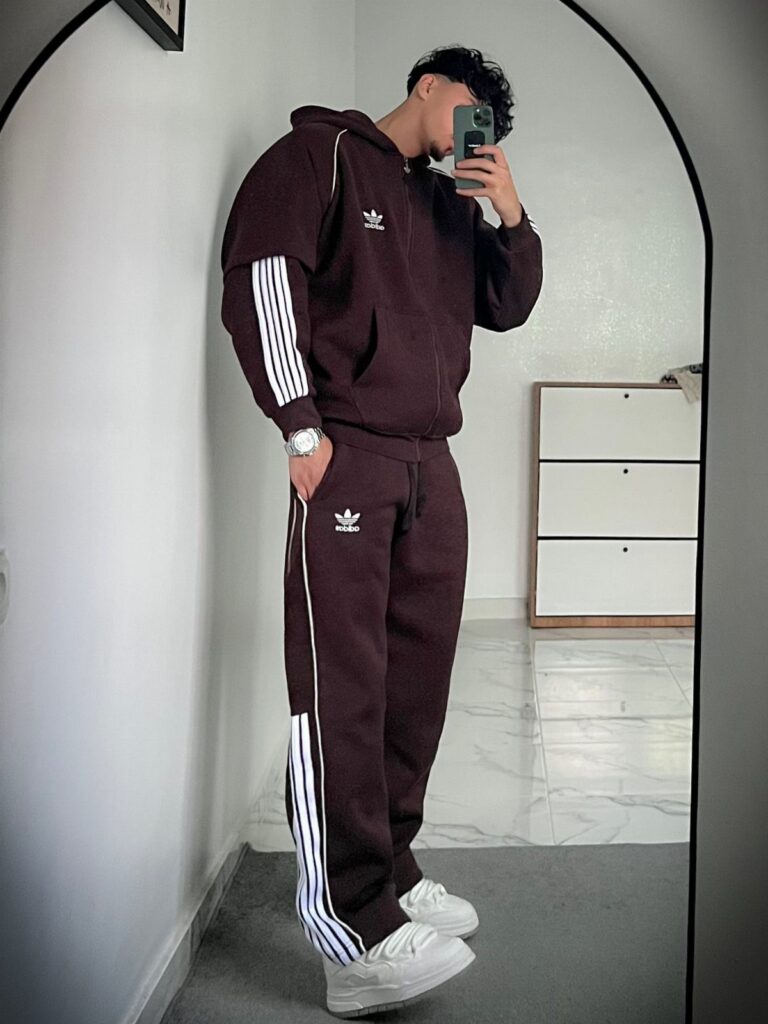
The list runs from athleisure, the lowest-effort option, to winter coats and puffer jackets, and the weather you face decides between them more than taste does.
A puffer jacket that blocks wind and sheds water belongs in a harsh cold snap, while a sweater layered under a leather jacket or a winter coat covers a mild commute.
1. Athleisure Wear
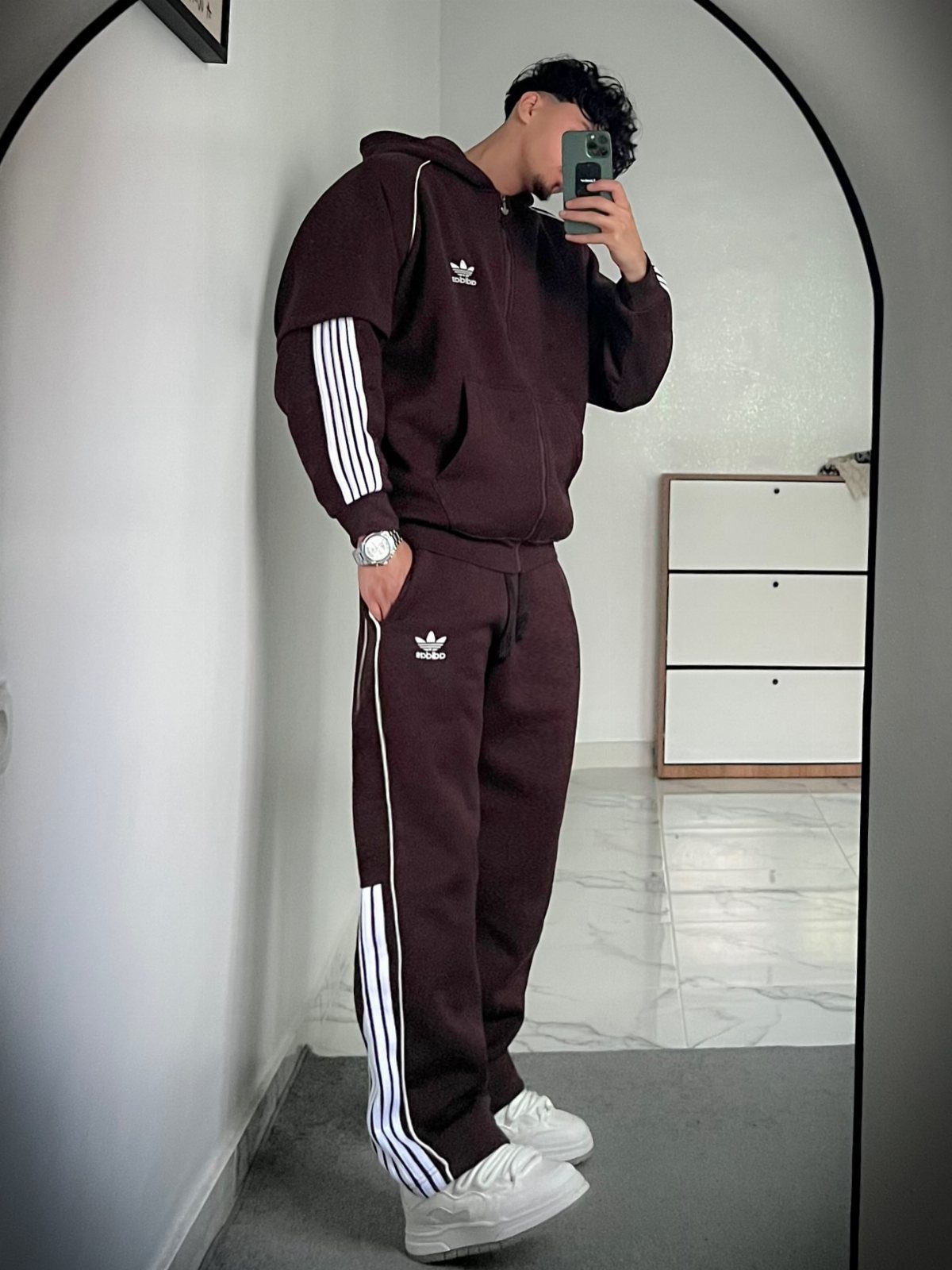
A matching tracksuit is the lowest-effort winter outfit there is, and it looks sharpest when the set is clean, the fit is relaxed, and the colors stay in a tight range.
Keep the palette to dark brown or burgundy and let white sneakers carry the clean contrast underneath.
Keep the rest quiet: a simple watch, no extra logos, and a fit that skims the body instead of pooling at the ankle. I would add a plain dark coat on top once the temperature drops.
2. Layered Sweater with Leather Jacket
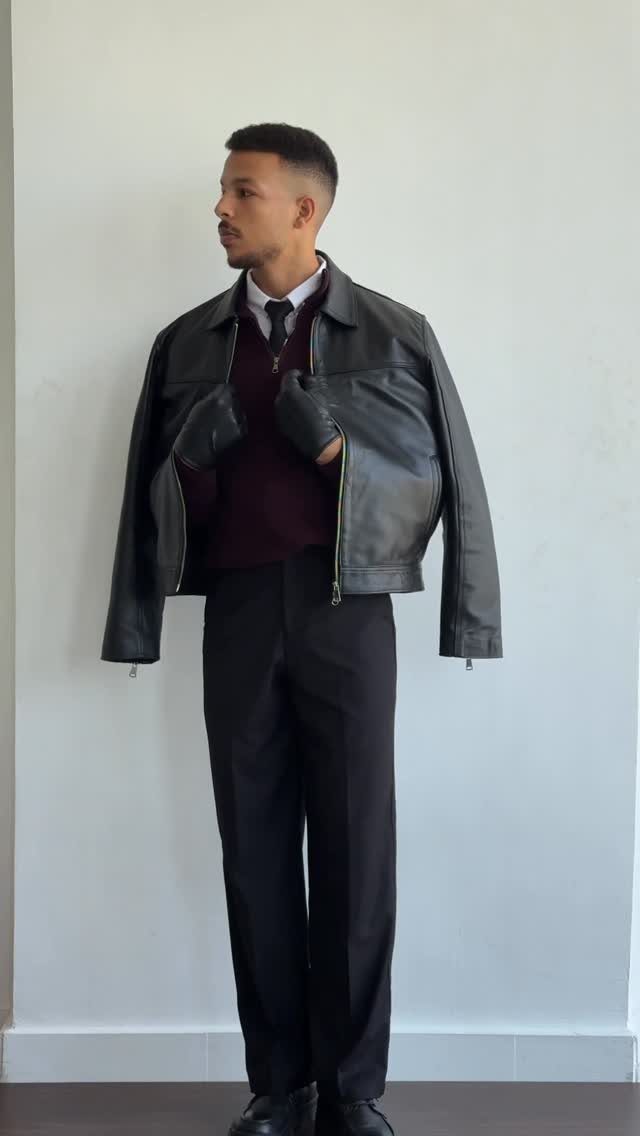
Sweater, collared shirt and tie sit under a leather jacket better than most men expect. The knit softens the tie, and the jacket roughens up the whole look.
Burgundy over a white shirt works against black trousers, and black leather keeps the contrast strong.
Tuck the tie into the sweater or let it show; either way, I prefer the jacket worn properly on the shoulders rather than draped, since that is what actually keeps you warm.
3. Turtleneck and Denim Jacket
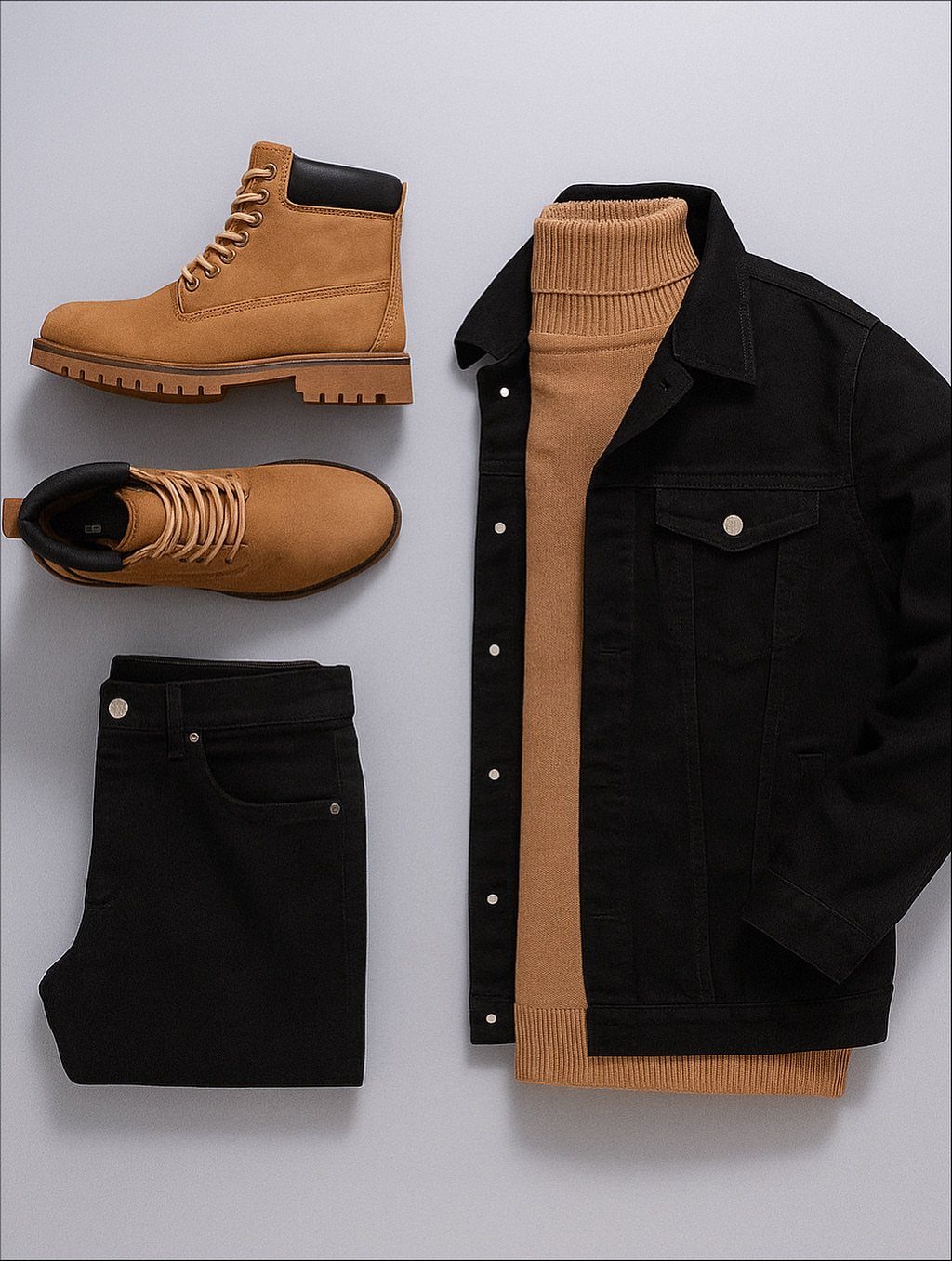
A tan ribbed turtleneck under a black denim jacket is a two-piece layer that needs almost no thought. The light knit against dark denim gives you contrast without a pattern in sight.
Black jeans and tan lace-up boots work because the dark denim keeps the lighter boot from looking too rugged.
The boots echo the sweater, which ties the outfit together. A turtleneck also replaces a scarf, so the neck stays covered with one less item to carry.
4. Hoodie Under a Black Jacket
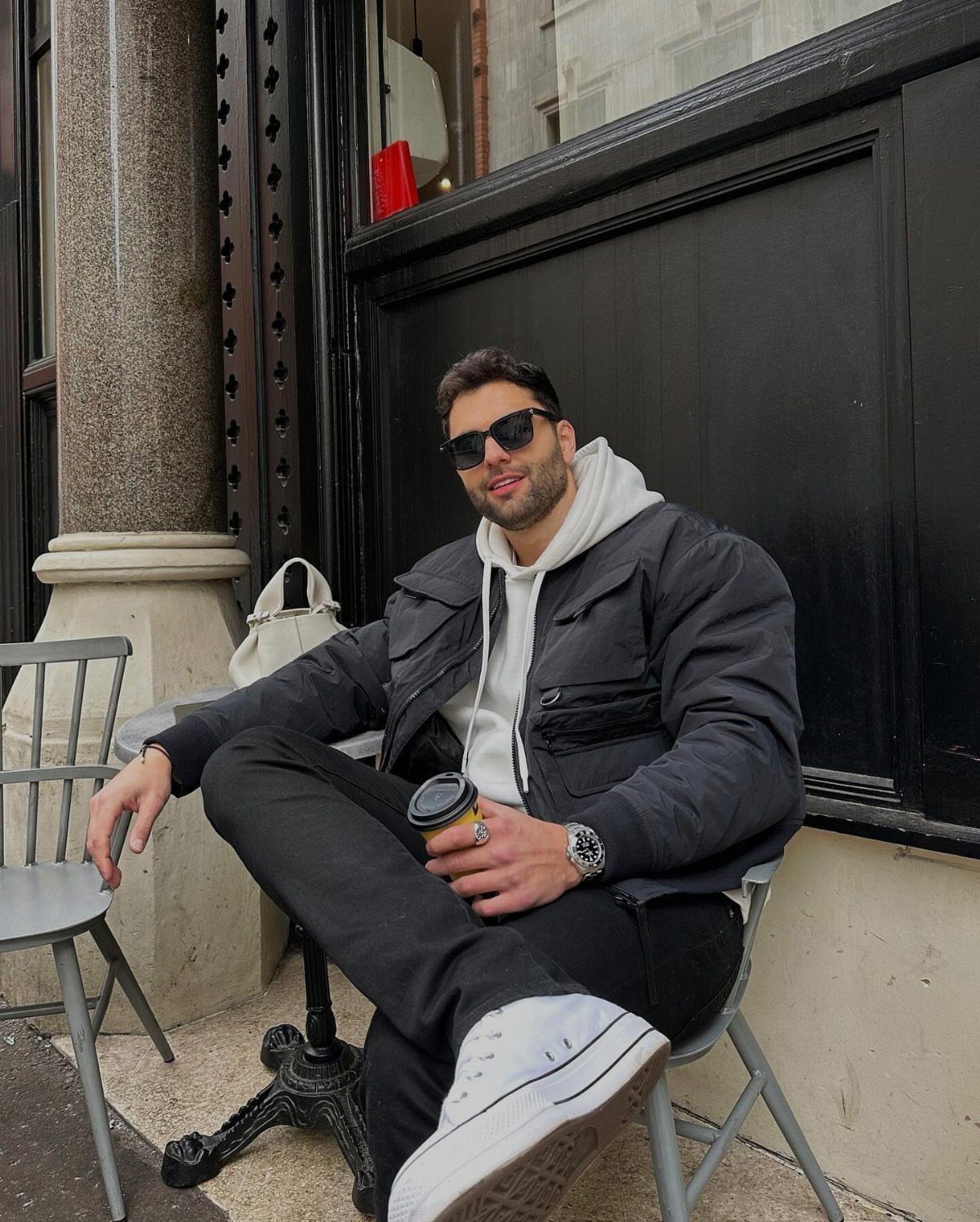
White hoodie, black jacket, black pants, white sneakers: the outfit repeats 2 colors and nothing else, which is why it reads as planned. Let the hoodie’s hem and cuffs show beneath the jacket so the layers look deliberate.
Sunglasses add polish without effort. I would pick a jacket cut slim enough to sit over the hoodie without bunching at the shoulders.
5. Winter Coats
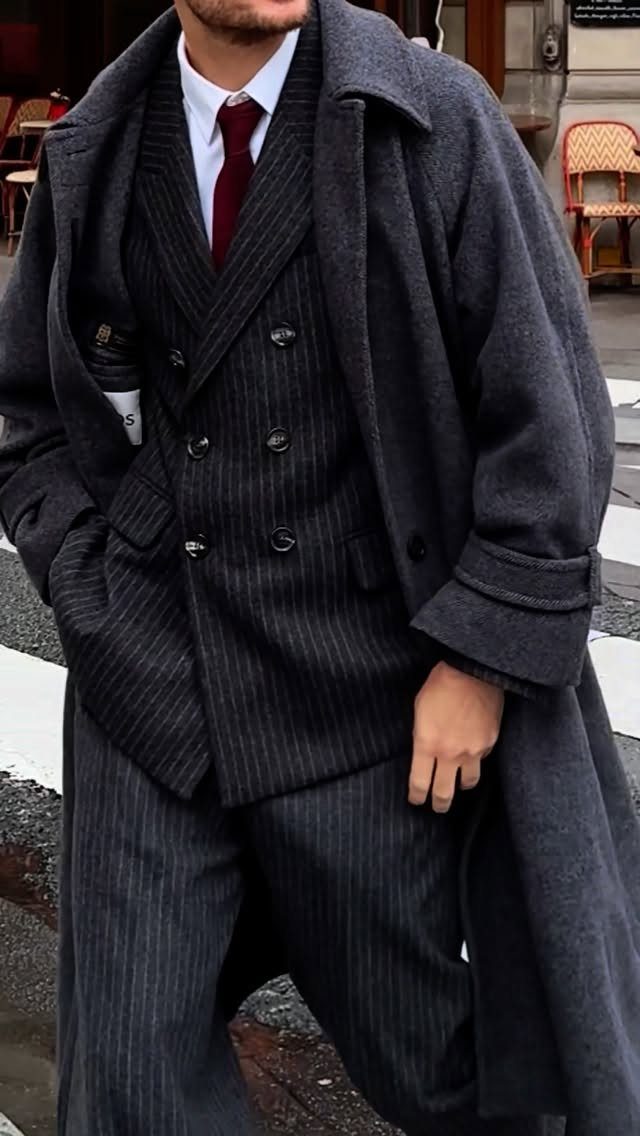
A heavy charcoal wool overcoat is the one piece that makes a suit workable in winter.
Over a pinstripe double-breasted suit, a long wool coat adds warmth without hiding the tailoring, as long as it is cut roomy enough through the shoulders to clear the jacket underneath.
Charcoal goes with nearly everything, so it also covers jeans and sweaters on weekends. Buy it a little roomy through the shoulders and chest so a suit jacket fits underneath, and let the coat run past the suit hem.
6. Puffer Jackets
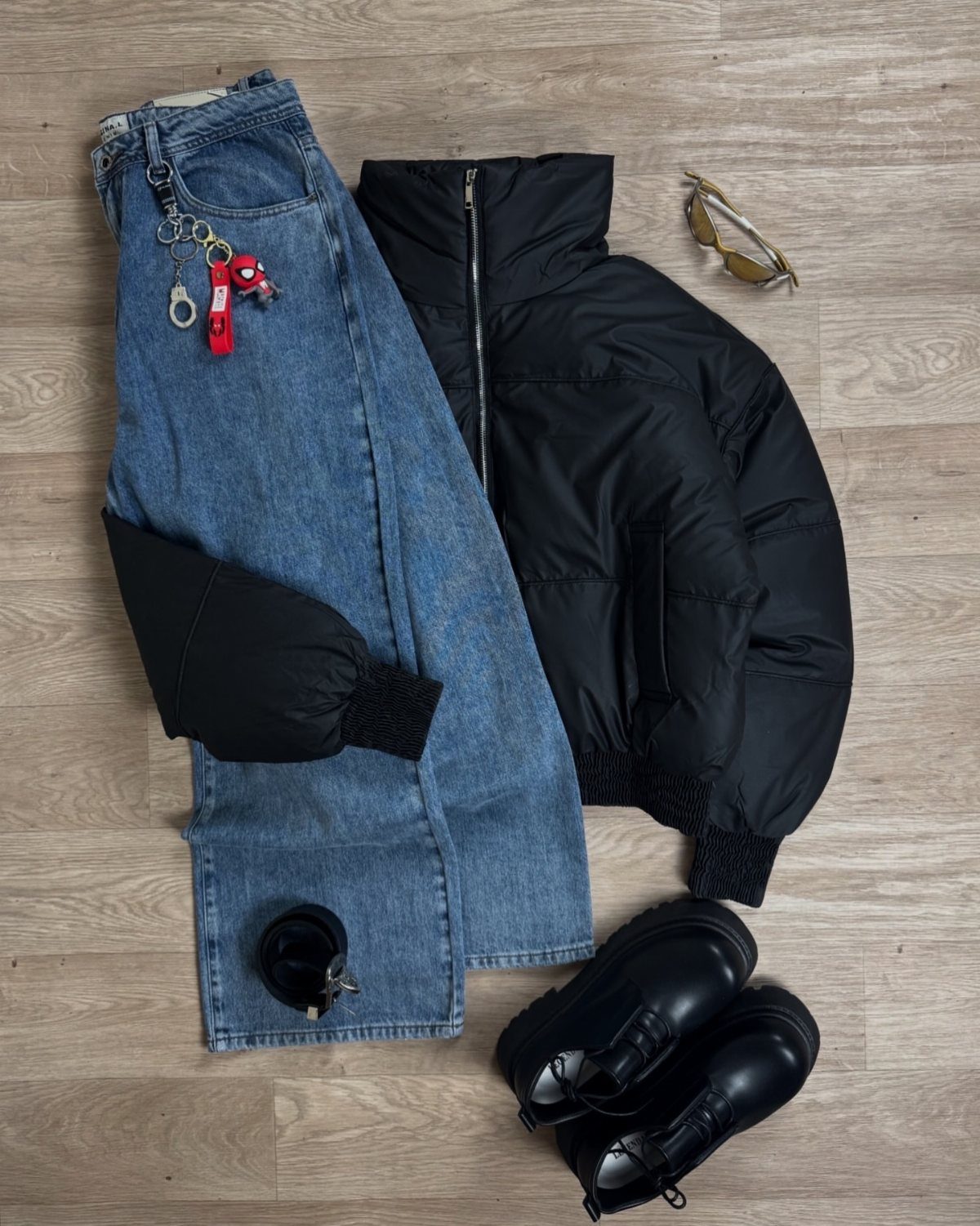
Puffer jackets give the most warmth for the least weight, and black is the easiest color to wear. Pair one with wide-leg blue jeans and black chunky shoes, and the bulk up top is balanced by volume below.
I would skip a second bulky layer underneath; a thin knit is enough.
Investing in Quality Fabrics
Merino wool and cashmere give you warmth without bulk, and that is why they beat thicker, cheaper knits. A thin layer of either under a coat does more than a chunky sweater that crowds your arms.
Texture matters too. Cable knits and fisherman sweaters have enough body to keep their shape, while a thin wool weave tends to sag and stretch after a few wears.
Thin cotton has no place in a cold-weather outfit. Cotton soaks up sweat and then pulls heat off your skin, which is exactly backward for a layer that sits against your body.
For pieces that get layered, pick dense, structured fabrics like heavy denim, corduroy and thick wool. They keep their line under a coat instead of collapsing into wrinkles.
Avoiding Bulk in Winter Outfits
Fit beats volume. Build the outfit from the inside out: a close-fitting base layer, then a sweater that follows your shoulder line, then an outer layer sized to your frame.
A long-sleeve tee in a heat-retaining fabric makes a good base layer, since it adds warmth to your torso without adding thickness.
Long vertical lines make you look taller and leaner, so leave jackets open, overcoats unbuttoned and scarves hanging long.
In harsh cold, spend on the coat. A down jacket that blocks wind, sheds water, insulates well and is easy to wash is expensive, but I’d still pick it, because a good one can last many winters.
Finish with waterproof boots that have a lug sole for grip, plus stretch pants that dry fast and keep the cold out.
Start with your winter coat, the most important layer for combatting the cold. Opt for a quality down jacket that’s windproof, waterproof, insulating, and easy to care for.
Mixing Formal and Casual Styles
Smart-casual in winter comes down to pairing one tailored piece with one relaxed piece. A clean knit under a tailored jacket with dark denim or wool trousers works, and structured boots finish it.
The sorting happens in silhouette and soles. Casual is a puffer, jeans and chunky boots.
Formal swaps in an overcoat, chinos and clean-profile leather or oxfords. Mix one step from each side and you land in the middle.
Sweater color shifts the mood as well. Burgundy, green or textured oatmeal reads casual; charcoal, navy or cream reads formal.
Texture keeps relaxed pieces from looking careless. Brushed flannel, merino and soft knits all help.
Frequently Asked Questions
What are some good winter clothing ideas for men?
Start with a snug base layer, add a sweater whose shoulder seams land where your shoulders end, and finish with a coat cut for your build.
Merino wool and cashmere give warmth without bulk, and a charcoal wool overcoat works over both suits and weekend jeans.
A black puffer with wide-leg blue jeans is the easy casual option, and a turtleneck under a denim jacket needs almost no thought.
Which dressing is best for men?
For winter, smart-casual is the safest bet: one tailored piece paired with one relaxed piece.
On a regular weekday, a fine-gauge knit under an unstructured blazer, plus dark jeans or wool trousers and leather boots with a real sole, gets the balance right.
It also adjusts easily, since swapping the coat or shoes moves the outfit toward dressier or more casual.
What is the 3-3-3 rule for men’s fashion?
I can’t point to a fixed rule by that name that applies to winter dressing.
What are the types of fashion men?
For winter, the useful split is casual versus formal, with a middle ground between them. Formal means a wool overcoat, chinos or flannel trousers, and polished leather shoes such as oxfords.
Borrow one piece from each column and you land in smart-casual; the sweater color then sets the mood, with burgundy, forest green or oatmeal leaning casual and charcoal, navy or cream leaning dressier.