Ideas on this list run from a free habit like grooming and skincare to a serious business suit you buy once and keep, with silk neck scarves, linen long-sleeve shirts and well-fitted leather gloves in between.
Your calendar decides which ones are yours: a man with client meetings starts with the serious business suit and the fit of a tailored blazer, while a man whose week is mostly casual gets more from leather jackets with clean denim and a lightweight parka.
Fit is the one step that applies to all of it, since a tailor can fix a waist or a sleeve but not the shoulders.
1. Tailored Blazer
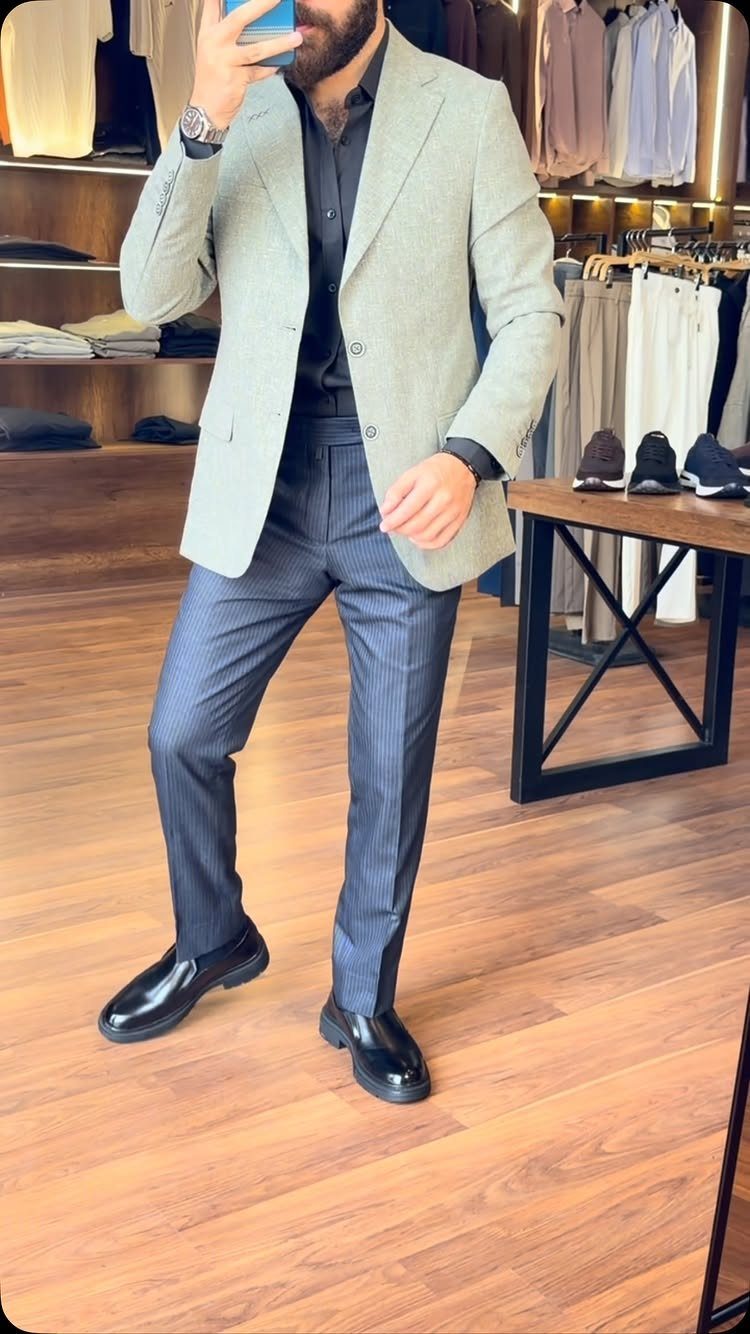
A blazer you own in a quality fabric does more work than three you bought on sale. Start with the shoulder seams, which should end right where your own shoulders do, because a tailor can adjust almost everything else.
Light green and light grey both read as relaxed, and both work over a dark shirt and darker trousers.
A navy or charcoal version, though, goes with more of what you already have, so start there if you are buying one.
Spend the money here before you spend it on shirts.
2. Fit
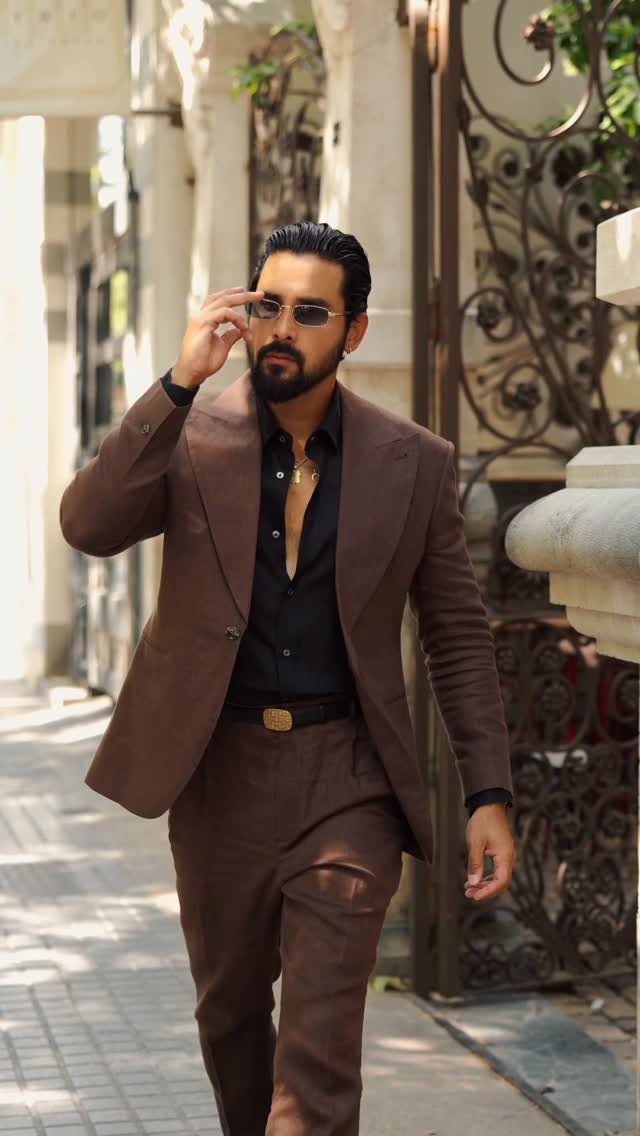
Fit is the cheapest upgrade a man in his 40s can make, and a brown suit like this one shows why: the shoulder seam sits at the edge of the bone, and the jacket skims the body without pulling.
Check 3 spots in the mirror. Shoulders should lie flat, the jacket should close without an X-shaped crease at the button, and trousers should break lightly at the shoe.
A tailor can take in a waist or shorten sleeves for a modest fee. Shoulders are the one thing that can’t be fixed easily, so judge those before buying.
3. Classic Dress Shoes
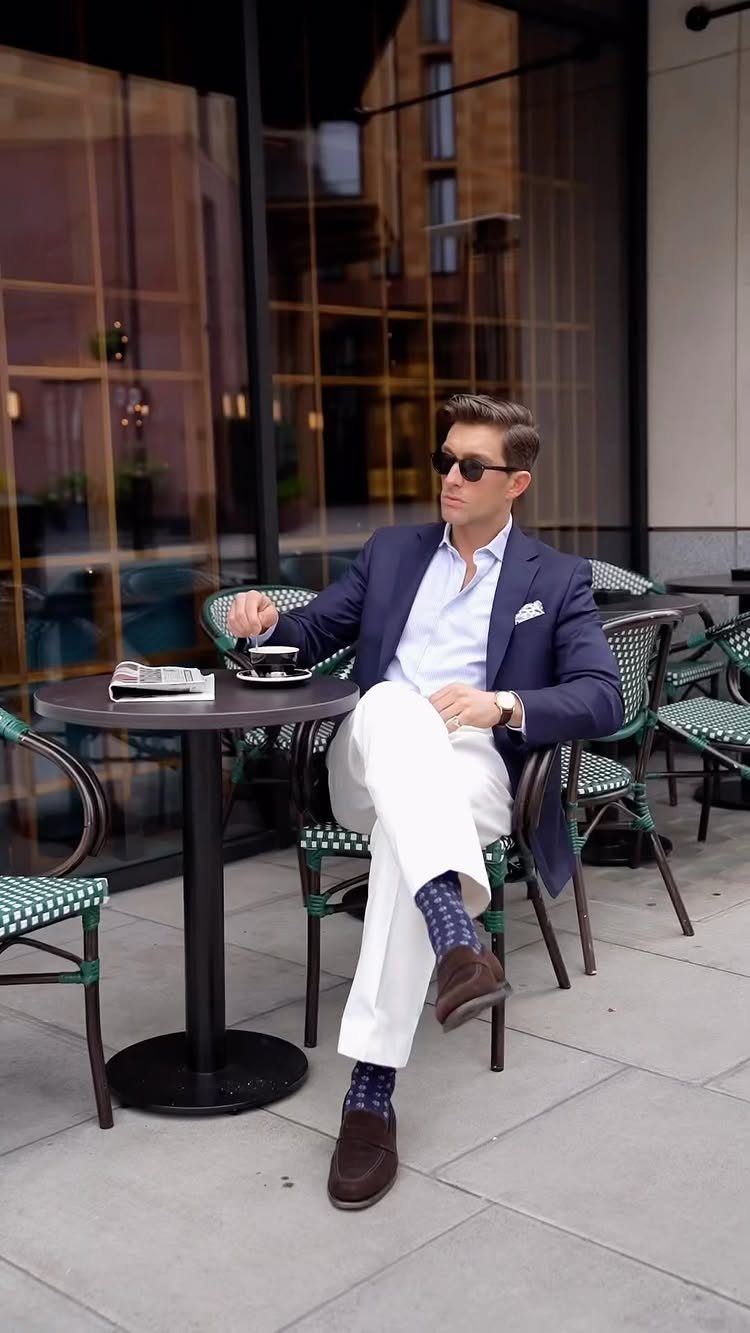
Brown suede loafers with a navy blazer and white trousers is a pairing I’d copy as is. Suede is softer on the foot than stiff calfskin, which matters if you stand through a long day.
Choose a leather or rubber sole with some cushioning, and try shoes on late in the day when feet run larger. Dark brown is the most flexible color for a second pair.
Suede does not love rain, so keep a pair of smooth leather shoes for wet days.
4. Short-Sleeve Shirts
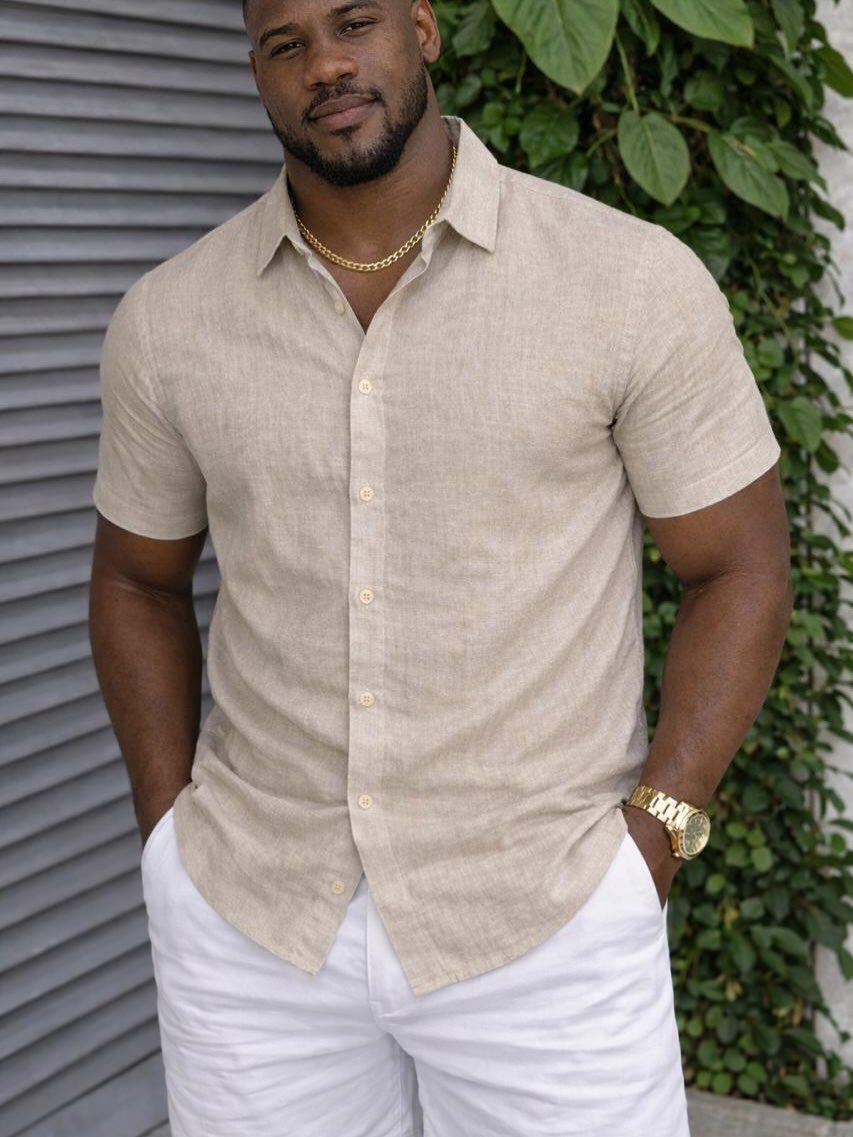
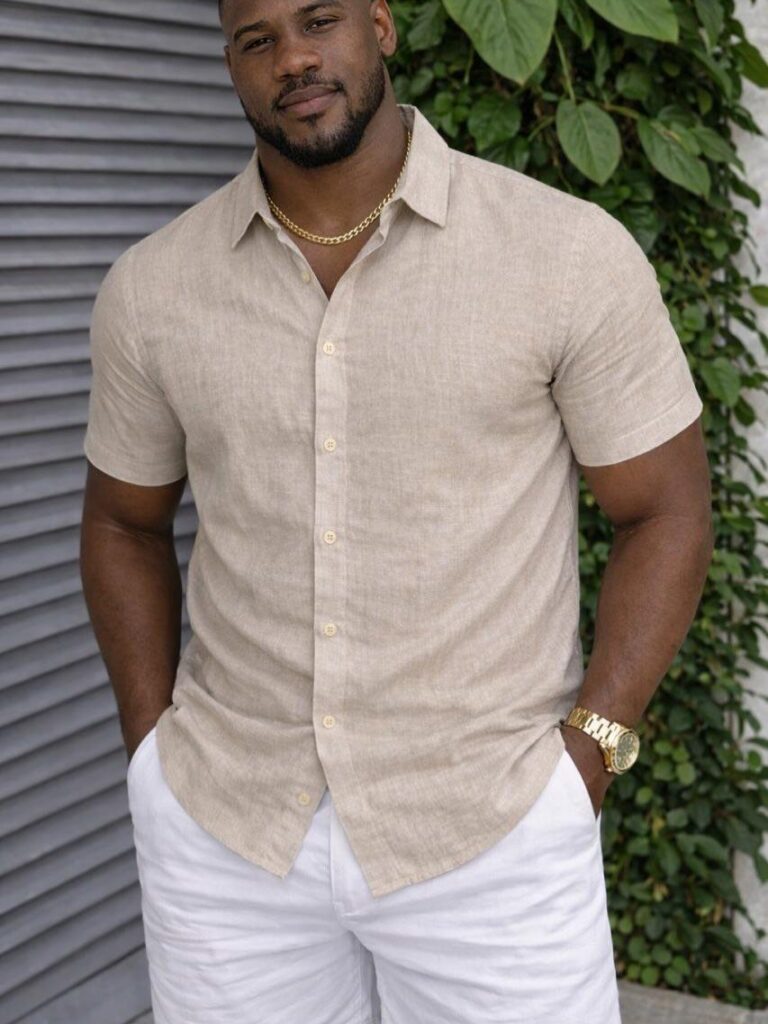
Short sleeves only look sharp when the sleeve ends mid-bicep and sits close to the arm. A flapping sleeve that reaches the elbow ruins the shirt, however good the fabric.
Linen in a neutral like beige breathes well in heat and pairs with white trousers without any effort. Keep the hem short enough to leave untucked, or tuck it if the shirt runs long.
Linen wrinkles, and I think that’s part of its charm. Accept that, or choose a cotton blend.
5. Smart-Casual Outfits
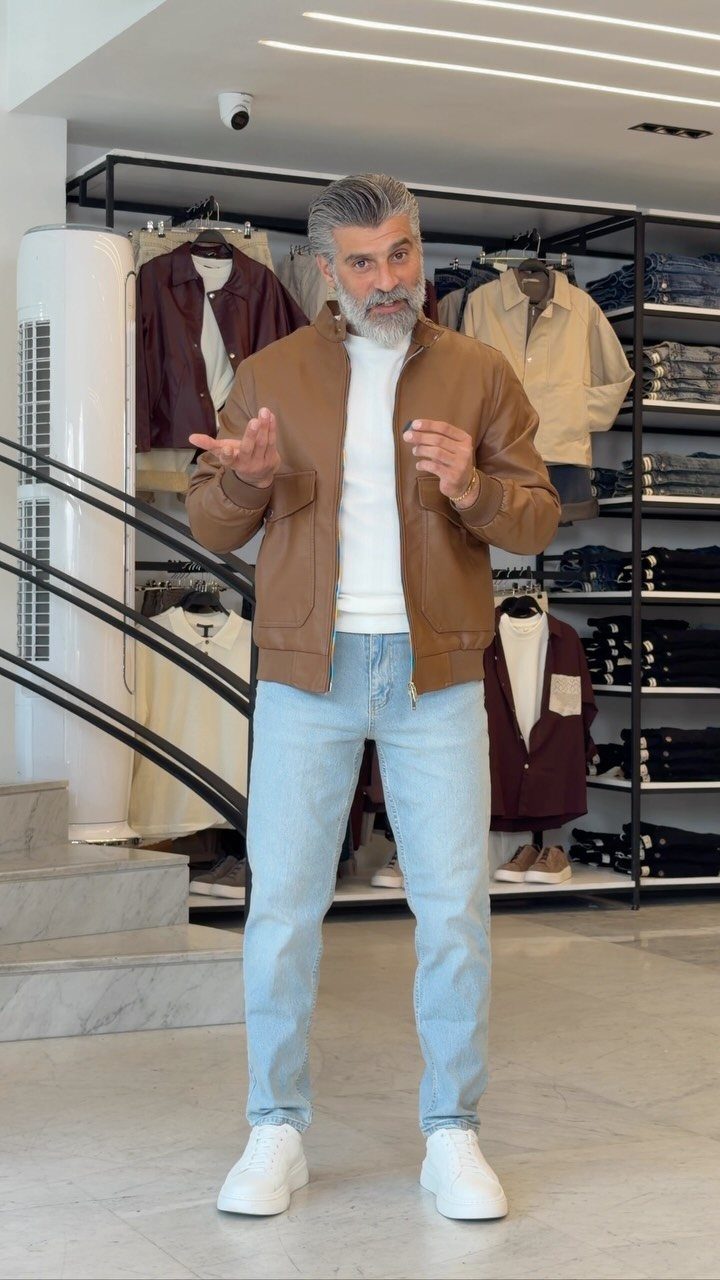
Every item is easy to find at a moderate price.
Keep the knit plain and the sneakers clean, since scuffed white shoes undo the whole look. Dark jeans make it dressier, light ones more relaxed.
Swap the jacket for a blazer and the same outfit moves toward the office.
6. Well-Fitted Leather Gloves
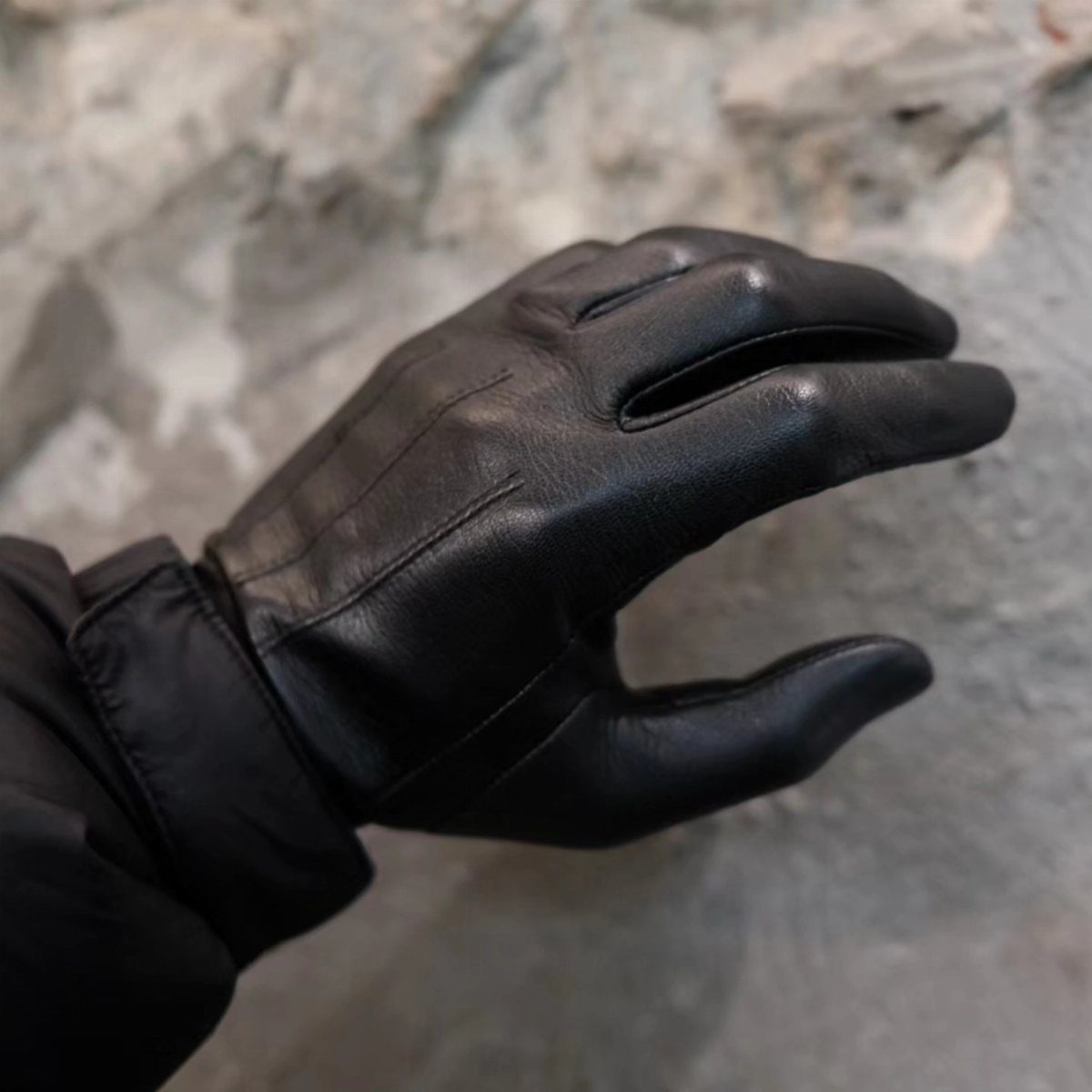
Gloves are the one accessory where fit is everything. Black leather should hug the fingers and palm with no loose tips, and the cuff should meet the jacket sleeve without a gap.
Try them on with your hand flexed. If the seams strain across the knuckles, go up a size.
Black goes with nearly every coat, which makes it the sensible first pair. Buying real leather costs more up front, but it softens and molds to your hand over time.
7. French-Cuff Shirt
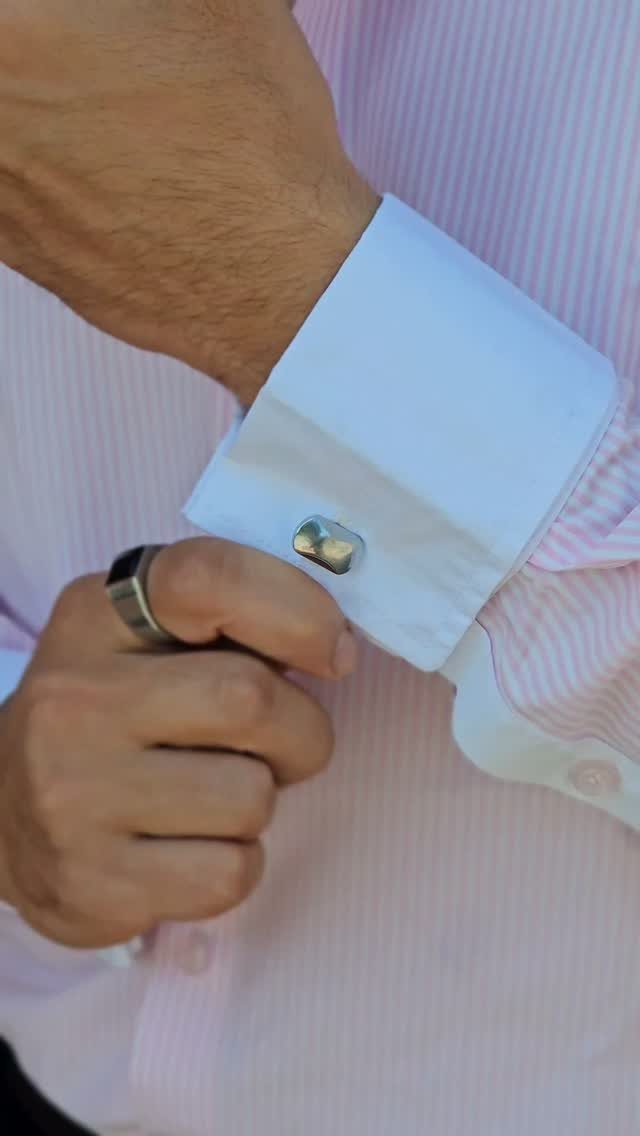
A French cuff folds back on itself and closes with a cufflink instead of a button, which is why it belongs with formal dress.
A white French-cuff shirt works with a dark suit, and silver links in a small, plain shape keep the cuff from looking fussy.
Pink and white stripes are a good way to wear a French cuff without looking stiff. Own one such shirt and save it for weddings, dinners and the days you want to look finished.
8. Classic Fedoras
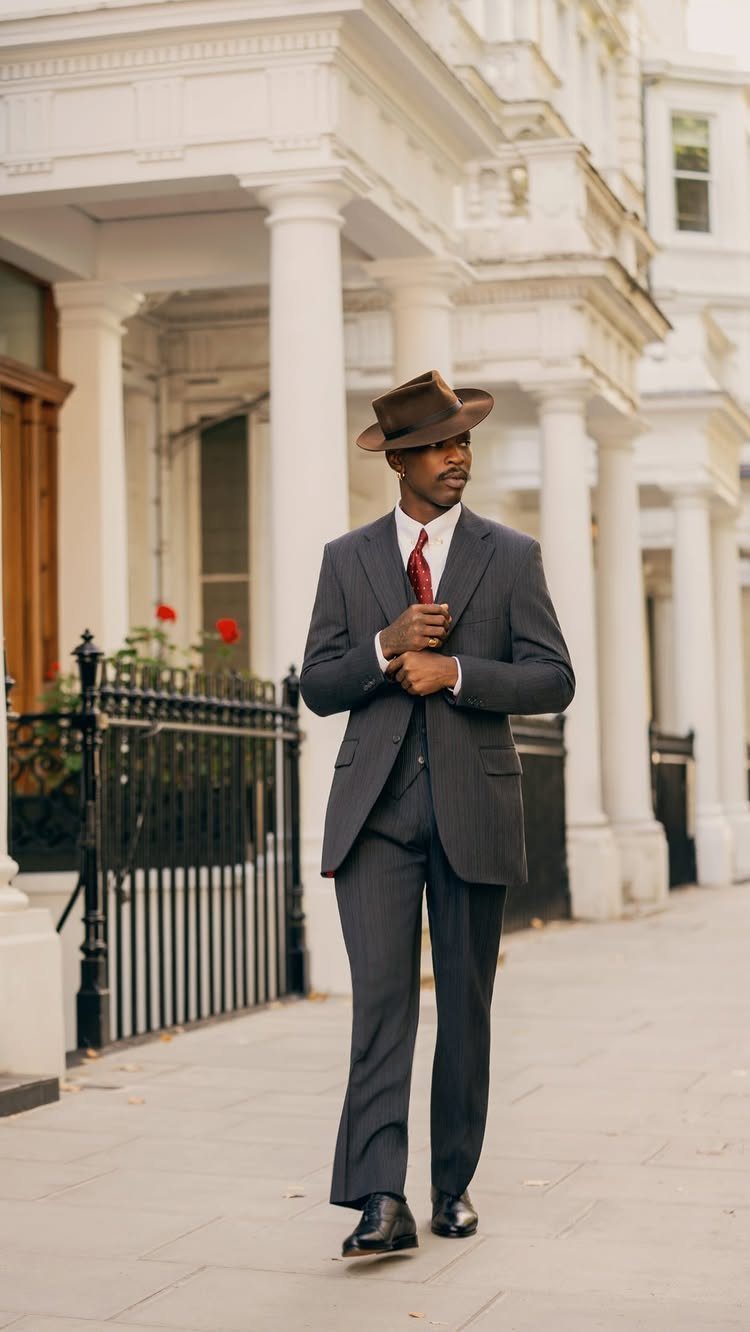
A brown fedora with a pinstriped suit and a red tie is a bold combination, and the hat has to be the only loud piece or the whole thing tips into costume. Keep everything else quiet.
I’d wear it with a suit rather than casual clothes, where it can look like a costume.
A hat is a personal call, so try several in a mirror before buying one.
9. The Serious Business Suit
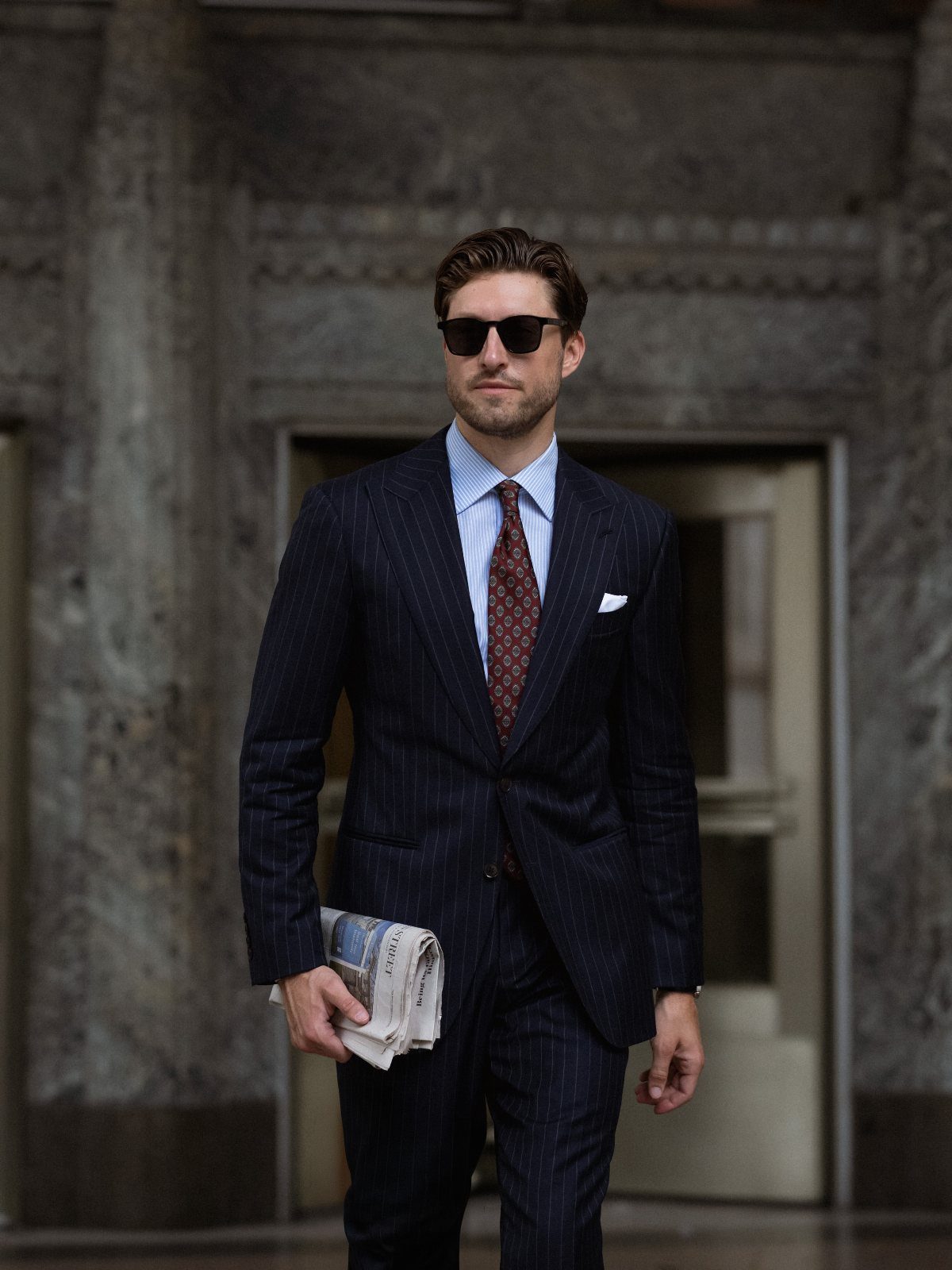
A dark pinstripe suit belongs in every man’s closet, and a man in his 40s gets more from it than from a trendy third option.
With a tie and a pocket square added, the suit is ready for almost any serious meeting.
Keep the pinstripe subtle and the color dark. The suit is the one piece I’d buy to last, then let a tailor make it fit.
10. Darker Colors and Richer Fabrics
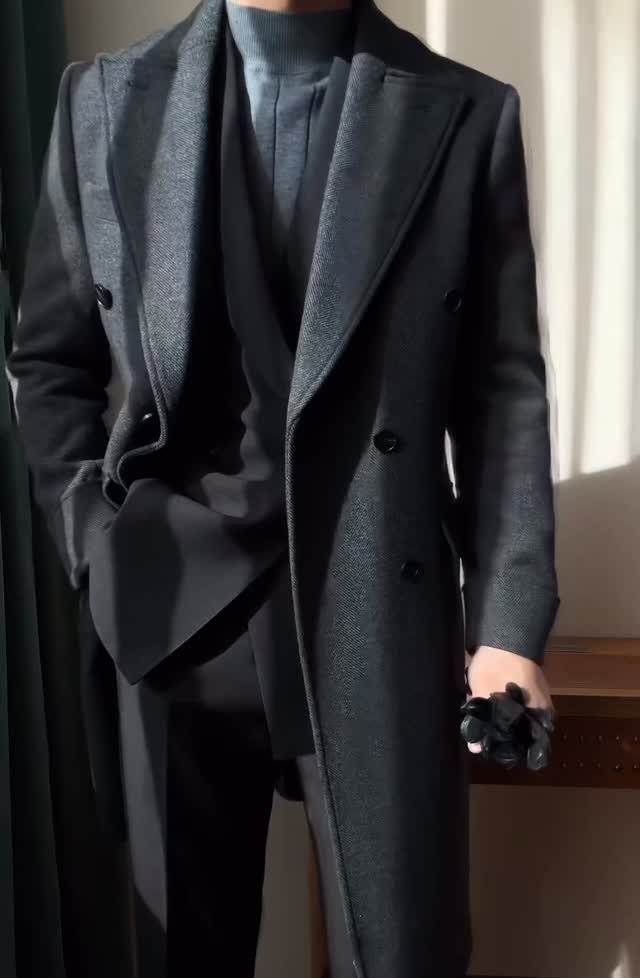
Darker shades read as more serious, and a heavier fabric like the wool in an overcoat hangs better than a thin one.
Keep the shades close and vary the texture: knit against smooth cloth gives the outfit depth.
Black gloves finish it. Buy the best coat you can afford, since it’s the piece people see first.
11. Layering
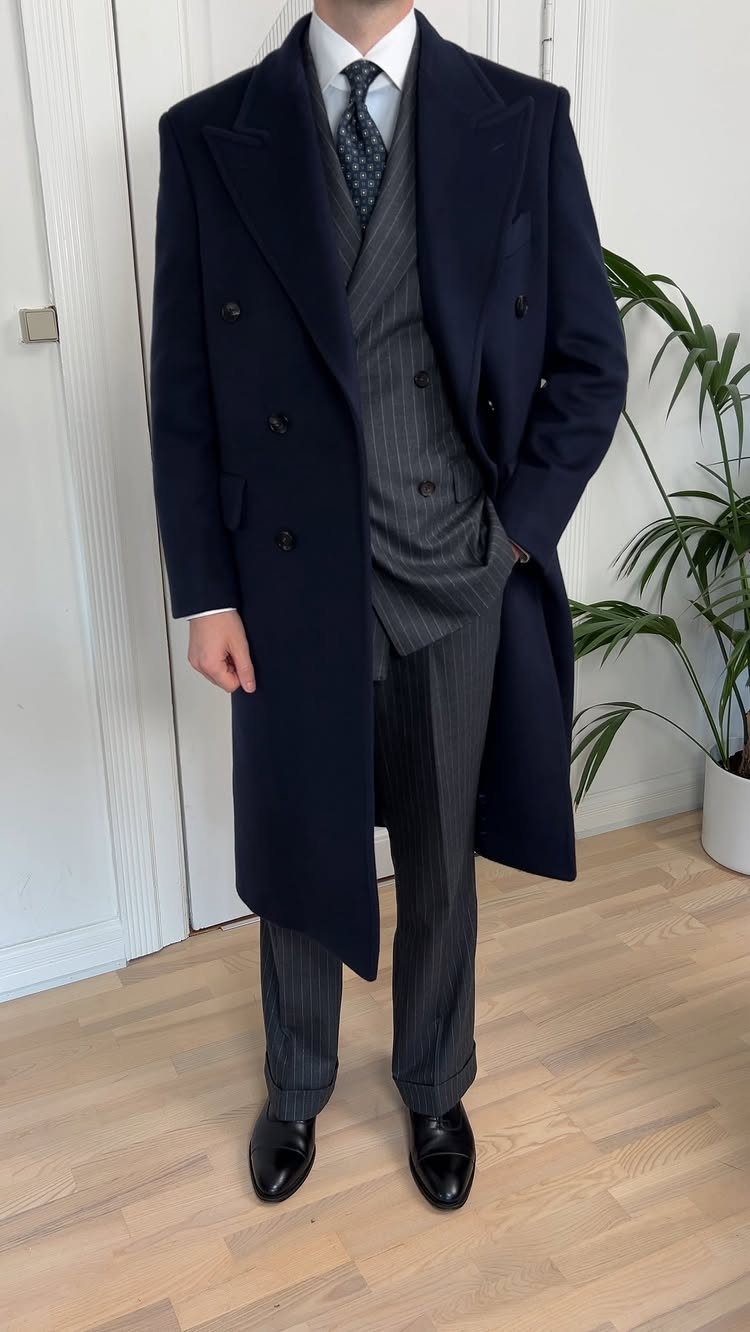
A navy overcoat over a grey pinstripe suit shows the simplest layering rule: the outer piece should be darker or plainer than what’s under it. The coat then frames the suit instead of fighting with it.
Make sure the coat fits over the jacket without pulling across the shoulders. Try it on while wearing the suit, not a thin shirt.
Keep the tie as the one pattern you let show.
12. Crew Socks in Neutral Colors
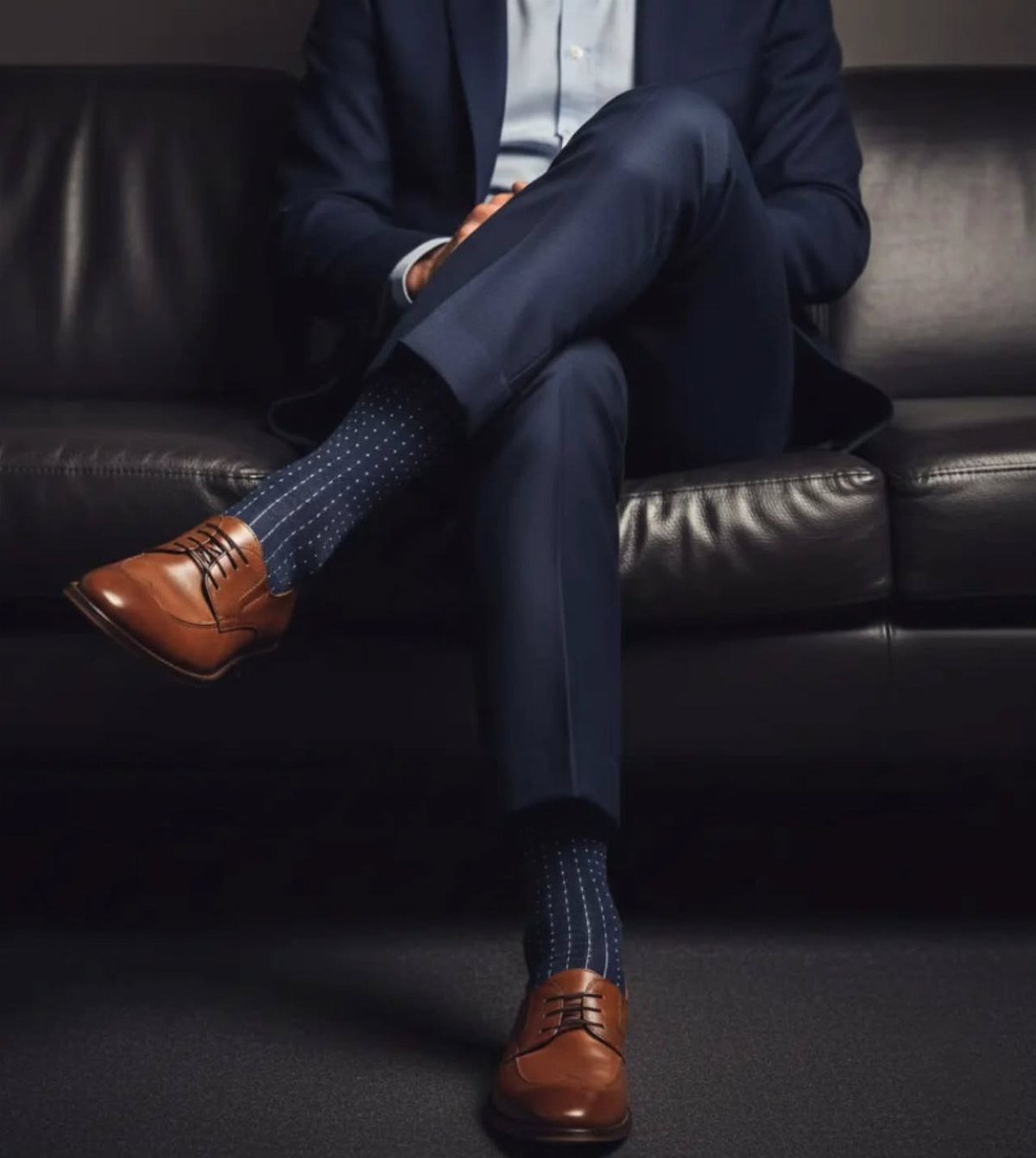
Crew socks that reach mid-calf keep skin from showing when you cross your legs, which ankle socks can’t do. That alone makes a navy suit look more finished.
Neutral colors are the safest choice: navy, grey or brown to match the shoes. The navy dotted pair here adds quiet interest, and a small pattern like that is as far as I’d go.
Match the sock to the trousers or the shoe, and you can’t go wrong.
13. Neat Facial Hair and Regular Haircuts
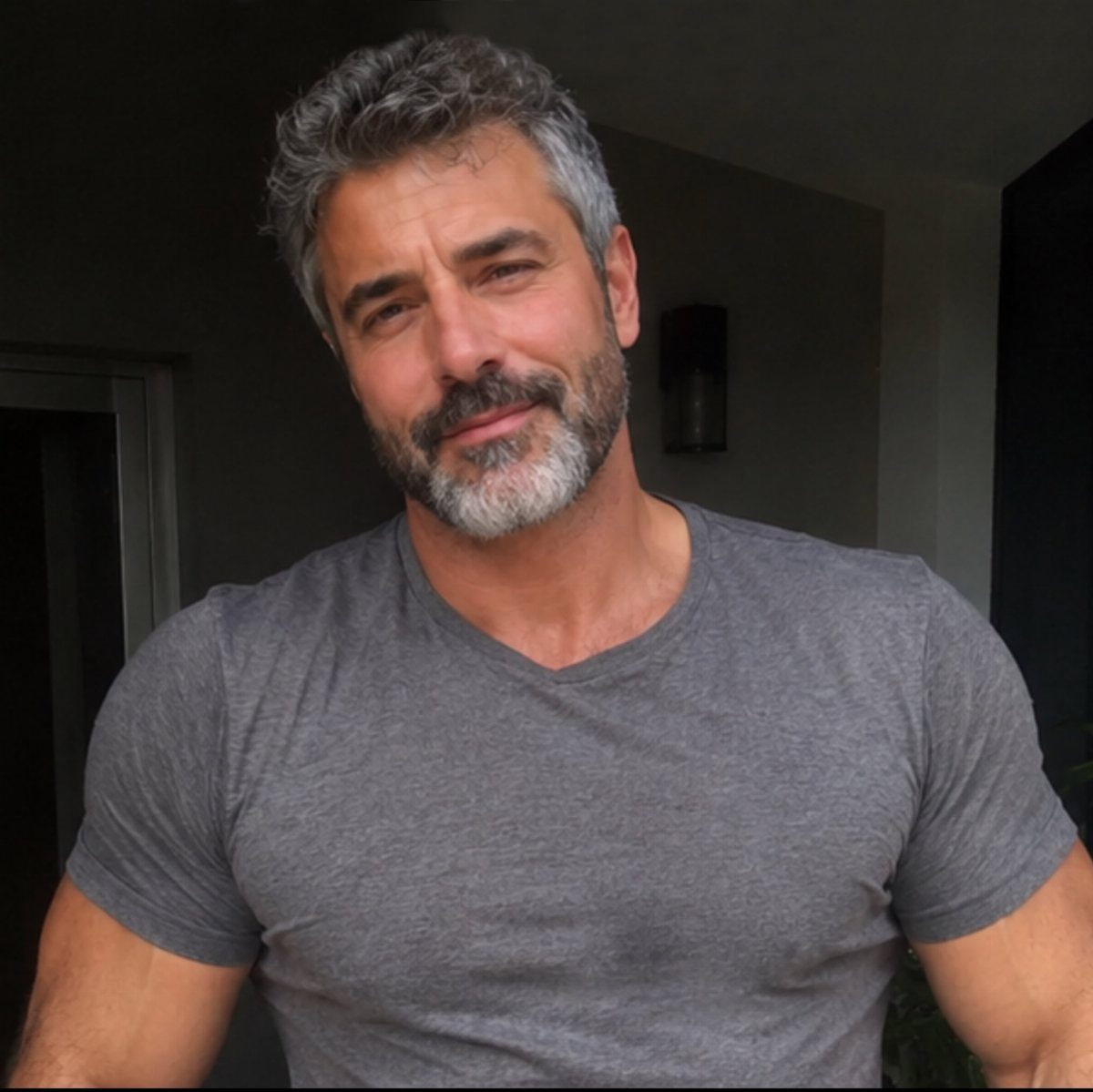
Salt-and-pepper hair looks best when the cut and the beard agree with each other. Short on the sides, a bit longer on top, and a beard trimmed to an even length keep a grey head looking intentional rather than tired.
Book a trim every few weeks, since the neckline and cheek lines go ragged first. A barber you return to learns your head, which saves time and money.
Grey hair needs no hiding if the edges are crisp.
14. Tonal Outfits
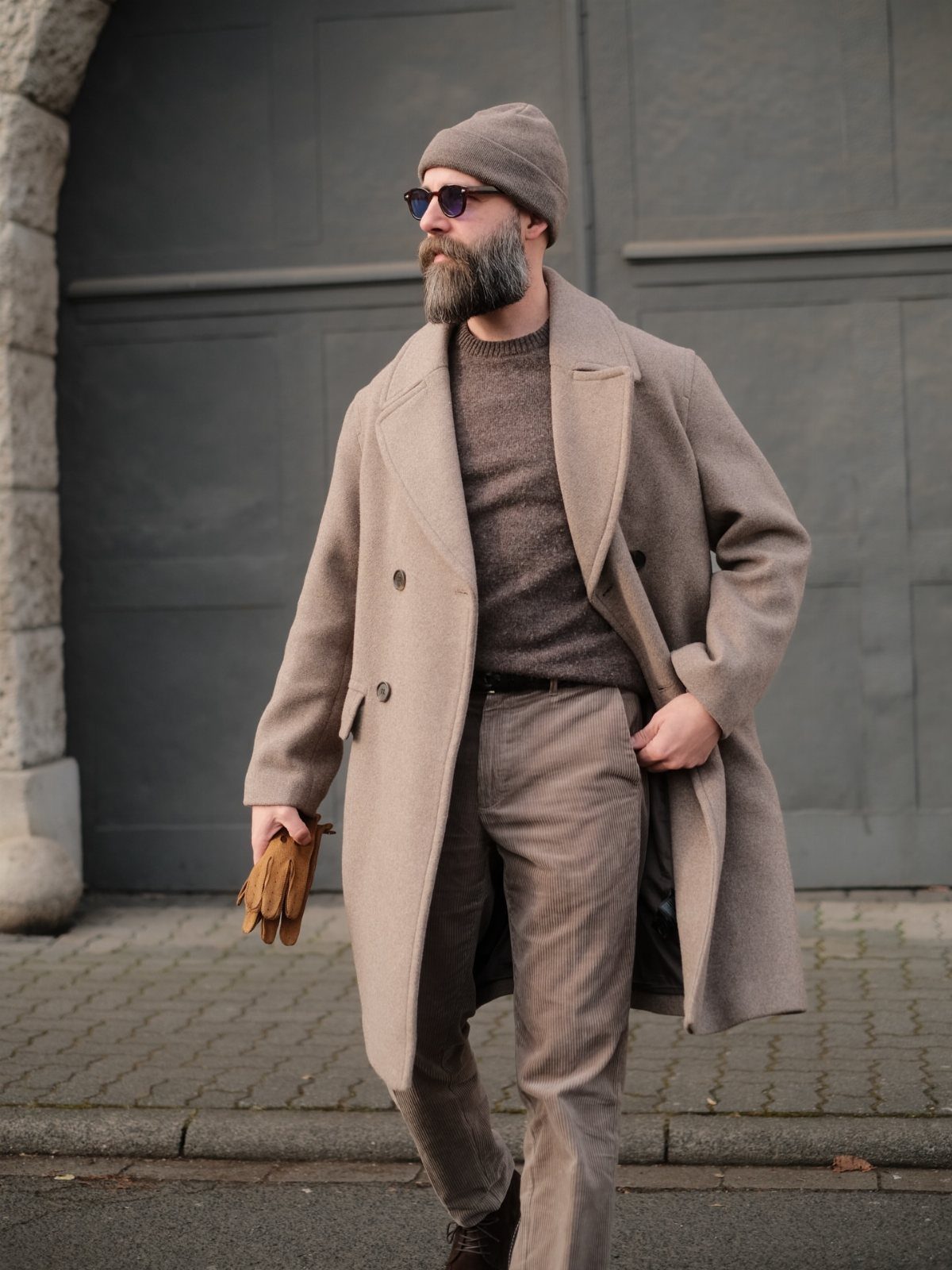
Tan, camel and brown sit close enough on the color wheel to wear head to toe, and the outfit holds together because the shades stay in one family.
A wool overcoat, a knit sweater and corduroy trousers each catch light differently, so the look has depth even though the palette stays the same.
Vary the texture and keep the shades near each other. A beanie and leather gloves in the same range finish it.
Try this before buying anything new; you may already own two of the pieces.
15. Leather Jackets with Clean Denim
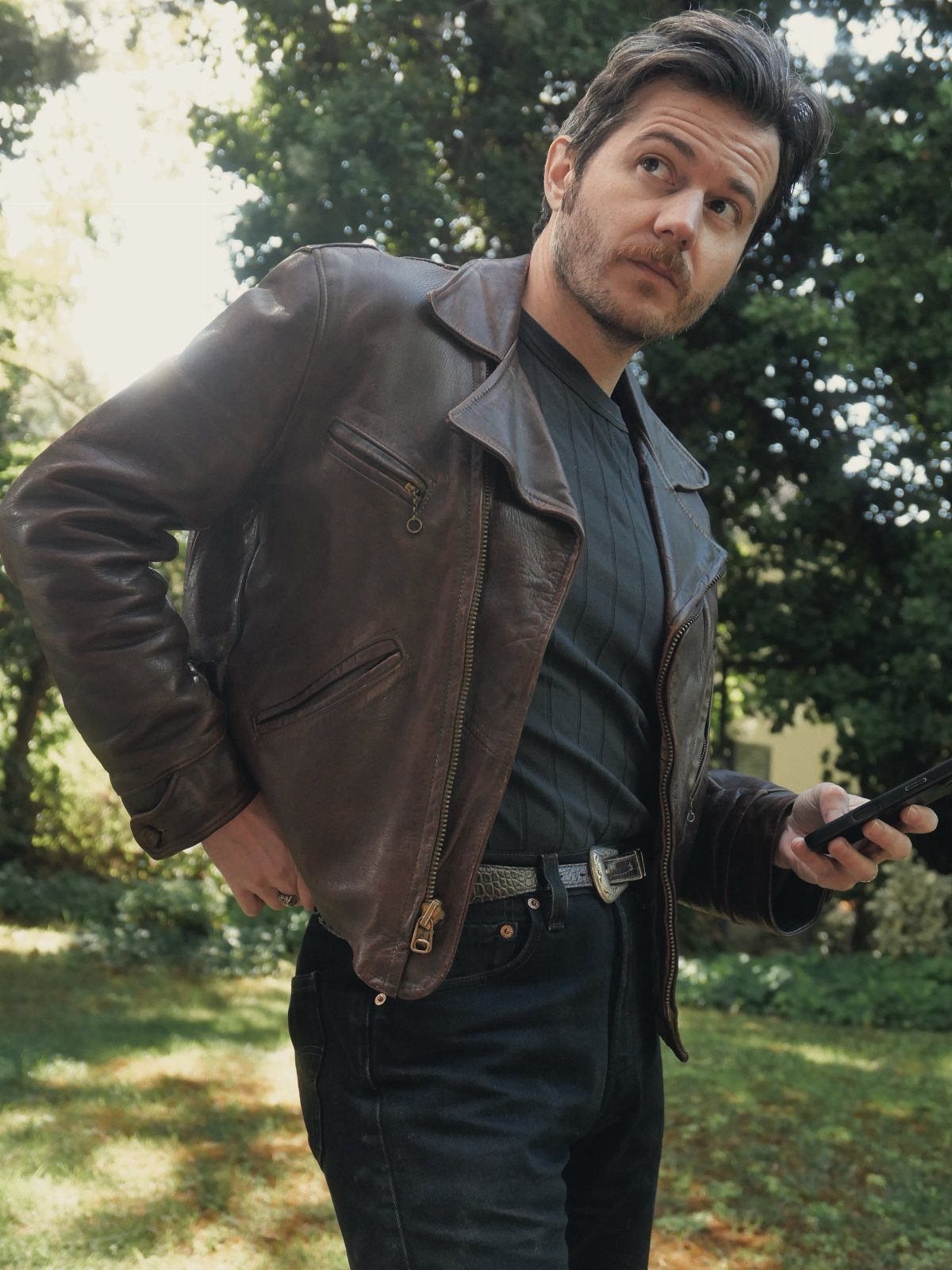
Leather is already rugged, so the denim has to be the clean part: dark, unfrayed and free of rips.
Stick with a plain belt and simple boots so the jacket is the only statement in the outfit. Fit matters most at the shoulders, and the sleeve should stop at the wrist.
Leather costs more up front, but one good jacket gets worn for years.
16. Lightweight Parkas
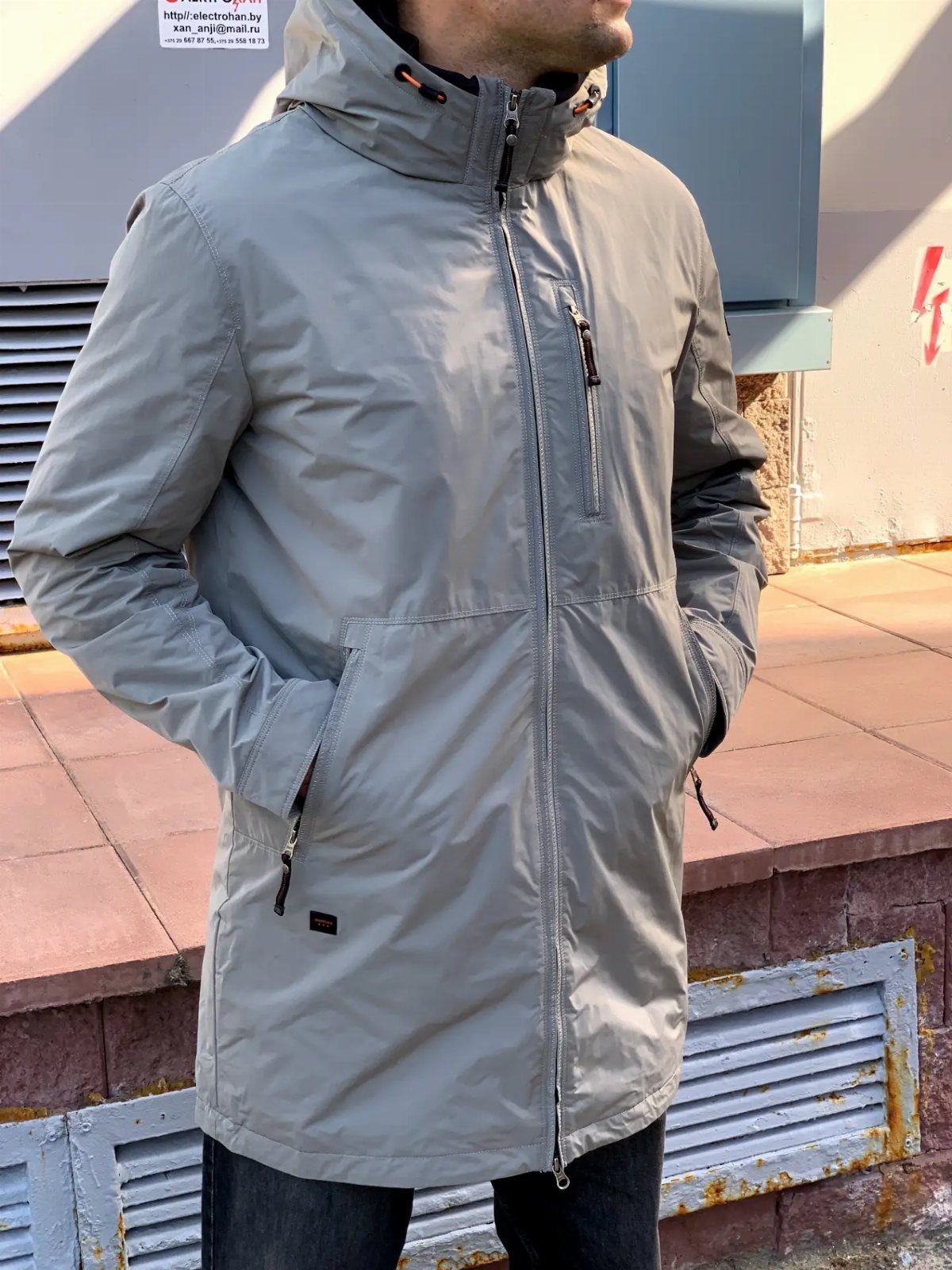
A lightweight parka covers the days when the forecast can’t make up its mind.
Choose a cut that ends around the hip so it doesn’t swallow your frame. Keep what’s underneath simple: a tee or a thin knit.
It won’t replace a winter coat, so treat it as the piece for mild, wet or windy days.
17. Button-Down Shirts with Denim

A dark blue button-down with blue jeans is about as easy as dressing gets, and brown suede boots make it feel finished.
Keep the shades of blue apart, with the shirt darker than the denim, so the two don’t blur together.
Leave the collar open, roll the sleeves once or twice, and tuck or leave out depending on the hem length. A hem that sits just below the belt works untucked.
This is a good default for dates and casual Fridays, and it needs almost no shopping time.
18. Chore and Utility Jackets
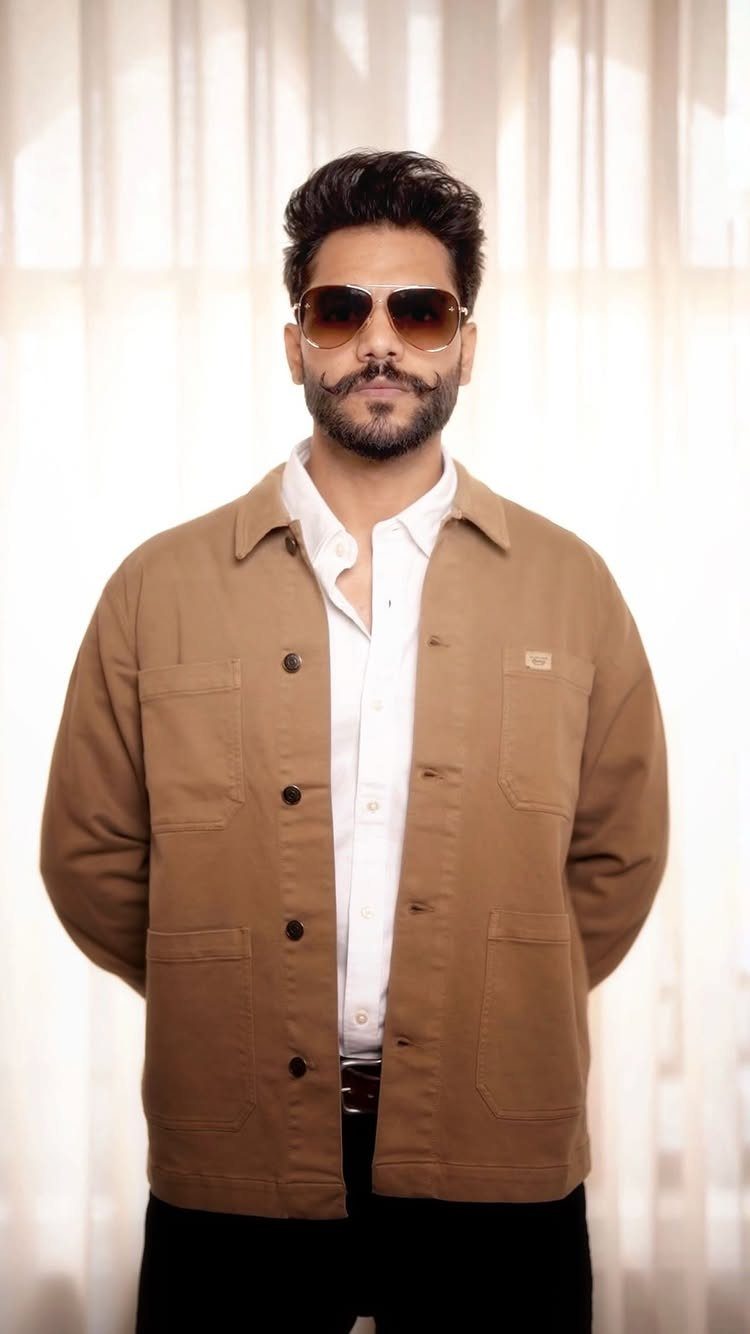
A tan utility jacket over a crisp white shirt is a smart way to dress down a dressier base. The shirt stays clean and the jacket adds texture, so the outfit reads as sharp without looking like a uniform.
Black trousers keep it from going too casual. I prefer a slim cut across the shoulders, with room to layer but no bagginess.
Wear the shirt open at the collar. Skip the tie; it fights the jacket.
19. Linen Long-Sleeve Shirts

An unbuttoned linen shirt over a plain base, with white linen trousers, is the easy version of this idea, and light blue is the shade I’d pick first. It reads cool without looking like beachwear.
Chest pockets give the front some structure, so the shirt doesn’t hang limp. Wear it open for a casual day or buttoned to the collar with the sleeves rolled once or twice.
Linen creases quickly, and that is part of the look. Don’t fight it with heavy ironing.
20. Silk Neck Scarves
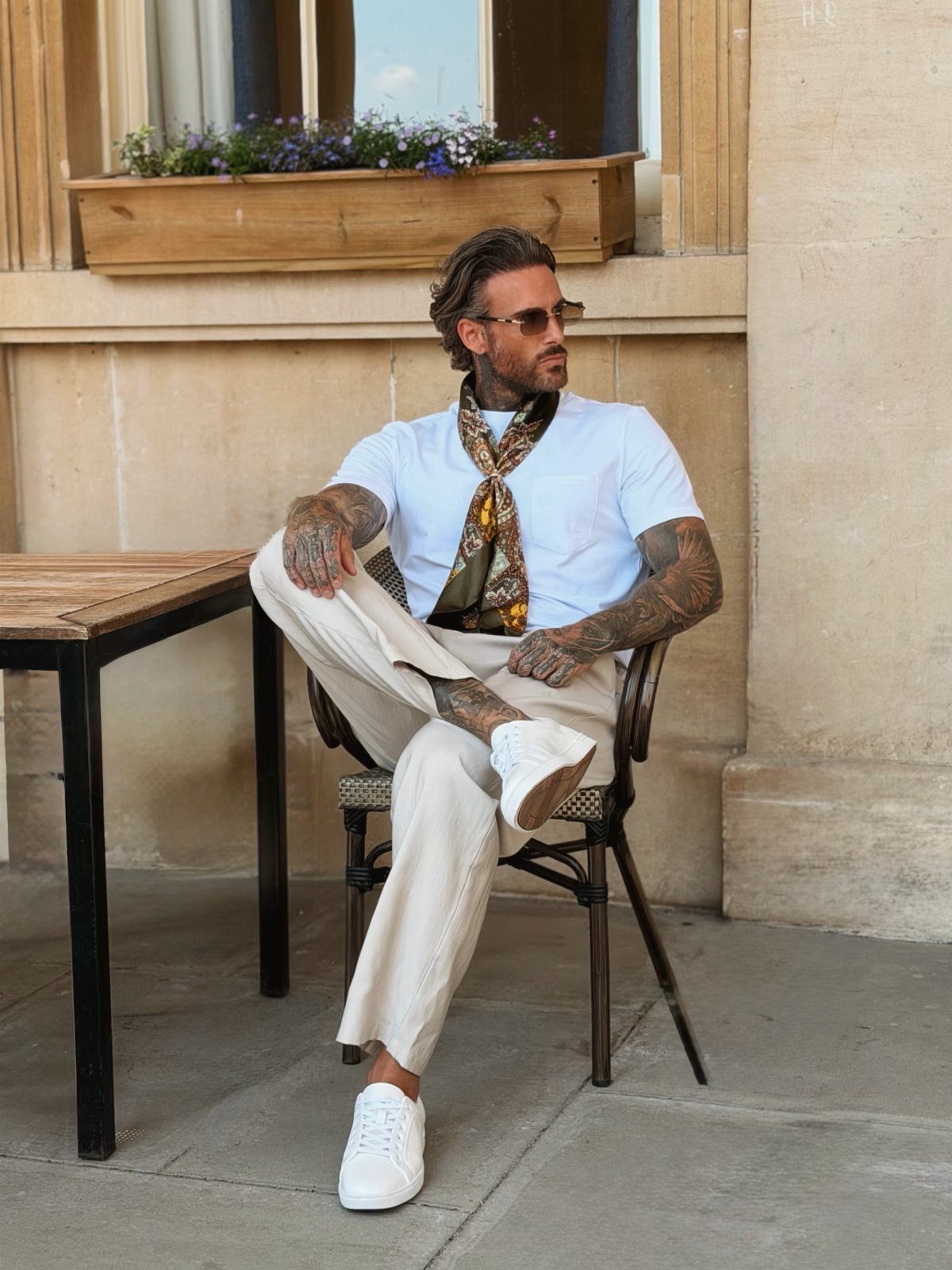
A silk neck scarf is the smallest change you can make to an outfit, and the easiest one to try. Against a white tee and beige trousers, one patterned scarf supplies all the interest, so everything else can stay plain.
Pick a pattern with a few colors that already appear in your closet, and tie it loosely at the collar line. Keep the rest quiet: neutral trousers, clean white sneakers.
It suits a man who likes a personal detail without buying a new wardrobe. If it feels like too much, wear it for a weekend first.
Grooming and Skincare
Most grooming lists skip skin care, and a basic routine takes very little time. Daily moisturizer plus sunscreen does more for your skin than any product you pick up later, and it costs little to keep up.
Shave with a fresh, sharp blade, then press on a soothing balm so the skin doesn’t redden or sting afterward. Before bed, wash off the day’s grime, then smooth on a light serum.
Pick a cut that fits the shape of your face, and let your barber tell you what that shape is. Clean skin and a tidy cut make even a plain tee and jeans look polished.
Lifestyle and Priorities at Forty
By your 40s the calendar holds work, family and your own interests, so each piece of clothing has to cover more than one of them. Buy for the week you actually have, not the one you imagine.
Pick a jacket that holds up in a meeting and still looks right at dinner afterward. Good activewear should travel from an airport to a Saturday coffee run without reading as gym clothes.
Shop with a purpose.
Go in knowing the gap you need to fill, and choose fit and durability over novelty. Nobody has spare hours to spend wandering store aisles, and a good wardrobe makes that unnecessary.
Fashion and Style Options
Test every piece before you buy it: can you build at least 3 different outfits with it? If not, leave it on the rack.
A blazer is the clearest case. Worn over jeans, it makes a casual night out look sharper, and over chinos it suits a dressier room just as well.
Mix up the fabrics in an outfit so it doesn’t look flat. Leather, denim and cotton worn together add depth.
Frequently Asked Questions
How to dress in your late 40s male?
Stick to well-fitted, timeless pieces in darker colors and richer fabrics, and let a tailor sort out the fit.
A navy or charcoal blazer, a dark pinstripe suit and a good overcoat cover most situations. Pick clothes that work for both work and dinner, since by your 40s each piece has to do more than one job.
What is the 3-3-3 rule for men’s fashion?
The 3-3-3 rule is usually described as buying three quality pieces each season to build a versatile wardrobe. A related test I like is to ask whether a piece can make at least 3 different outfits.
What are some good clothes brands for a 40-year-old man?
Brand names matter less than what the clothes are made of and how they fit.
Look for makers that put quality, fit and timeless styles first, and spend on the pieces that last: a blazer, a dark suit, a wool overcoat.
A tailor can fix most fit problems, but not shoulders, so judge those before you buy.
Should men over 40 wear jeans?
Yes, as long as they fit well and look clean, and both dark indigo and a medium blue wash work at 40 and beyond.
Skip rips and fraying, and avoid anything skin-tight. Dark jeans pair well with a blazer for a sharper look, or with a button-down shirt and brown suede boots for dates and casual Fridays.