The outfits here run from jeans in charcoal, black and blue to black and white trousers, with a hoodie as the most casual option and a white turtleneck as the sharpest.
Your own closet should pick the coat for you: a pea coat looks best against pants you already own, whether charcoal, black or blue jeans, or black trousers.
1. Pea Coat with Charcoal Jeans
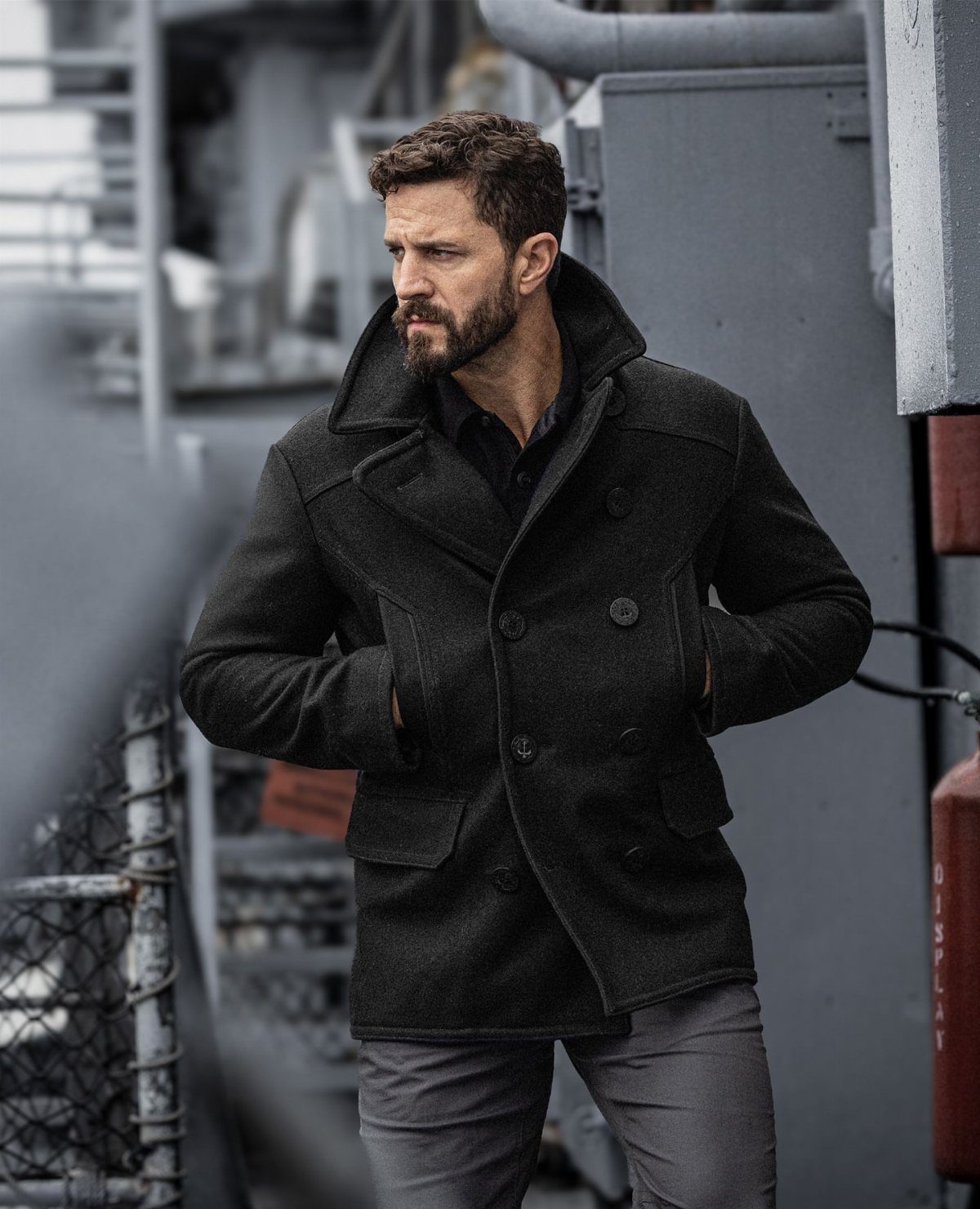
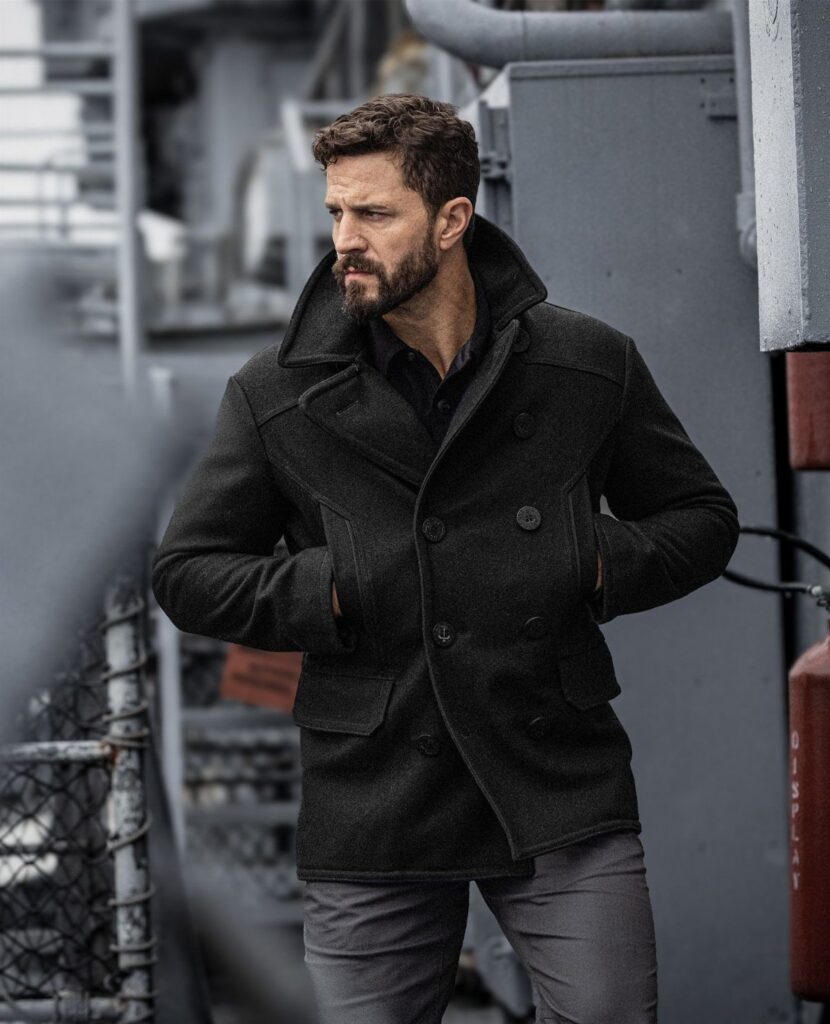
Charcoal sits one step softer than black, so a dark pea coat over charcoal pants reads as one tonal outfit instead of a contrast. That is why it works as a semi-casual default: nothing fights, and nothing needs thought.
I would keep the rest of the outfit quiet.
A white or light grey knit underneath and dark leather boots finish it. If the coat and pants are nearly the same shade, add a lighter layer at the collar so the outfit doesn’t flatten out.
2. Pea Coat with Black Jeans
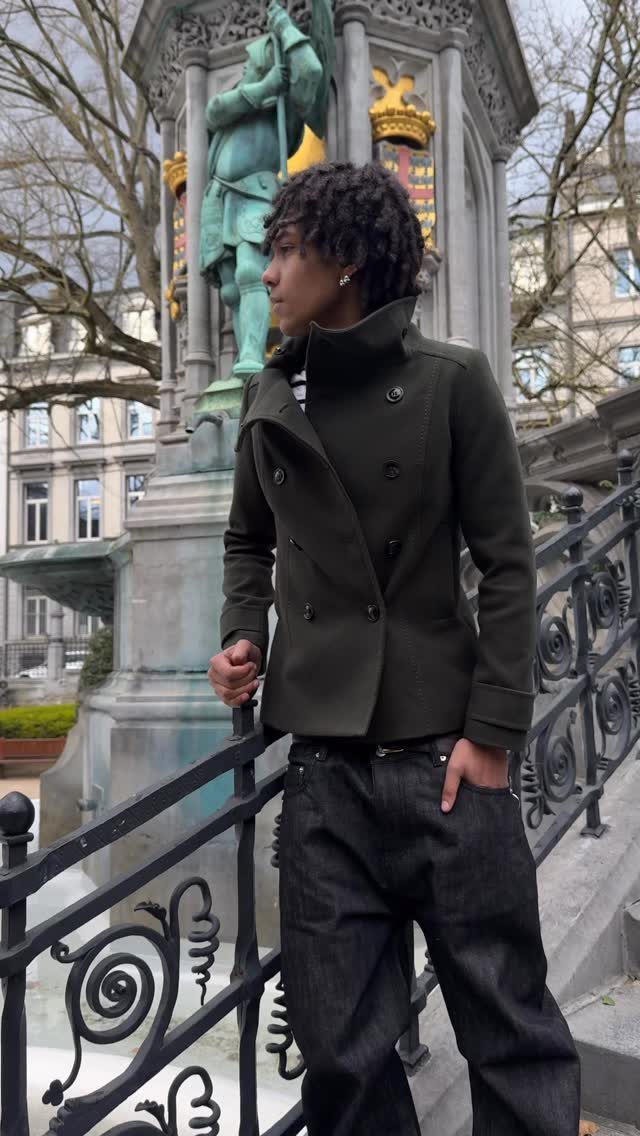
Black jeans give a pea coat a clean, dark base, and a coat in dark olive stops the whole look from going flat. Olive is the quieter way to add color without adding a loud piece.
A cropped coat paired with loose jeans changes the proportions, so keep the hem of the jeans clean and let them break over the shoe once.
I like plain sneakers or boots here. Anything shiny pulls attention from the coat.
3. Pea Coat with Blue Jeans
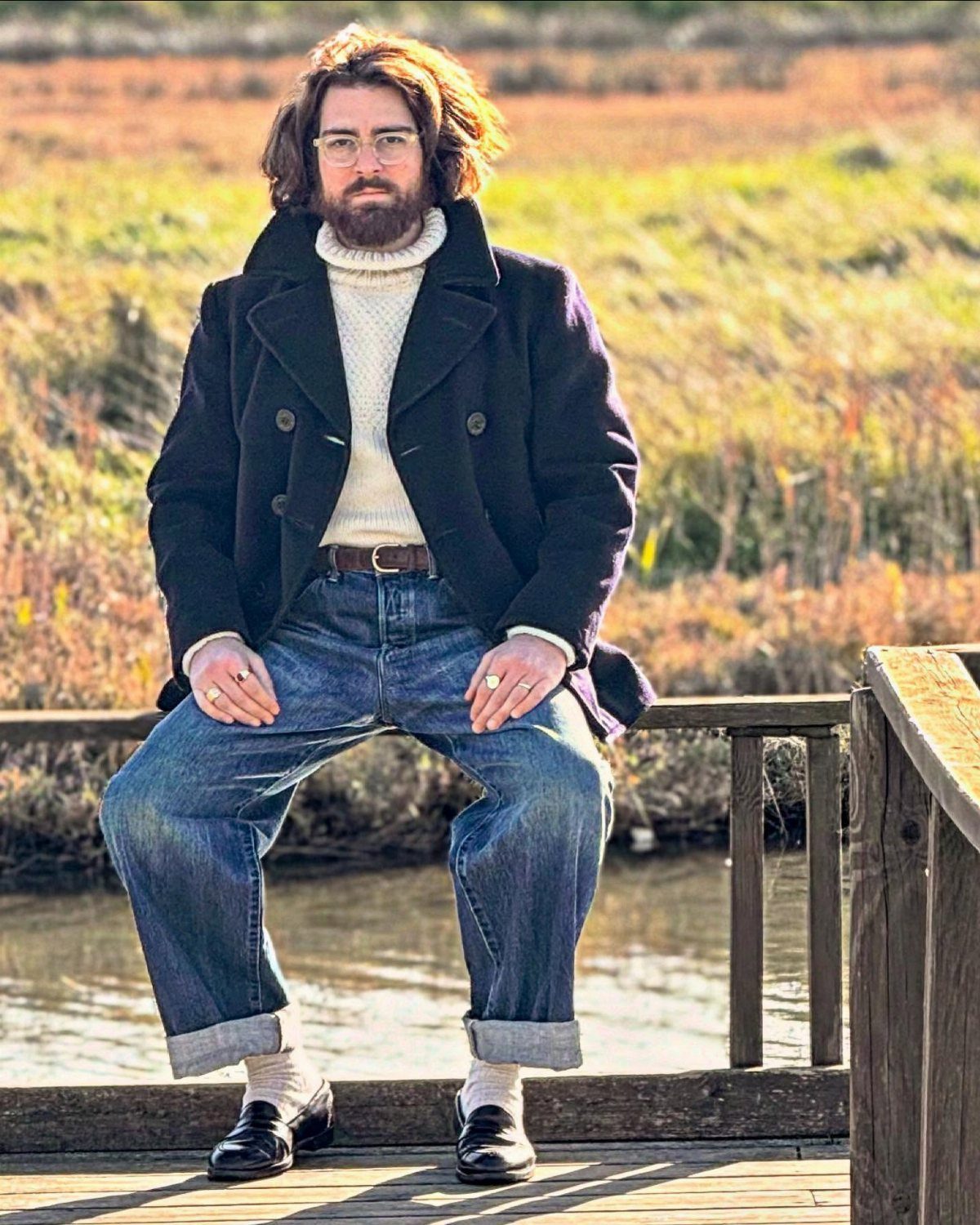
Navy over blue denim is the combination I would hand to anyone who owns one pea coat and wants it to go with the jeans already in the closet.
The 2 blues sit close enough to agree, and a white turtleneck breaks them up.
Cuffing the jeans once and wearing loafers keeps the look sharp rather than rugged.
Choose a darker wash for denim so it doesn’t compete with the navy. Faded light jeans work too, but they make the coat look dressier than the rest.
4. Pea Coat with Black Trousers
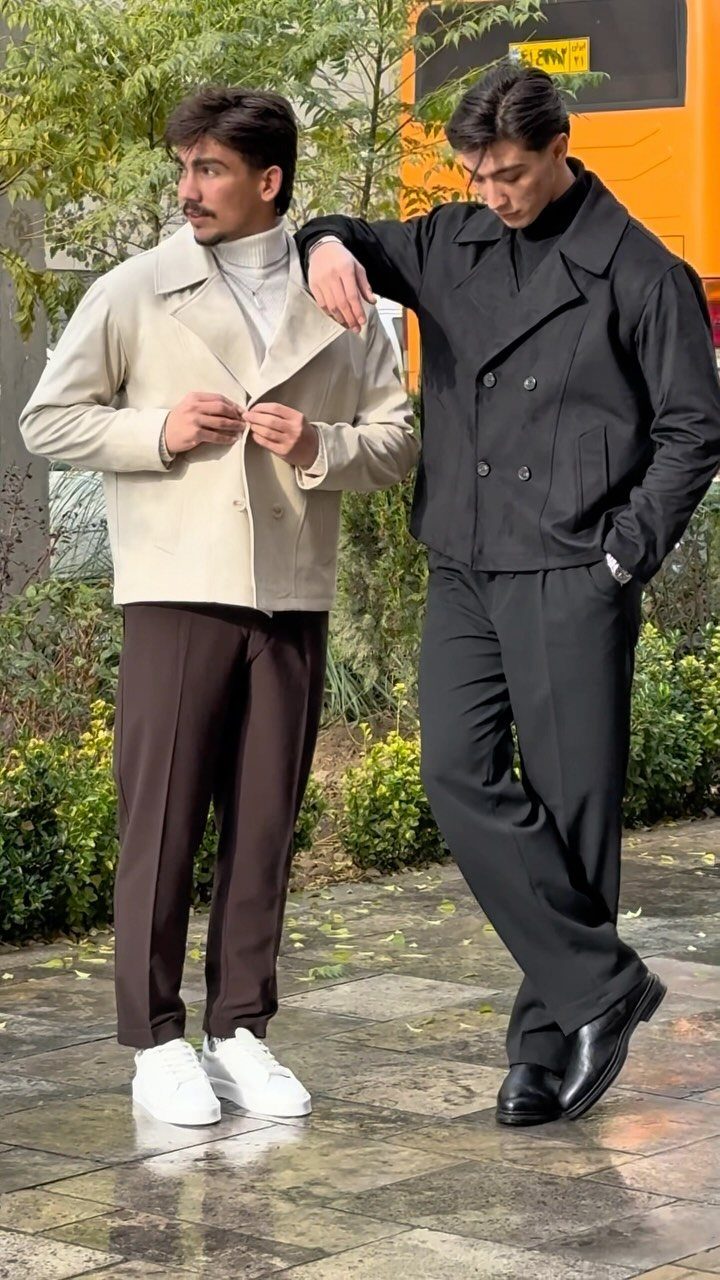
All black is the most forgiving way to wear a pea coat at night or at work: coat, turtleneck and trousers in one color, no matching required.
The risk is flatness, since 3 blacks in different fabrics can look mismatched in daylight.
Vary the texture instead of the shade.
A wool coat, a fine-knit turtleneck and smooth trousers give the outfit depth. Black boots or sleek leather sneakers close it out, and a single silver watch is enough.
5. Brown Pea Coat Outfit Grid
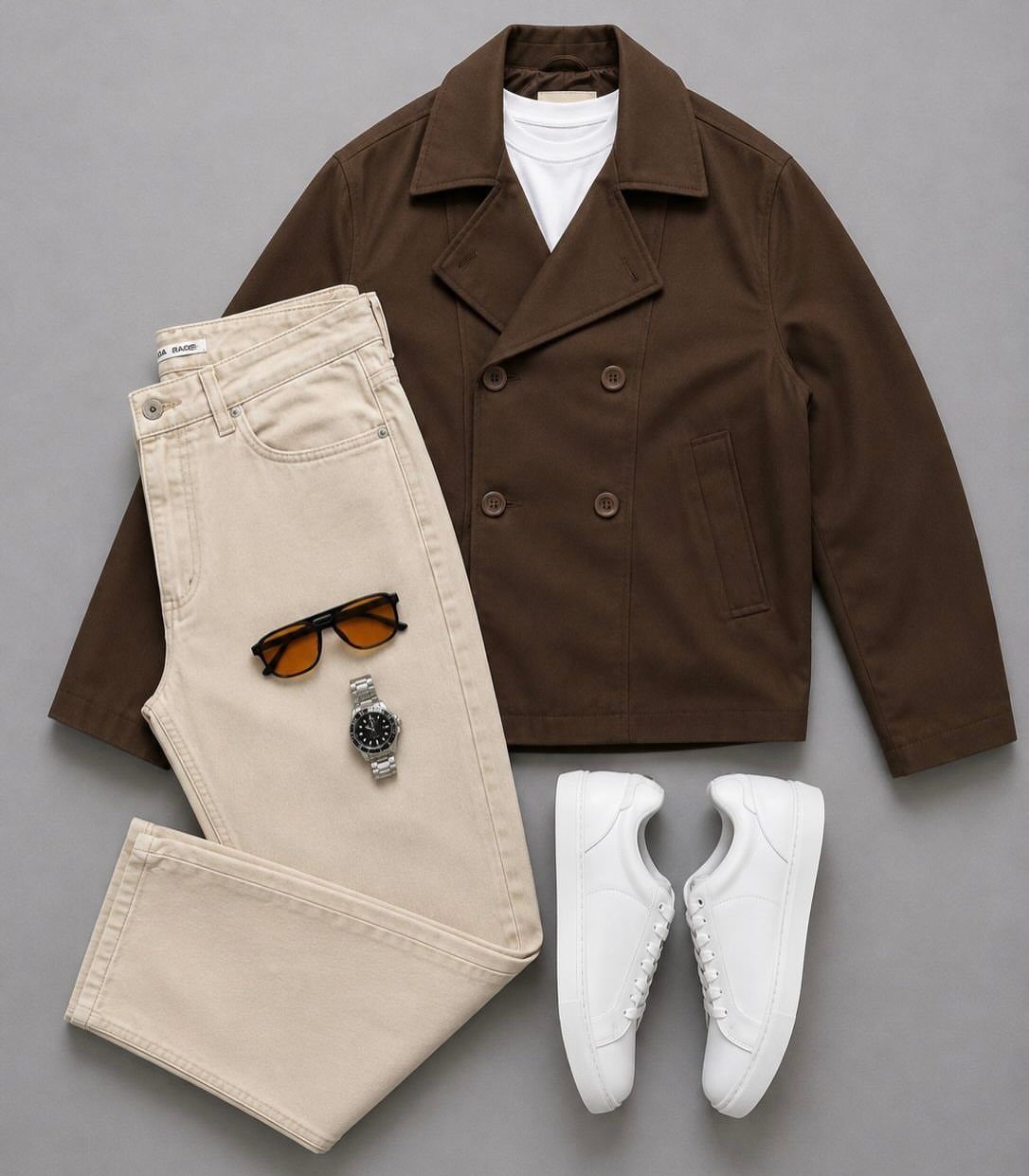
Brown makes a pea coat feel warmer and less formal than navy, and cream jeans keep that warmth going.
White sneakers and a white tee underneath hold the palette to 3 tones, which is why this grid is easy to copy.
Sunglasses and a watch are the only extras, and that restraint is right. One caution: cream jeans show dirt fast, so I would save this for dry days and wear the outfit with care.
6. Pea Coat with White Trousers
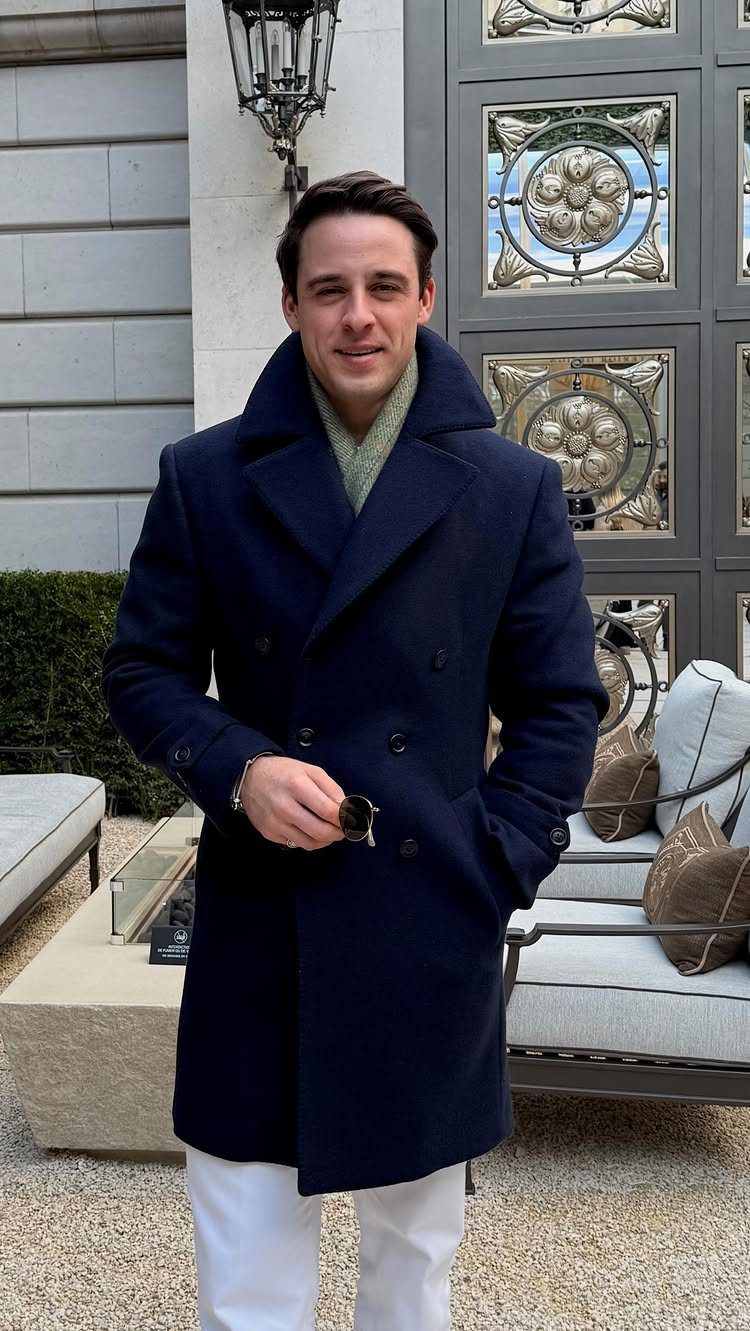
White trousers under a navy pea coat make the coat the darkest thing in the outfit, so it looks deliberate rather than heavy. A light green scarf adds a soft second color without clashing.
This is a mild-day outfit with some risk attached: white shows every scuff and stain, and it can turn see-through in thin fabric.
Choose a thicker cotton and wear dark or white shoes. If the look feels too bold, a pale grey scarf is the safer swap.
7. Pea Coat Over a Hoodie
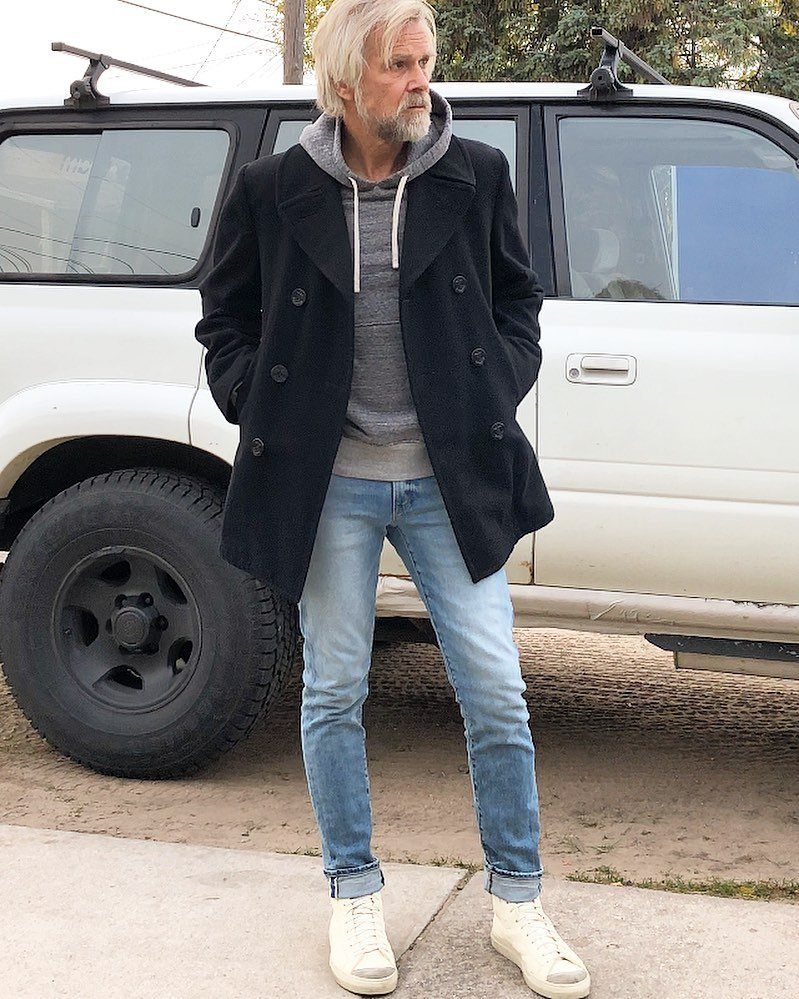
A black pea coat over a grey hoodie is the easiest way to dress a coat down, and it works because the coat does the sharp work while the hoodie stays soft.
Light wash jeans and white sneakers keep the whole outfit relaxed.
Pick a hoodie in a plain, thin knit with no big graphics, so the collar of the coat sits flat over the hood.
I would leave the hood tucked inside the coat rather than piled on top of it. It’s a good errand-day outfit for a man who wants warmth without looking like he gave up.
8. Pea Coat with White Turtleneck
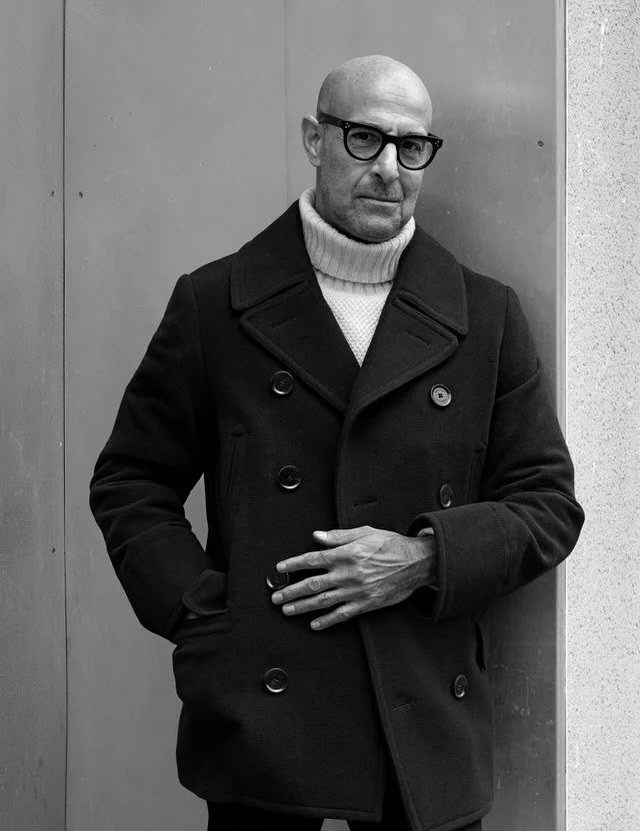
A crisp white turtleneck under a dark double-breasted pea coat gives you a clean, high-contrast line from chin to chest. The coat’s 2 rows of buttons carry the formality, so the knit can stay simple.
Choose a fine, smooth knit that sits close to the neck without bunching, since a thick roll fights the coat’s collar. Keep the rest dark and quiet: trousers in one shade, plain leather shoes.
For me, this is the sharpest way to wear a pea coat without a tie, and it asks for nothing else.
Pea Coat History and Origin
Every feature of a pea coat started as a fix for a problem at sea.
Heavy wool kept out water, wind and salt spray, held its warmth when damp, and was slow to catch fire. The indigo color hid grime and held up against fading.
The double-breasted front did more than block the chill. Extra cloth padded sailors against rubbing from rigging, and because the double row of buttons sat wide apart, a line could run up the center of the chest without catching.
The slash pockets kept cold hands close, and the hip-length cut left room to move on deck.
The tall collar and broad lapels flip up and button across the throat, which is still the best use of them on a windy corner.
The exact origin is murky. The most common story traces an early version to 16th century Dutch sailors, and the name is thought to come from a Dutch word, pijjekker.
In more modern times, peacoats have been adopted by civilians and remain a popular option season after season. It’s a true classic and few clothing items have remained as on-trend as the peacoat for hundreds of years.
Choosing the Right Pea Coat
Start with the fabric. Thick wool will outlast most coats by decades, and it is safer too: it resists ignition, stops burning once the flame is gone, and never melts into skin like synthetic fabric can.
I would buy 100% wool, or a blend with no more than 20% synthetic fiber.
For fit, try the coat on over what you actually wear under it, such as a sweater, and never over a suit jacket or blazer.
This coat isn’t built for that layering, and it will pull and bunch. The shoulder seams should sit right at the edge of your shoulders.
Check the hem too. A pea coat is meant to be short, ending around the hip, and that cut is what gives you easy movement.
Look inside before you pay: clean stitching, firmly sewn buttons and a lining that lies flat.
Who Should Wear a Pea Coat
Slim to average builds and younger men get the most out of a pea coat, since the cut is easiest to wear there.
The short, close cut and the double row of buttons add visual bulk across the chest, and that is where it can go wrong.
On a stocky frame, the coat can make you look wider and shorter.
On a very thin frame, a poorly sized one can make you look thinner. Either way, the fix starts with fit, not with giving up on the coat.
If you’re a larger man, I would try a single-breasted version or a longer overcoat before settling on a pea coat. Those lines run more vertically and sit less boxy.
If you’re slim, pick wool with some weight so the coat holds a shape instead of hanging.
Frequently Asked Questions
What do you wear with a pea coat?
Jeans, chinos or dress trousers all work, with a knit or shirt underneath.
Charcoal jeans, a white or light grey sweater and dark leather boots under a navy or black pea coat make the simplest outfit, because no single piece pulls attention from the others.
For a sharper look with no tie, I’d pair a thin white turtleneck with a dark double-breasted coat.
Are pea coats for men still in style?
Yes. The coat has stayed a staple because its short cut, double-breasted front and thick wool are practical as well as good-looking.
It also dresses up or down: over a hoodie it looks relaxed, and over a turtleneck and trousers it looks sharp.