Fit decides which of these 1950s looks works for you: a loose Hawaiian shirt suits a man who carries weight at the middle, while high waisted wide leg trousers reward a man who wants the waistband at his natural waist and longer-looking legs.
The list runs from two-tone shoes to the Hollywood influence section, so some ideas take one easy swap and others need a whole outfit. Start with the piece that matches your build, then add the rest.
1. Two-tone Shoes
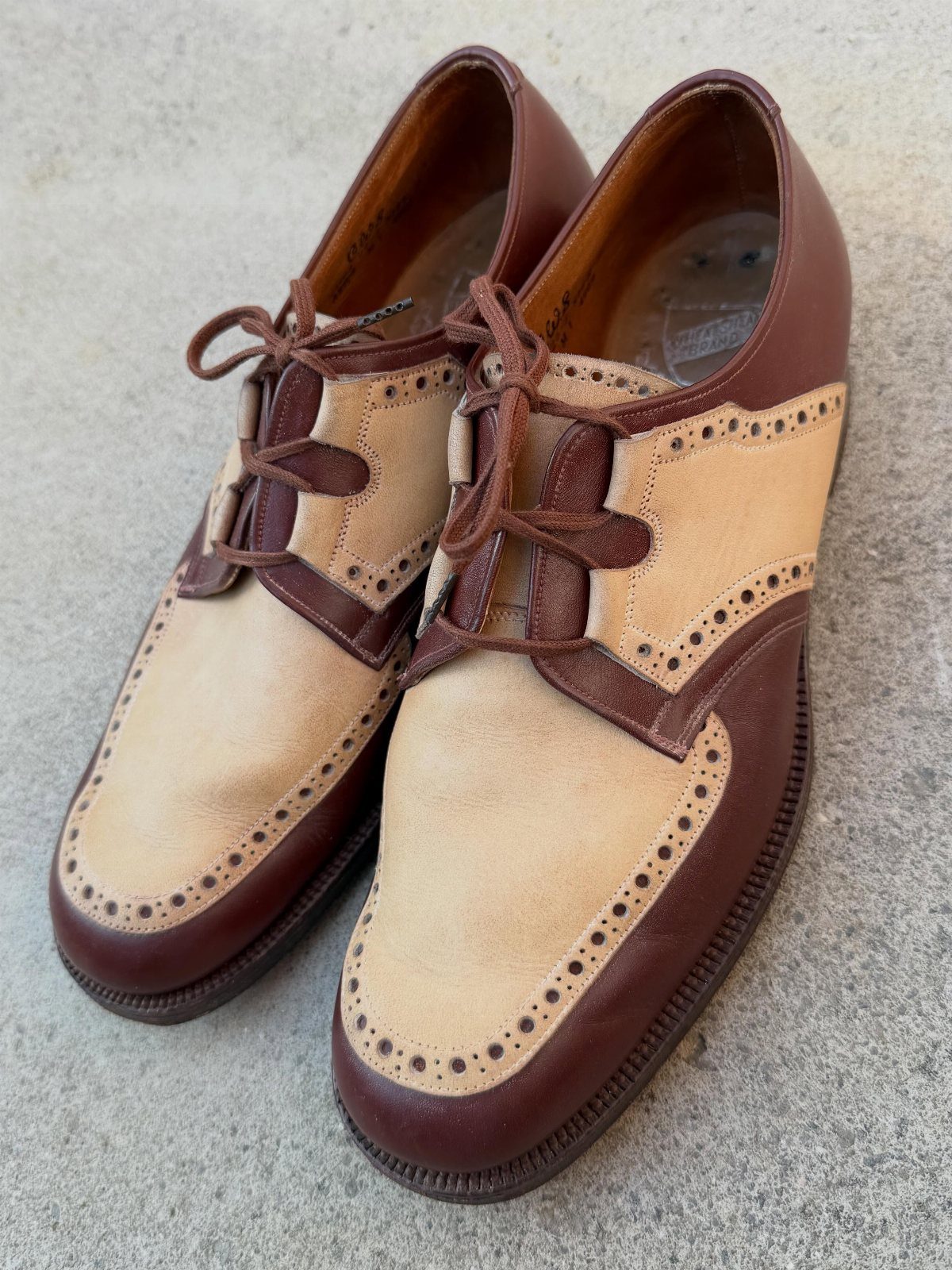
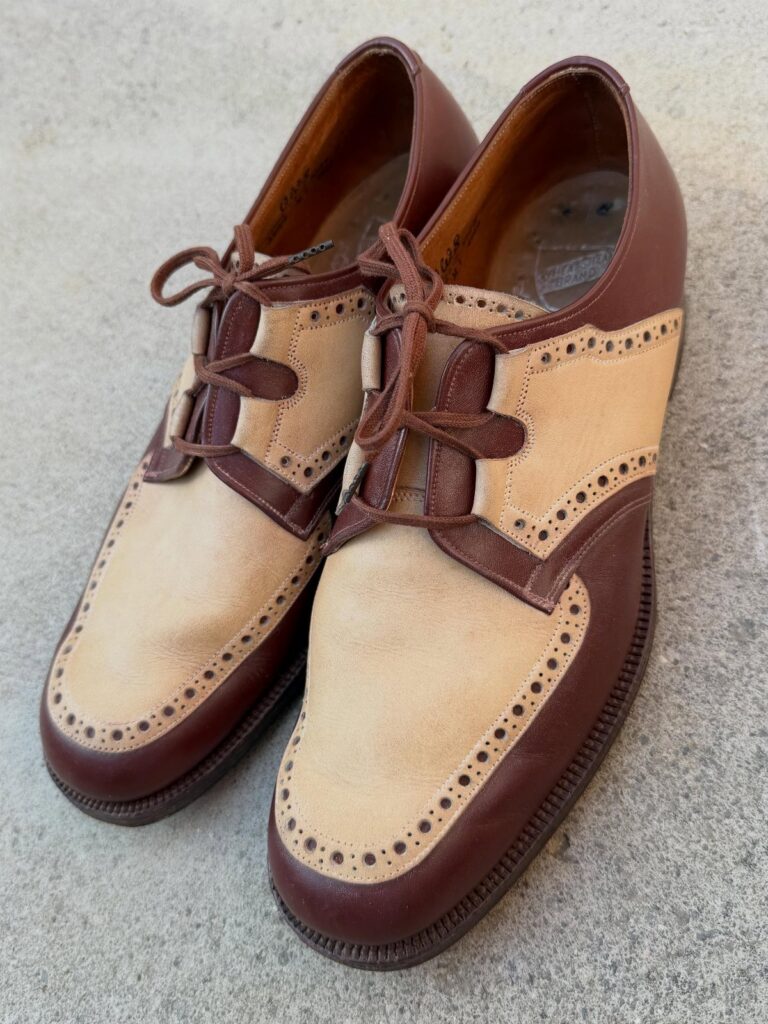
Brown leather paired with tan suede is the combination to look for, and the wingtip derby in the second pair shows why. The suede softens a shoe that would otherwise read as formal.
Pair them with khakis or dark denim, so the shoes are the loudest thing in the outfit. Keep the rest of your clothes quiet: a solid shirt, a plain belt in the darker brown of the shoe.
I would pick the derby over a polished oxford here. The open lacing looks more relaxed, which suits a casual wardrobe.
2. Men’s 1950s Western Wear
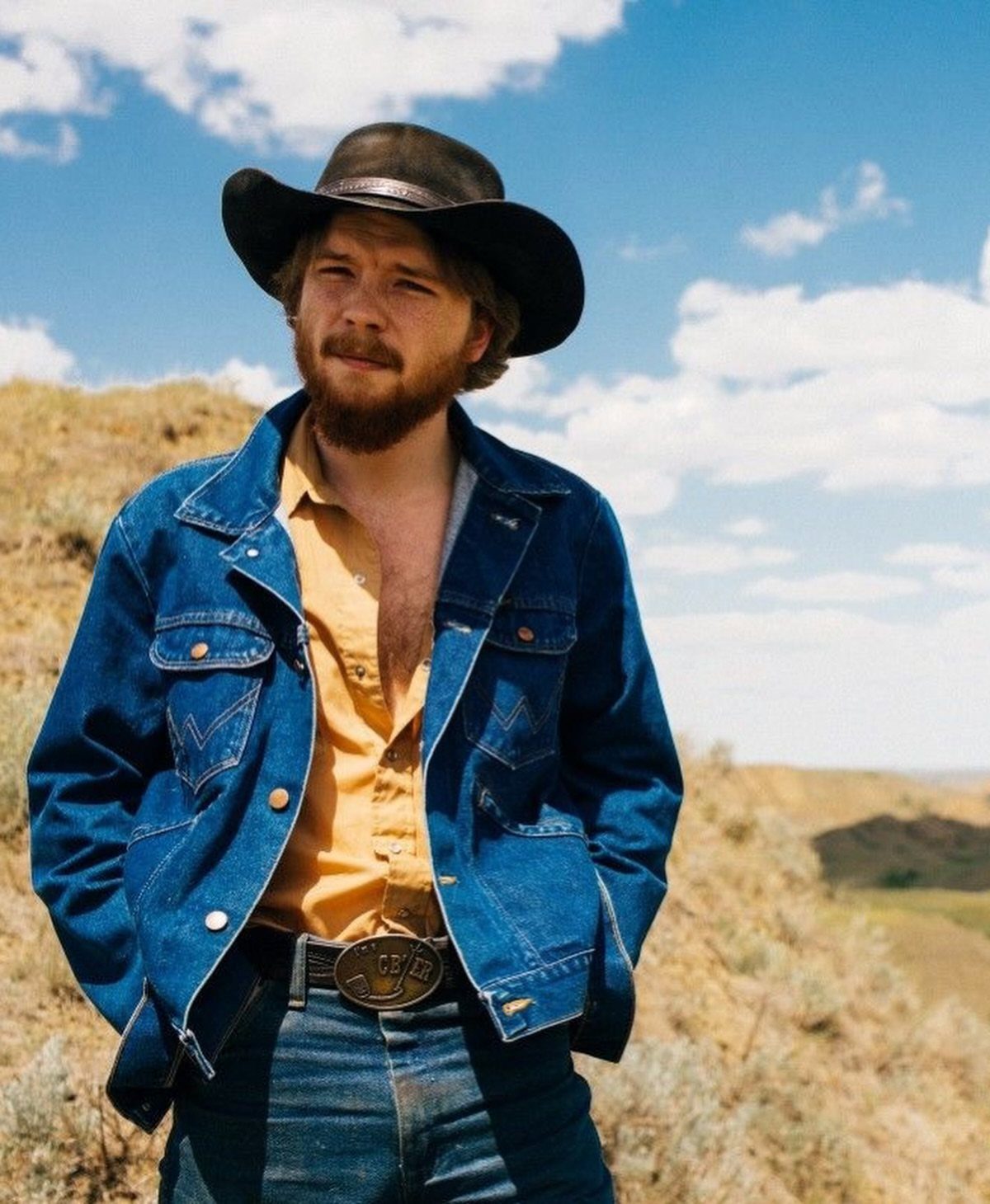
A denim jacket worn open over a bright shirt does most of the work in western style. Add a black cowboy hat and a belt buckle, and the outfit is finished.
Pick one statement piece rather than three.
If the hat is bold, keep the jeans plain and the buckle modest. Yellow shirts pop against blue denim, but a white or cream shirt is easier if you want less attention.
Buckles are the cheapest way into the look, and they work with any pair of jeans you own.
3. Sport Coats and Slacks
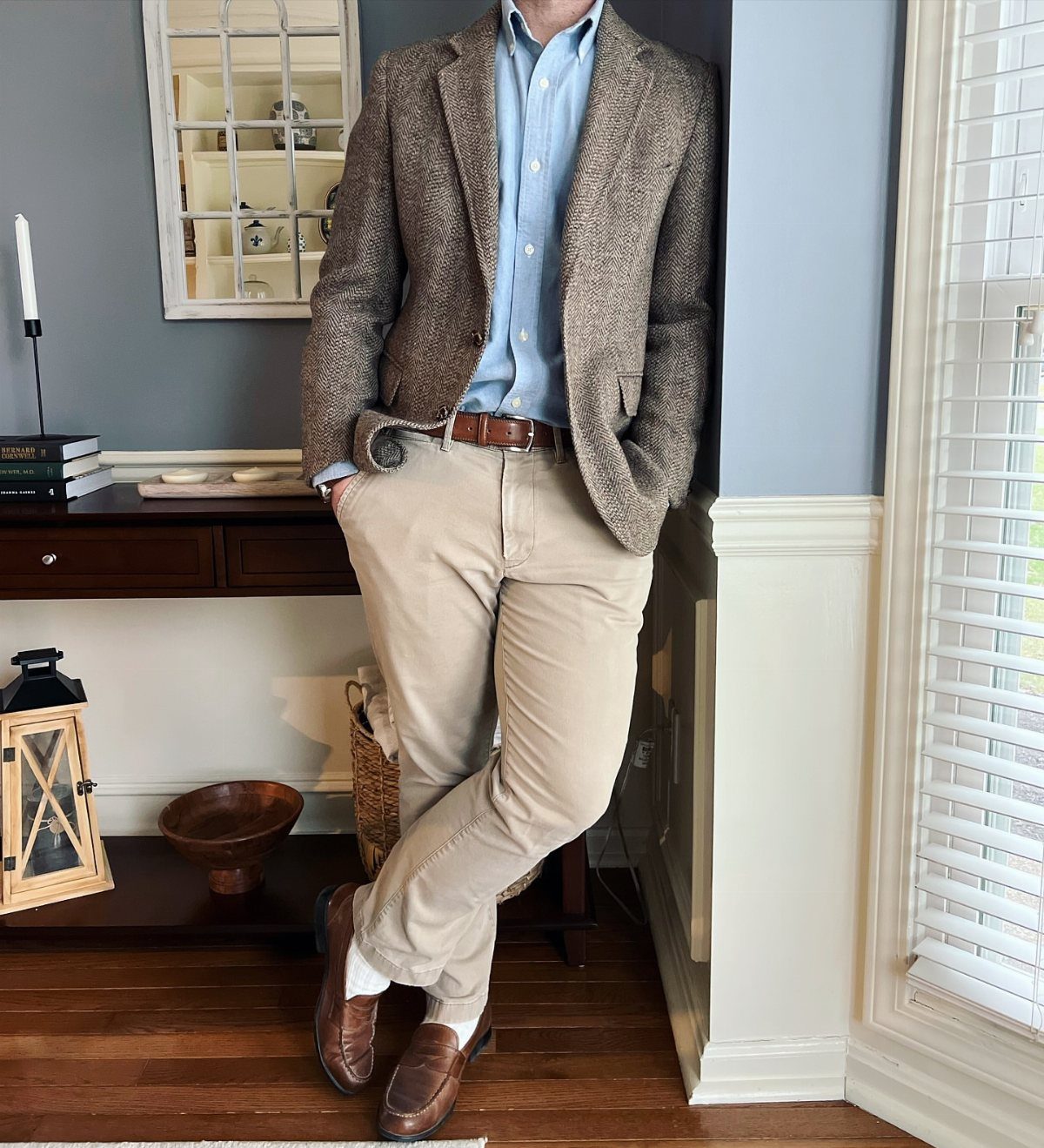
Light blue shirt, khaki slacks, brown tweed jacket: 3 pieces, and none of them fight each other. That is why this outfit is easy for a man who wants to look put together without effort.
Herringbone already adds texture, so a plain shirt works best underneath.
If brown feels dull, swap in a navy or olive jacket and leave the rest alone. Slacks should sit clean on the shoe without bunching.
4. Hawaiian Shirts
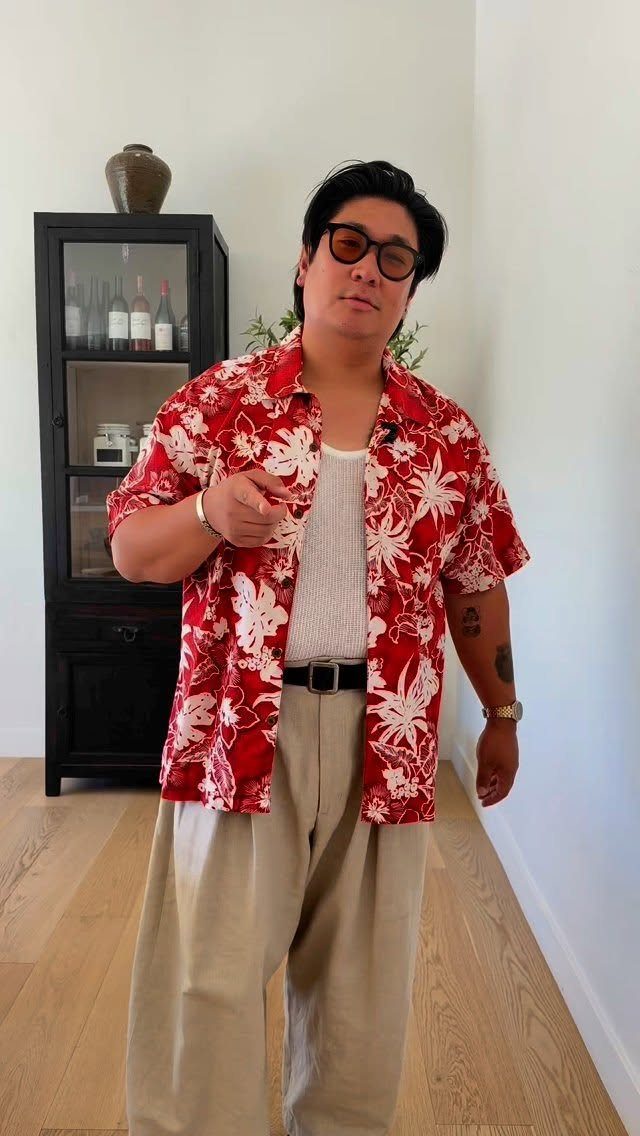
Leave the buttons open and put a white ribbed tank underneath: that single choice turns a loud floral shirt into something wearable. Red and white keeps the pattern from shouting.
Tan, wide-legged trousers are the right partner, since a calm bottom half balances a busy top. Skip the matching shorts and the extra accessories.
A camp collar lies flat when open, which helps. Choose a shirt that hangs loose rather than clings, especially if you carry a little weight at the middle.
5. Bowling Shirts
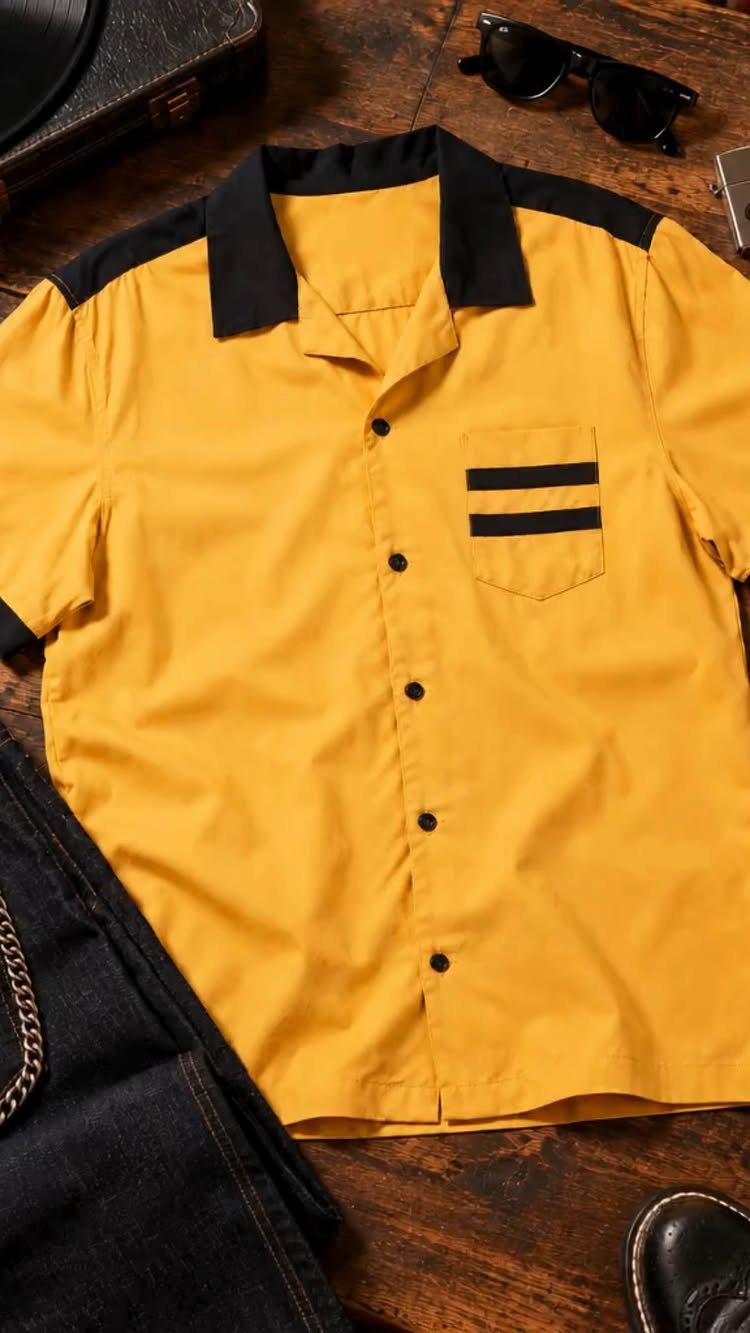
Colorblock panels make a bowling shirt look different from any other short-sleeve button-up. A contrast collar and a striped pocket on a solid color give a bowling shirt a clear identity without a loud print.
Dark denim is the obvious partner, and I would stop there. Wear it untucked, with the hem sitting around the belt line, so the shirt is the one bold piece.
Pick a color pairing you would wear anyway. Yellow and black is bold; a darker two-color version is safer if this is your first one.
6. High Waisted Wide Leg Trousers
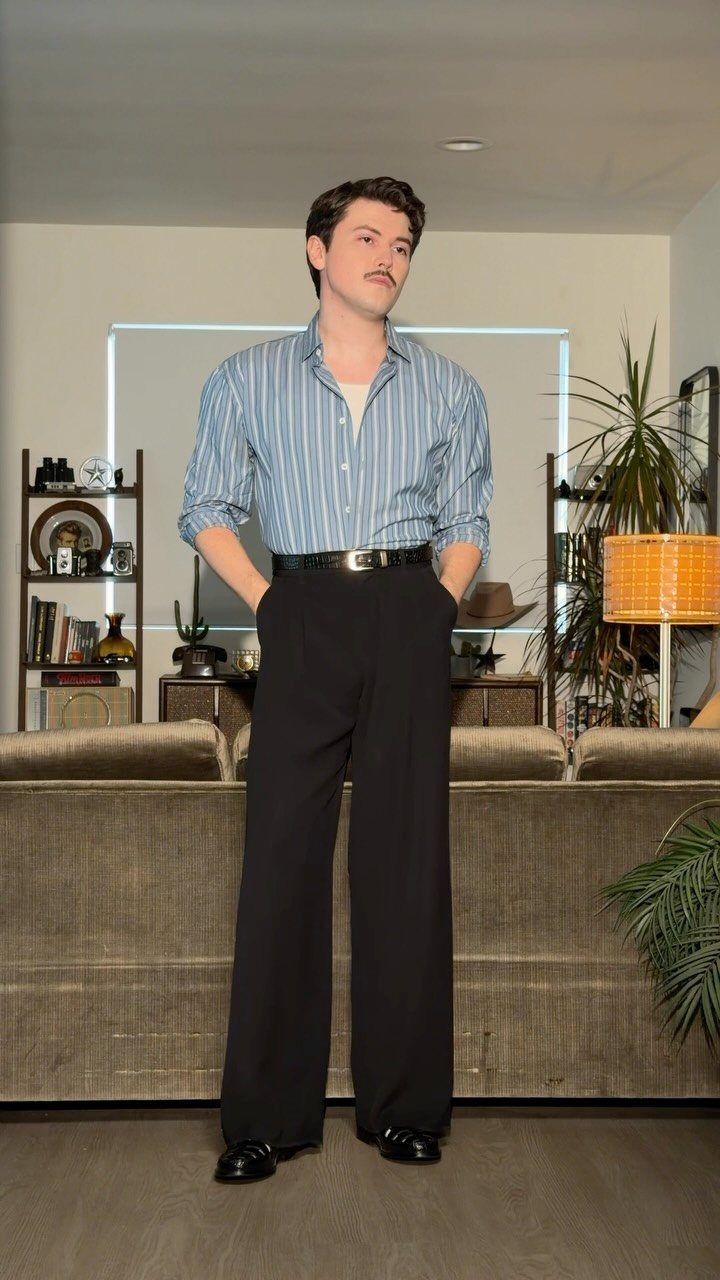
Tucking a striped shirt into high-waisted trousers puts the waistband where it belongs, at your natural waist, and it lengthens your legs. Black wide-leg trousers with a belt keep the whole look sharp.
The shirt does the talking. A blue stripe against black reads cleanly, and a jacket on top is optional.
Fit decides everything.
The trouser should hang straight from the hip, with enough room in the leg that the fabric moves when you walk. A good hem sits just over the shoe.
7. Plaid Jacket and Wide Denim
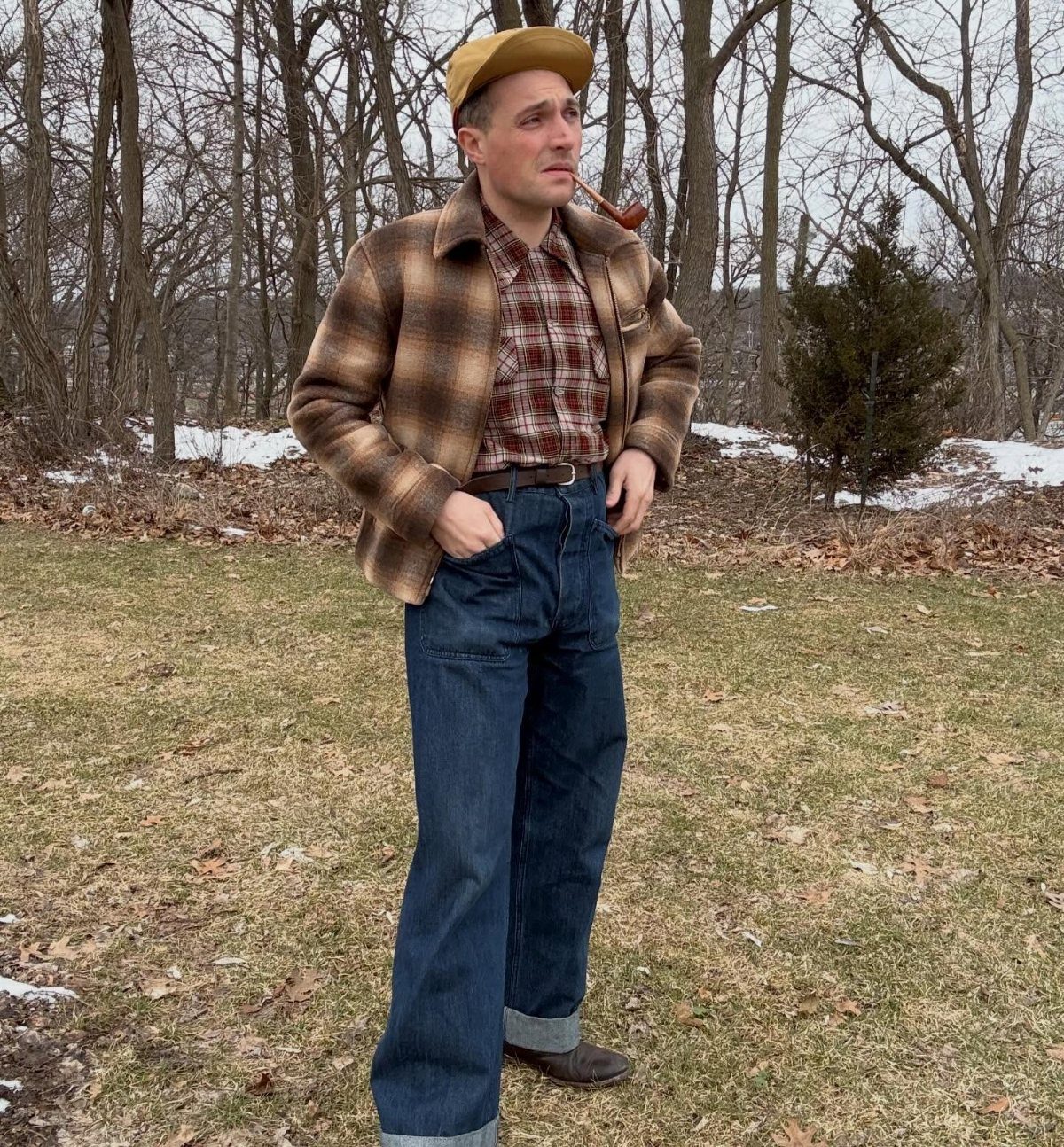
Brown plaid on top and dark, wide-leg denim below make a pairing that needs very little else. The cuffed hem keeps the wide leg from swallowing the shoe.
Let the jacket carry the pattern, and choose a plain, quiet shirt underneath. A checked shirt underneath works only if its scale is clearly smaller than the jacket’s.
A flat cap finishes it, and I would pick one in a solid color so the plaid stays the point.
8. Cardigan with Wide Trousers
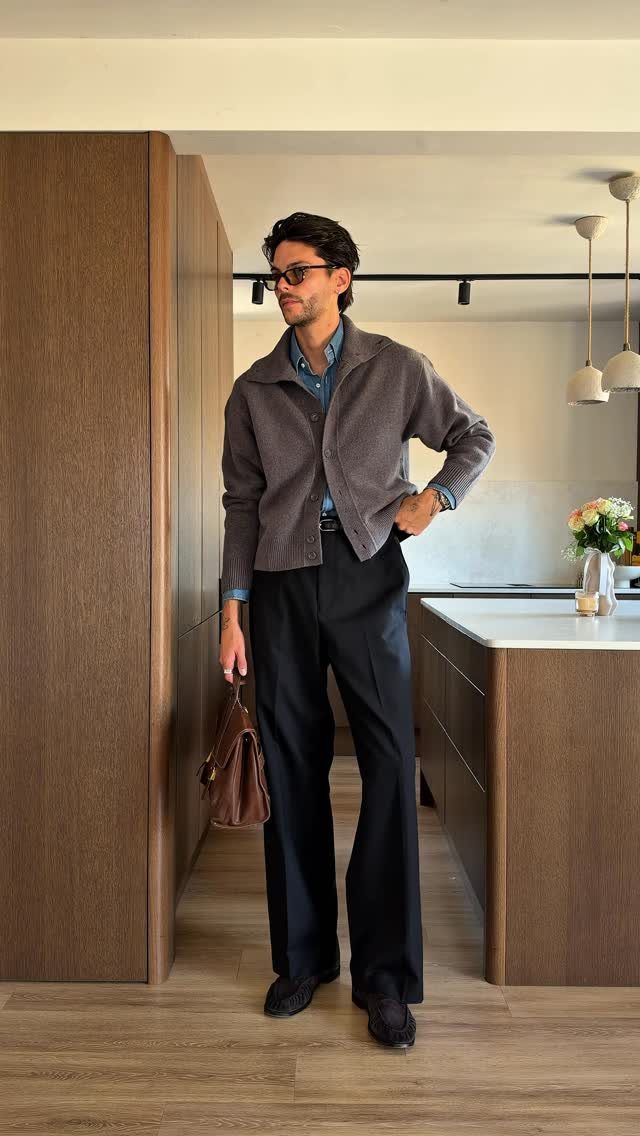
Grey knit over a blue collared shirt is a quiet pairing, and dark wide-leg trousers give it some weight at the bottom. Buttoned cardigans like this one read tidier than a pullover, so the outfit works for a normal workday.
Button it fully or leave the bottom button open; either way the shirt collar should sit out over the knit.
I like a leather bag with it. Wide trousers are roomy, so pick a pair that hangs straight rather than flaring.
9. Shearling Leather Bomber Jacket
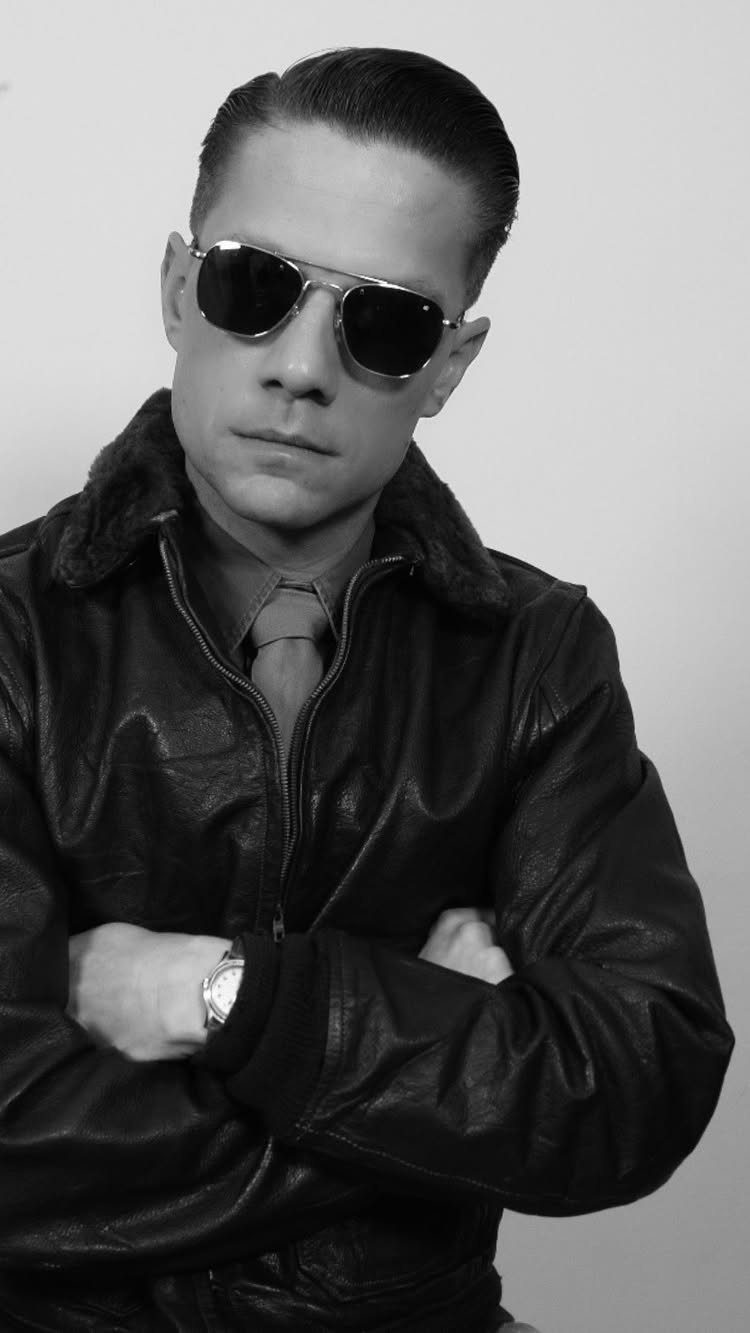
A dark leather flight jacket with a shearling collar brings warmth to the neck, and the collar frames a shirt and tie better than you would expect. The tie keeps a rugged jacket from looking costume-like.
A simple, dark shirt and tie let the collar get the attention.
This is the most dressed-up way I know to wear a bomber.
10. Tweed Blazer with Denim Shirt
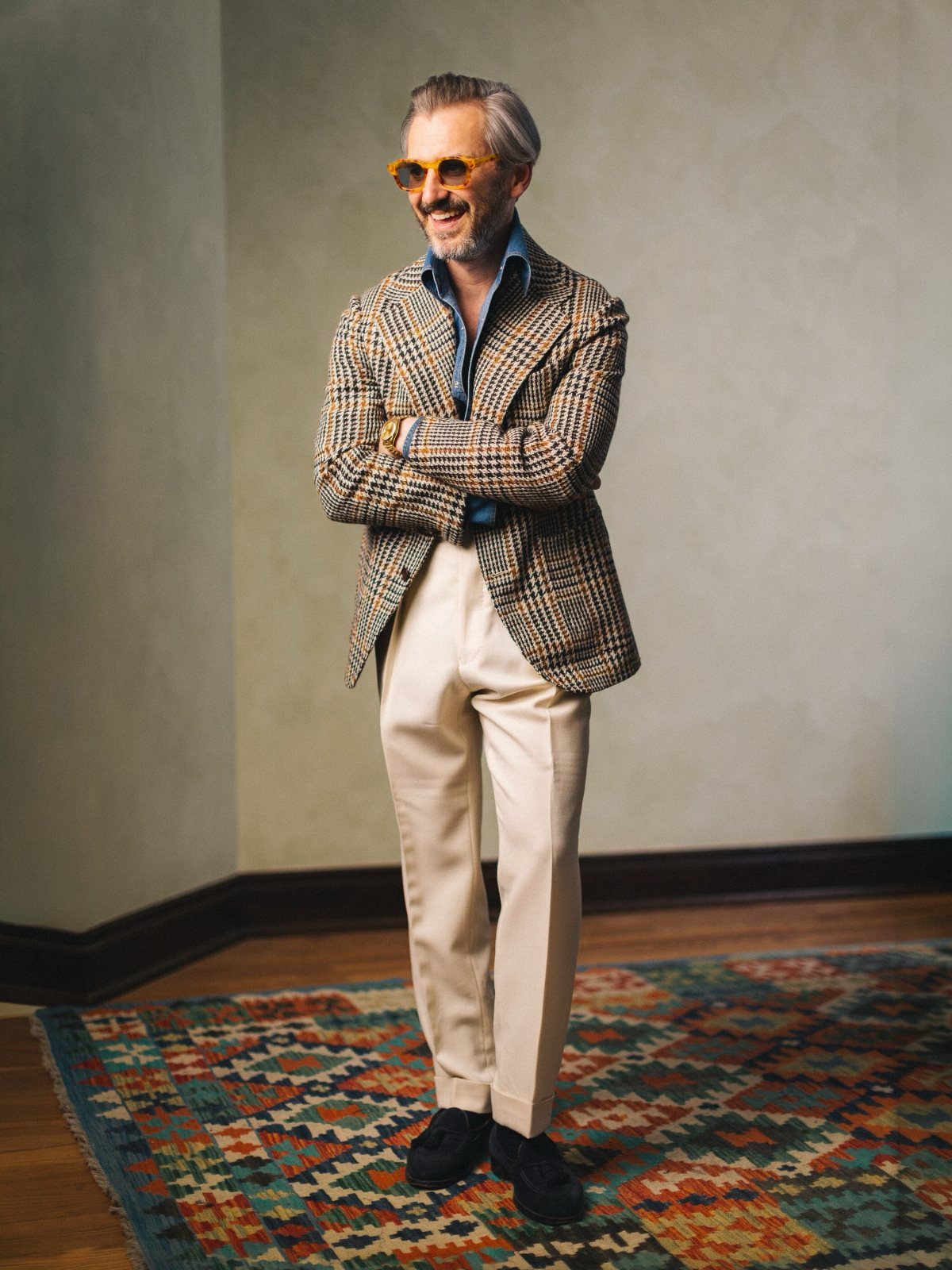
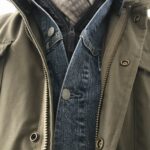
Wearing a denim shirt under a patterned brown tweed blazer is the easiest way I know to make tweed casual. The denim takes the formality out of the jacket, and cream trousers keep the lower half light.
Leave the denim shirt open at the collar rather than adding a tie. Choose a wash that is clearly different from the jacket’s brown, so the two do not blur.
Tweed already has pattern, so skip a patterned shirt.
11. Double Denim Workwear Look
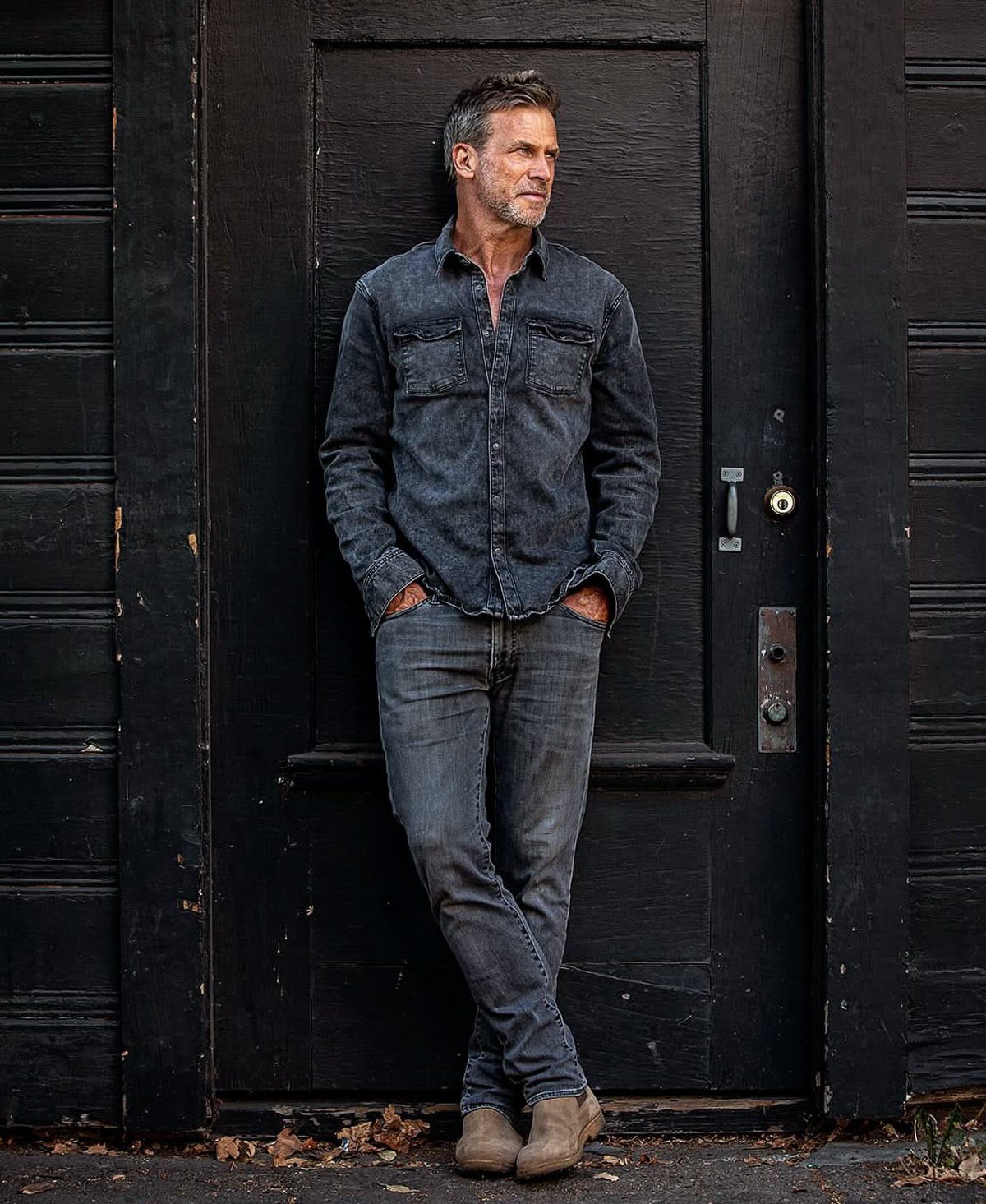
Matching dark grey denim on top and bottom reads as a single deliberate outfit rather than 2 pieces that nearly match. Buying the shirt and jeans in the same wash is what makes it work.
Tan suede boots break up all that grey, and I would not swap them for black. A warm shoe against a cool denim keeps the look from going flat.
Leave the shirt untucked or tuck it in; both work, as long as the jeans fit straight through the leg.
Influence of Hollywood
Fit is the lesson worth borrowing from Cary Grant.
Look at the suits Cary Grant wears in those Hitchcock pictures: soft, natural shoulders and a easy, clean drape, with nothing flashy to point at. The fit does all the work.
Frank Sinatra shows the other half: slim lapels, a dark tie, and a pocket square placed with care, all worn loosely enough to look easy. Copy that attitude before you copy the pieces.
For rebel style, James Dean’s red windbreaker over a white t-shirt and Marlon Brando’s leather motorcycle jacket are the 2 references.
Both work because they look like clothes a person actually wore, so keep them simple and skip the costume details.
Workplace Attire
Conservative was the rule for 1950s offices, and rank set the budget, so the bigger the job, the pricier the suit on the hanger.
You do not have to spend that way today, but the instinct to dress a step above your role still helps.
When the jacket came off, a sweater or vest took its place. A few workplaces let men wear a knit sweater over a shirt and tie, which was about as close to casual Friday as the decade got.
That combination still works. Pick a fine-gauge knit in a solid color, keep the tie plain, and you get a relaxed office outfit that stays neat.
Seasonal Attire
Seasonal dressing in the 1950s followed simple rules, and men changed less from season to season than women did. In warm weather, a suit in a lighter-weight fabric kept the look formal without the heat.
For cold or rainy days, a trench coat was a classic choice. Structured topcoats and wool overcoats were also standard, and their clean, tailored shape echoed the suit underneath.
I would follow that logic: choose a coat that fits over your jacket without hiding it. Shorter casual jackets, including bombers, were the younger man’s alternative, so pick based on how dressed up your day is.
1950’s bespoke coats were generally not cut narrowly by today’s standards, but unlike many suits from the prior decade, they featured a noticeable waistline. Shoulders remained slightly padded and wide.
Frequently Asked Questions
What kind of clothing did men wear in the 1950s?
Men wore structured wool suits for work and social occasions, and relaxed pieces off the clock: denim jeans, white t-shirts, leather jackets and work shirts.
Button-down oxford shirts, khakis and loafers made up the Ivy League uniform, and that trio sat comfortably between a suit and weekend clothes. Tweed was a favorite for sport coats, and cotton handled shirts and trousers.
What do I wear to a 1950s themed party?
Pick one or two clear 1950s pieces and keep the rest modern, because a full vintage outfit can look like a costume.
A denim jacket over a bright shirt, a leather motorcycle jacket over a white t-shirt, or a bowling shirt with dark denim all read right. Add a pocket square or a knit tie if you want a period touch.
How do I wear a Hawaiian shirt without it looking too loud?
Leave it unbuttoned over a white ribbed tank and pair it with tan, wide-legged trousers.
The plain tank and calm bottom half balance the busy print, and a red and white pattern stays quieter than most. Choose a camp collar that lies flat and a loose cut that hangs rather than clings.
How do I make a tweed blazer look casual?
Under a tweed blazer, a denim shirt with the collar open and no tie is the easiest way to relax it.
Keep the denim wash visibly lighter or darker than the brown of the jacket, and leave patterned shirts in the closet, because the tweed already supplies the texture and pattern.