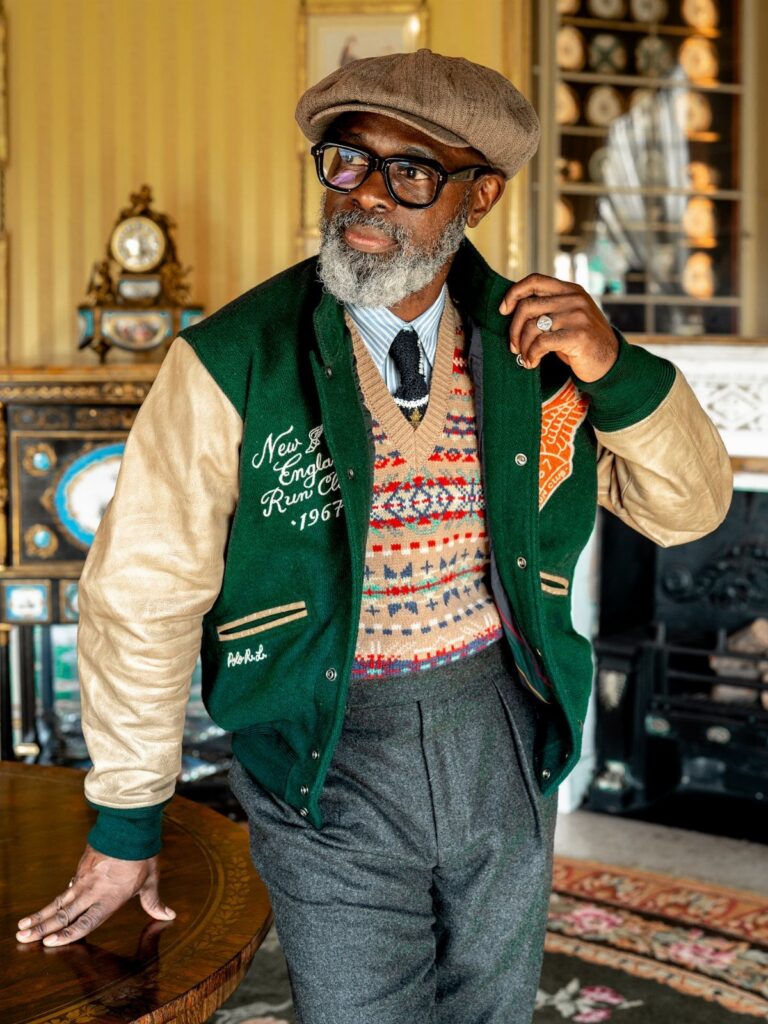
The 12 styles here run from a quiet black tee with brown trousers to a white cowboy hat, a green varsity jacket lettered "New England Run Club 1967" and a soccer jersey worn as a top.
The one that is yours depends on where you spend a normal week: an office, a campus, a weekend with no plans.
Every style on this list suits a certain kind of day, from Business Casual at the office to Streetwear on the weekend, so choose the day first and the style follows.
Minimalist Style and Smart Casual need little more than good fit and a neutral palette, while Western Cowboy Style and Streetwear lean on one loud piece, so the real difference is how much effort you want to spend each morning.
1. Smart Casual
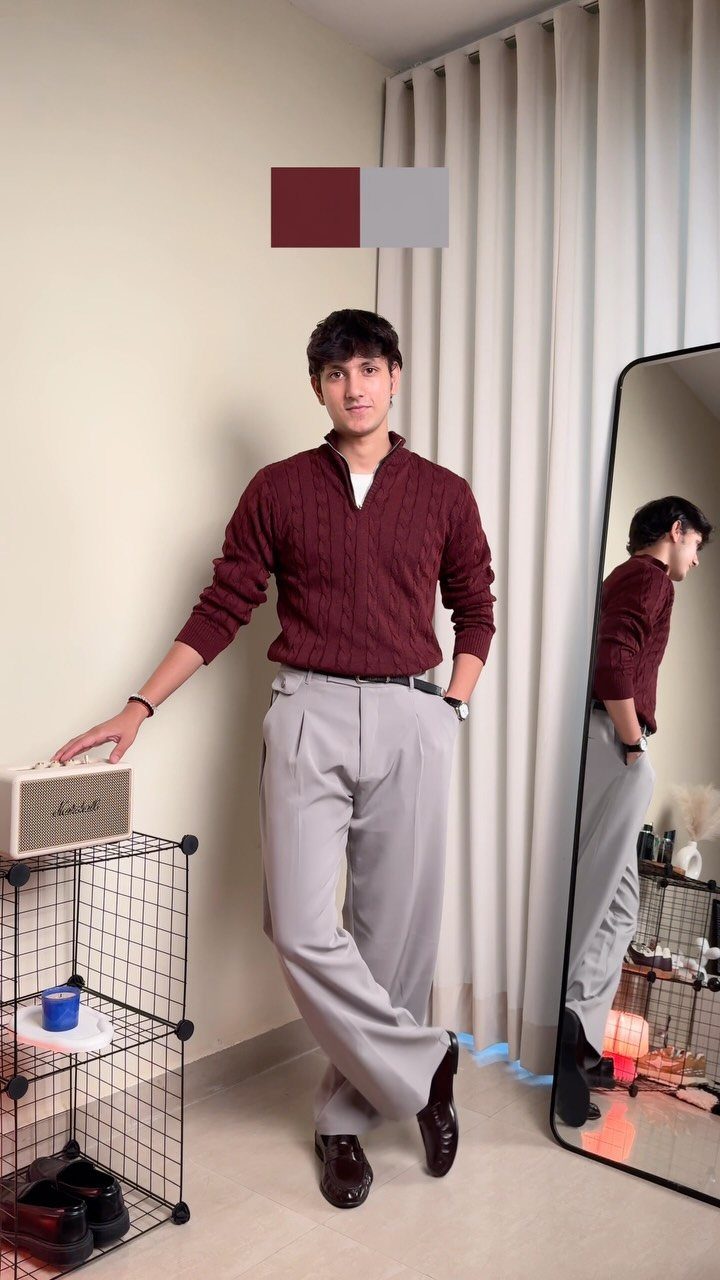
Burgundy knitwear over grey trousers is a safe pairing, and the loafers keep it from looking like a sweater and jeans afterthought. A quarter-zip cable-knit sits between a dress shirt and a hoodie, which is exactly where this style lives.
Keep the trousers wide but clean, and let the sweater carry the color. Grey is quiet enough that one saturated piece reads as intentional.
Dress loafers are my pick for the feet. Sneakers would work, but they pull the look toward casual and lose the polish.
2. Minimalist Style
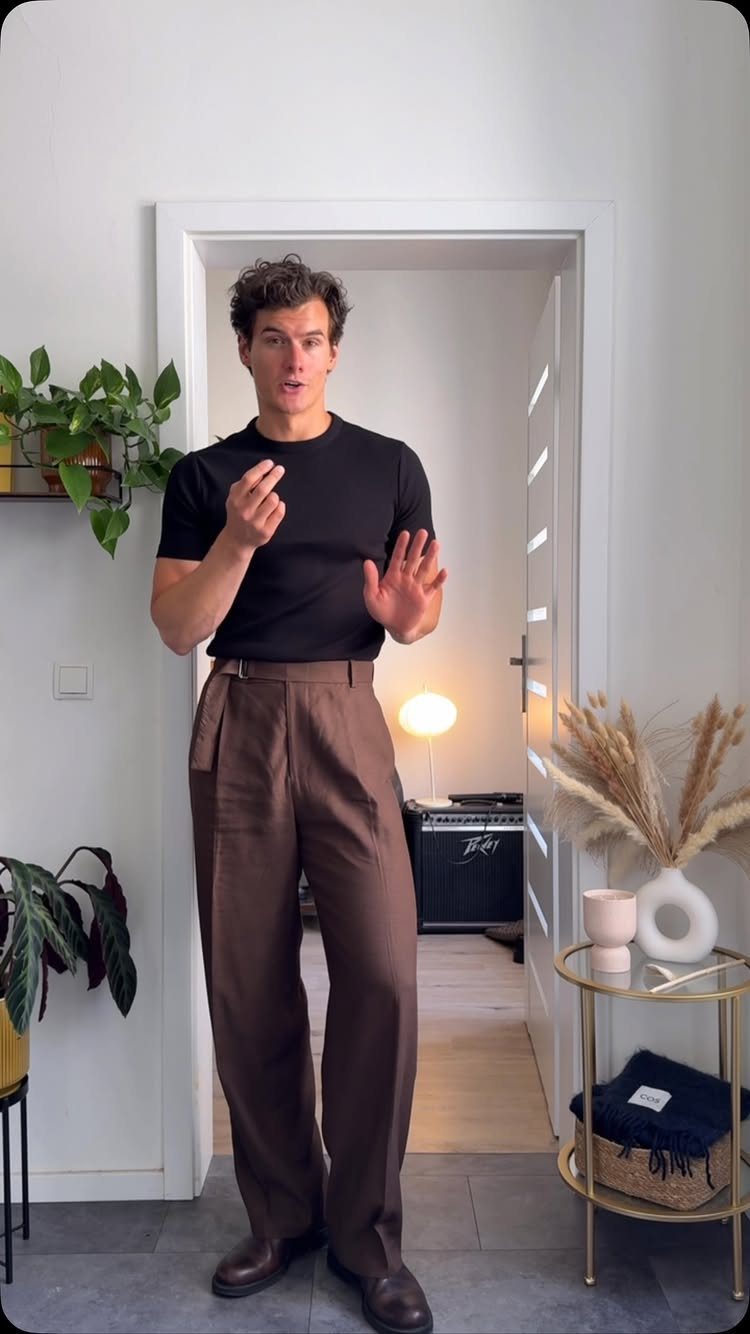
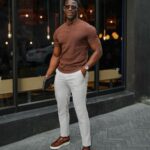
3 pieces do the work here: a fitted black tee, high-waisted brown trousers, and dark dress shoes. Nothing has a logo, a pattern, or a loud texture, so the cut of each piece is all you see.
That makes fit the whole game. A tee that skims the chest and a trouser rise that sits at the waist give a long, clean line, and wide legs add drape without fuss.
I like black against brown for a low-contrast pairing that still looks deliberate. Keep the shoes darker than the trousers.
3. Business Casual
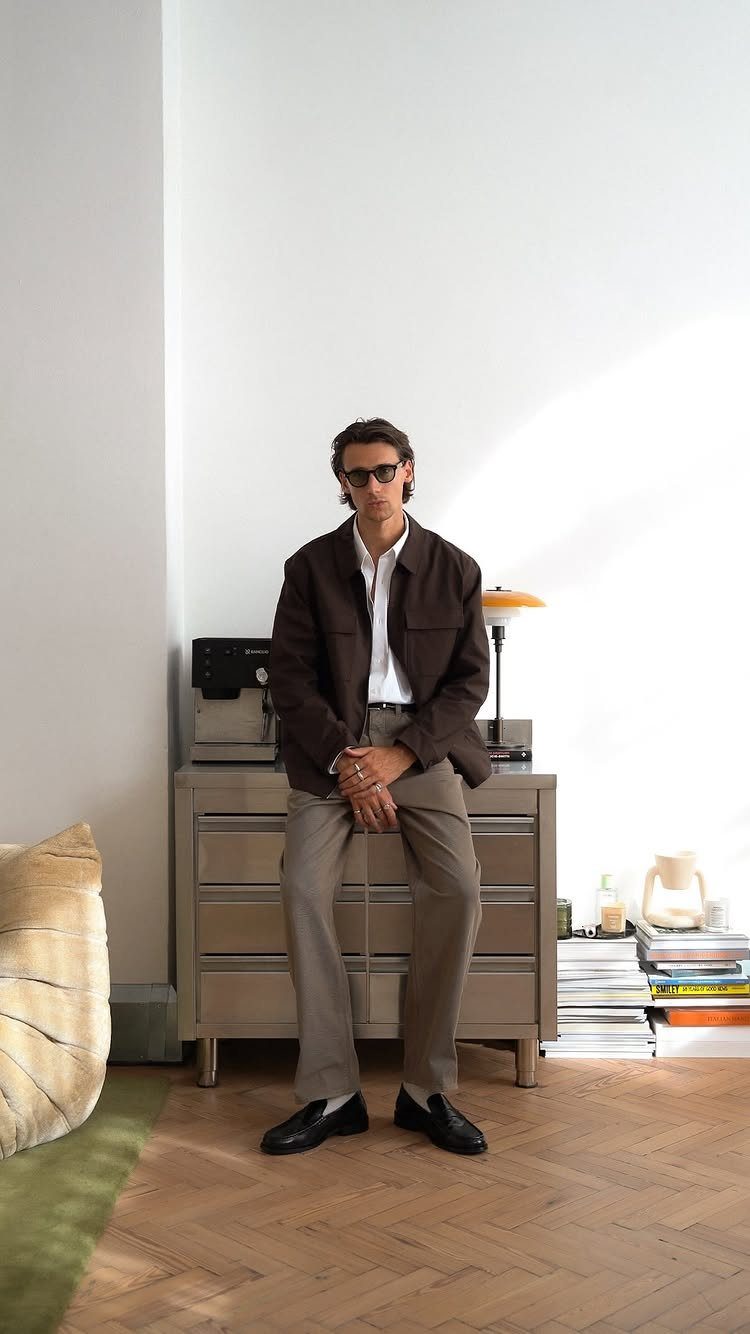
Beige trousers with a brown jacket and an open-collar white shirt: that is business casual with the tie removed and the polish kept. Black loafers finish it without the stiffness of lace-ups.
For a normal office day, this is an easy formula. Pick a jacket in a earthy shade, a white shirt that stays crisp, and trousers a few tones lighter than the jacket.
Leave the top button open, but only on a shirt with a collar that holds its shape. A limp collar looks tired fast.
4. Streetwear
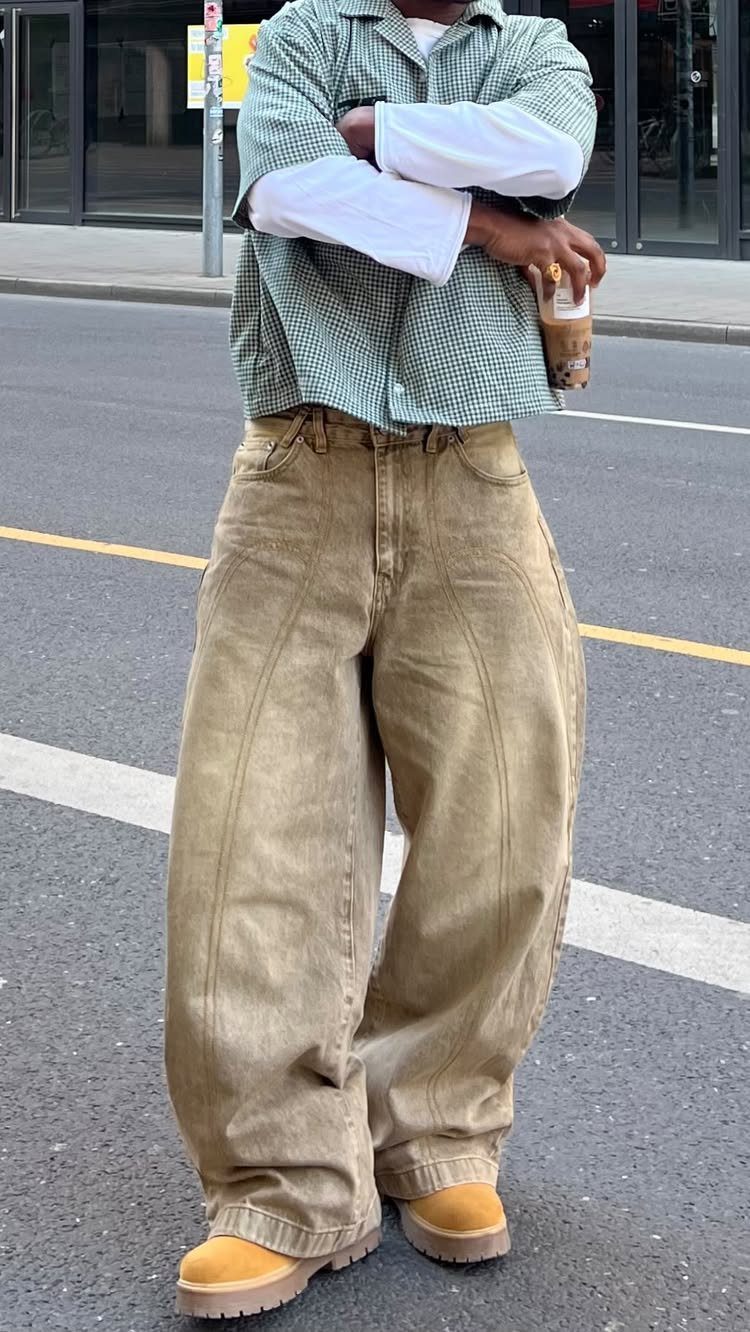
Baggy tan trousers, yellow work boots, and an oversized green checked shirt over a white long-sleeve tee: streetwear is built on volume and layering, with the boots doing the talking.
Its roots in urban culture and subcultures explain the loose, workwear-leaning shapes.
Start with a plain white tee underneath, since it gives the checked shirt something to sit against. Then let the shirt hang open.
Pick one loud item, here the boots, and keep everything else in muted earth tones so the outfit stays balanced.
5. Vintage Style
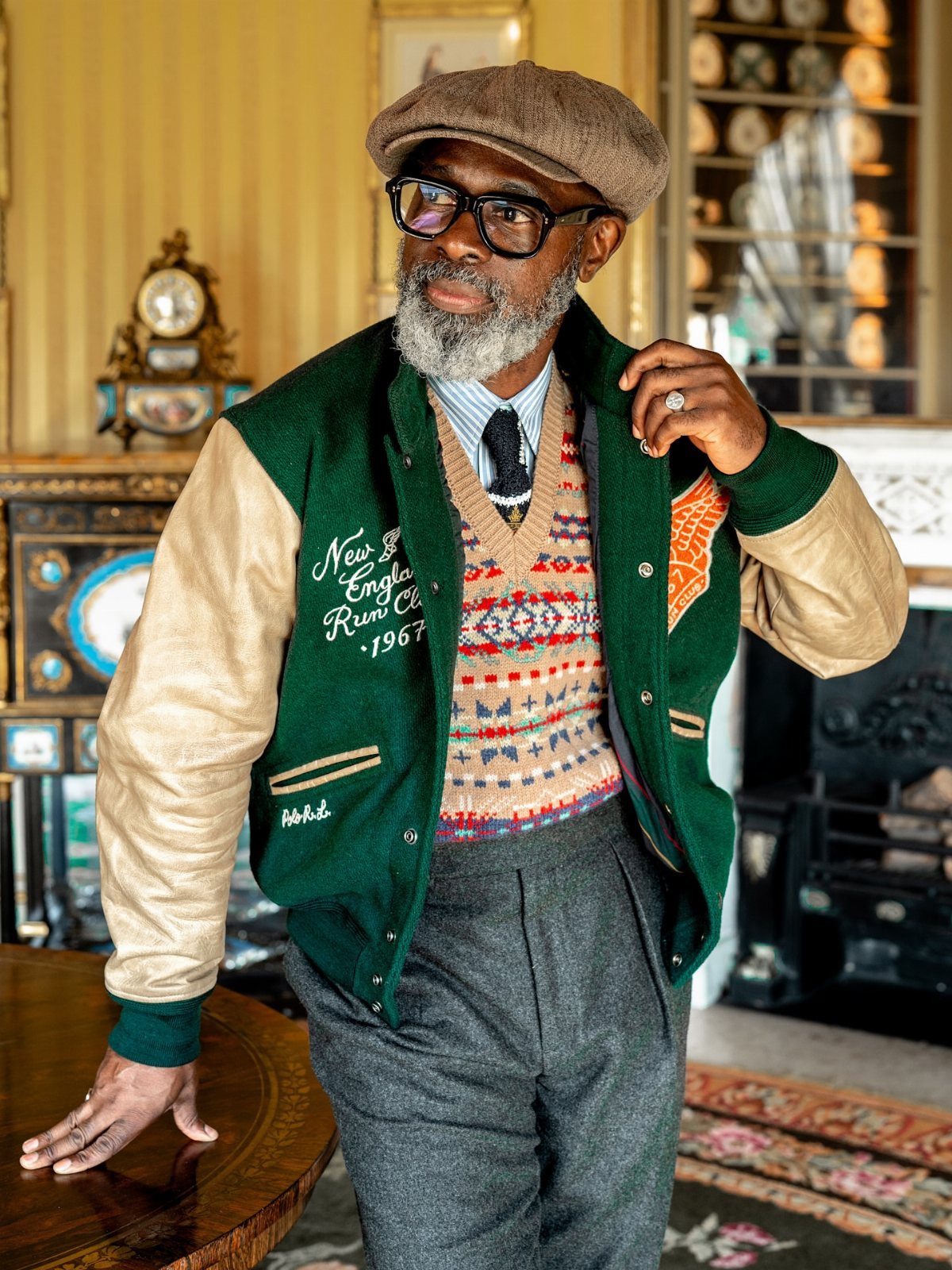
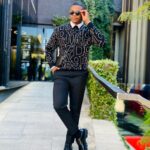
A flat cap, patterned sweater vest, tie, and varsity jacket: vintage style borrows from past eras, and the fun is in mixing pieces that look like they have history.
Here a green varsity jacket with a stitched "New England Run Club 1967" lettering is the anchor.
I would build around one statement layer like that and keep the rest simple. A sweater vest over a collared shirt and tie adds texture without needing a full costume.
Glasses and a cap finish it. Too many period pieces at once start to look like dress-up, so stop at three or four.
6. Preppy Style
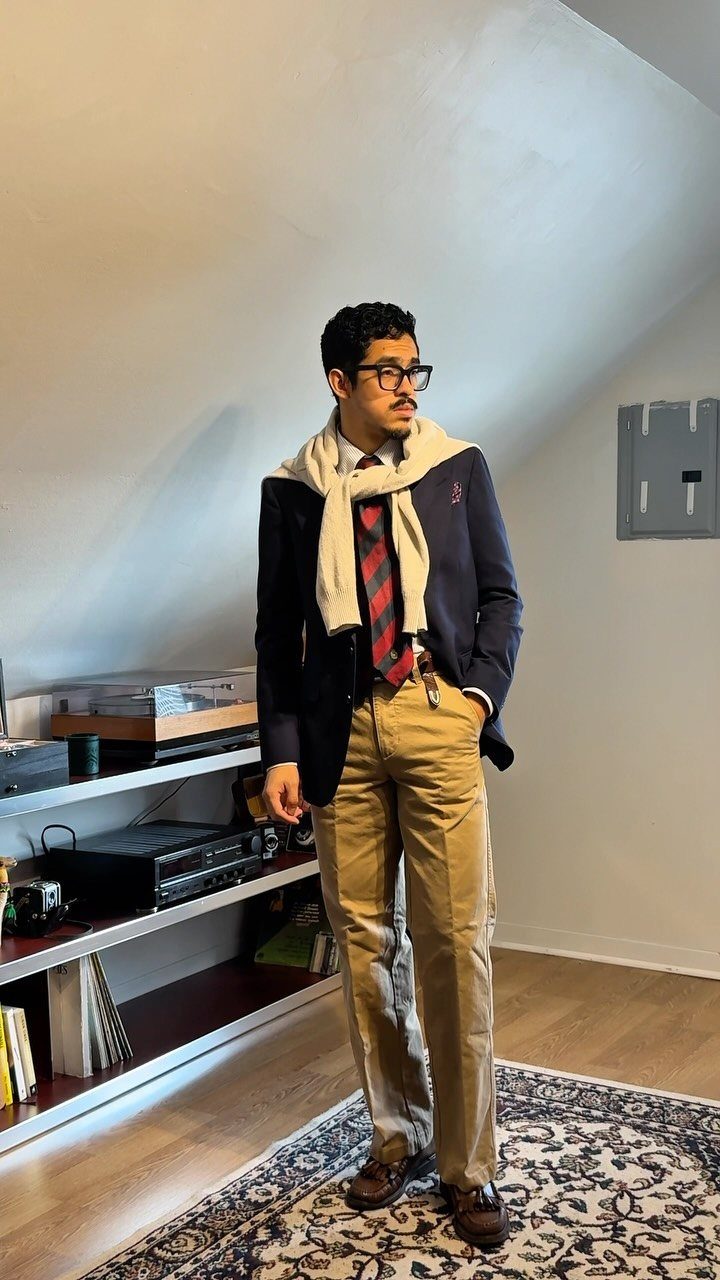
A sweater draped over the shoulders is the detail that says Ivy League before anything else does.
Every piece here is a classic, so the outfit works on a normal day and does not need an occasion. Navy and khaki are easy to mix with almost anything in your closet.
Keep the tie stripes simple and the blazer fitted through the shoulders, because those 2 details decide whether the look reads as preppy or as a costume. Preppy only looks sharp when it looks neat.
7. Blokecore
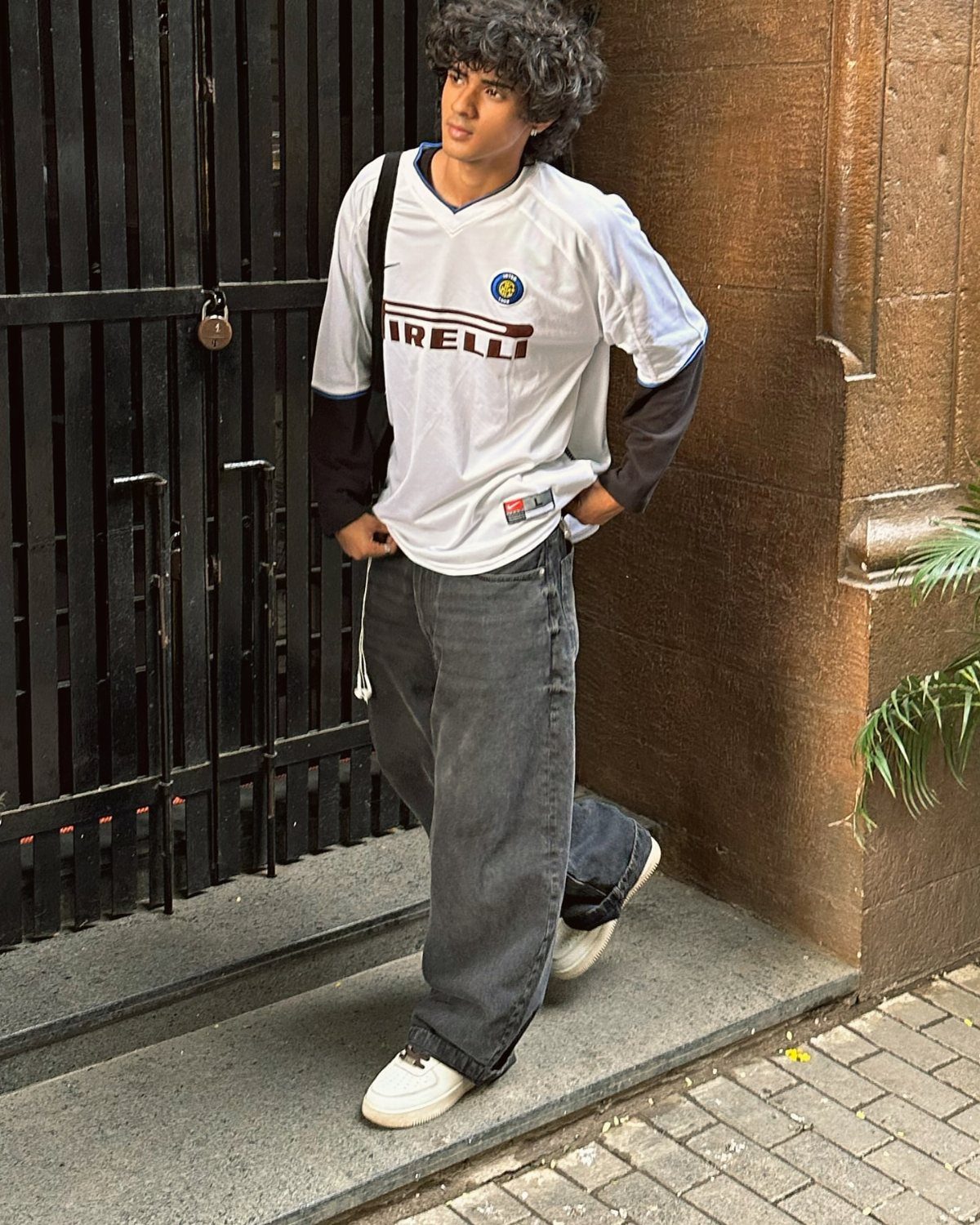
A soccer jersey worn as a regular top is the whole idea, and a vintage one like this Inter Milan shirt does it best. Layer it over a dark long sleeve so the jersey’s bold panel stands out.
Baggy charcoal jeans and white sneakers keep the rest quiet. I would let the jersey be the only graphic on you.
Pick a shirt with a loose fit, since a tight one reads as game day rather than style.
8. Old Money Aesthetic
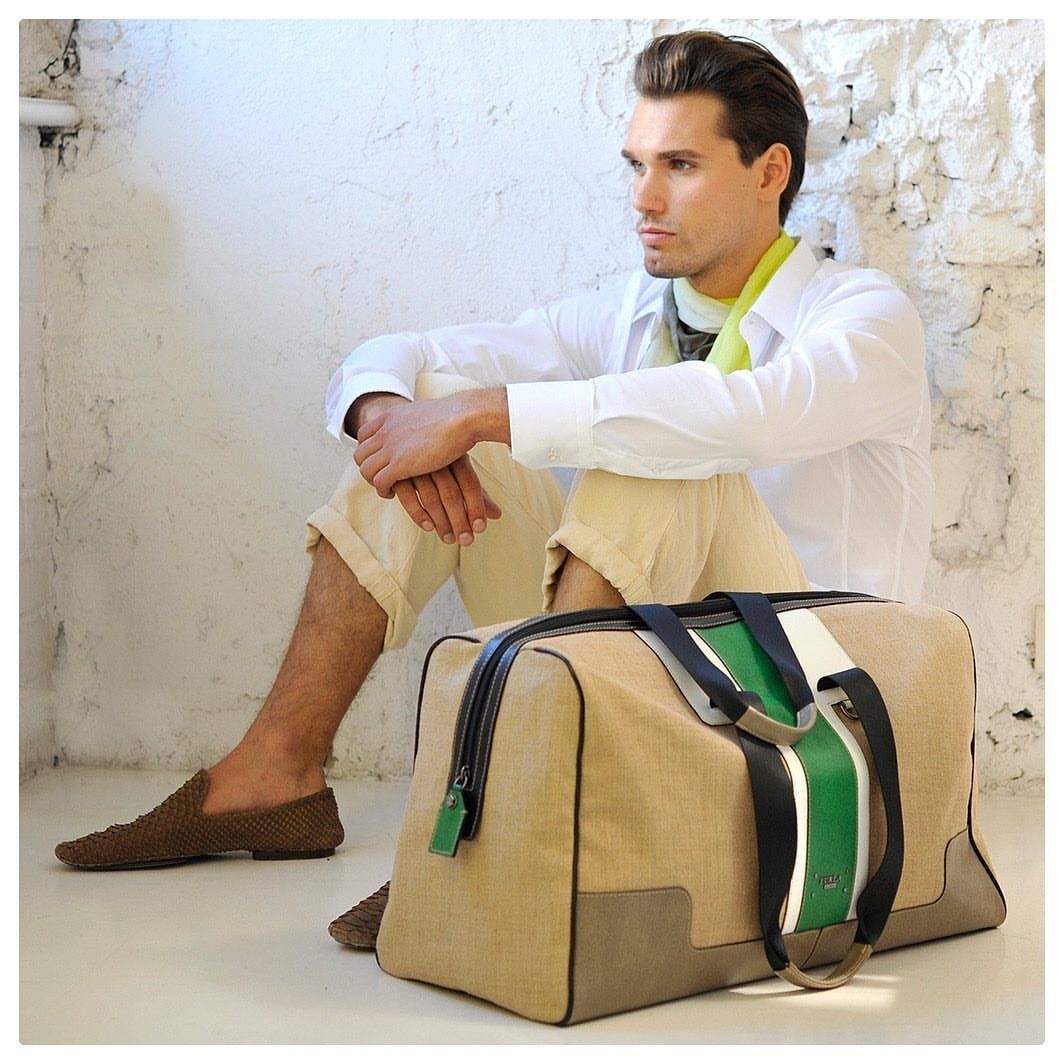
Old money dressing runs on quiet, pale pieces: a white button-down, tailored beige shorts, and woven loafers. Nothing shouts, and no logo does any work.
Roll the shorts or hem them so they sit cleanly, and keep the shirt crisp. Woven loafers add texture without adding noise.
A canvas weekend bag finishes the look as a travel companion. I prefer it in tan so it sits with the beige instead of fighting it.
9. Rugged Casual Style
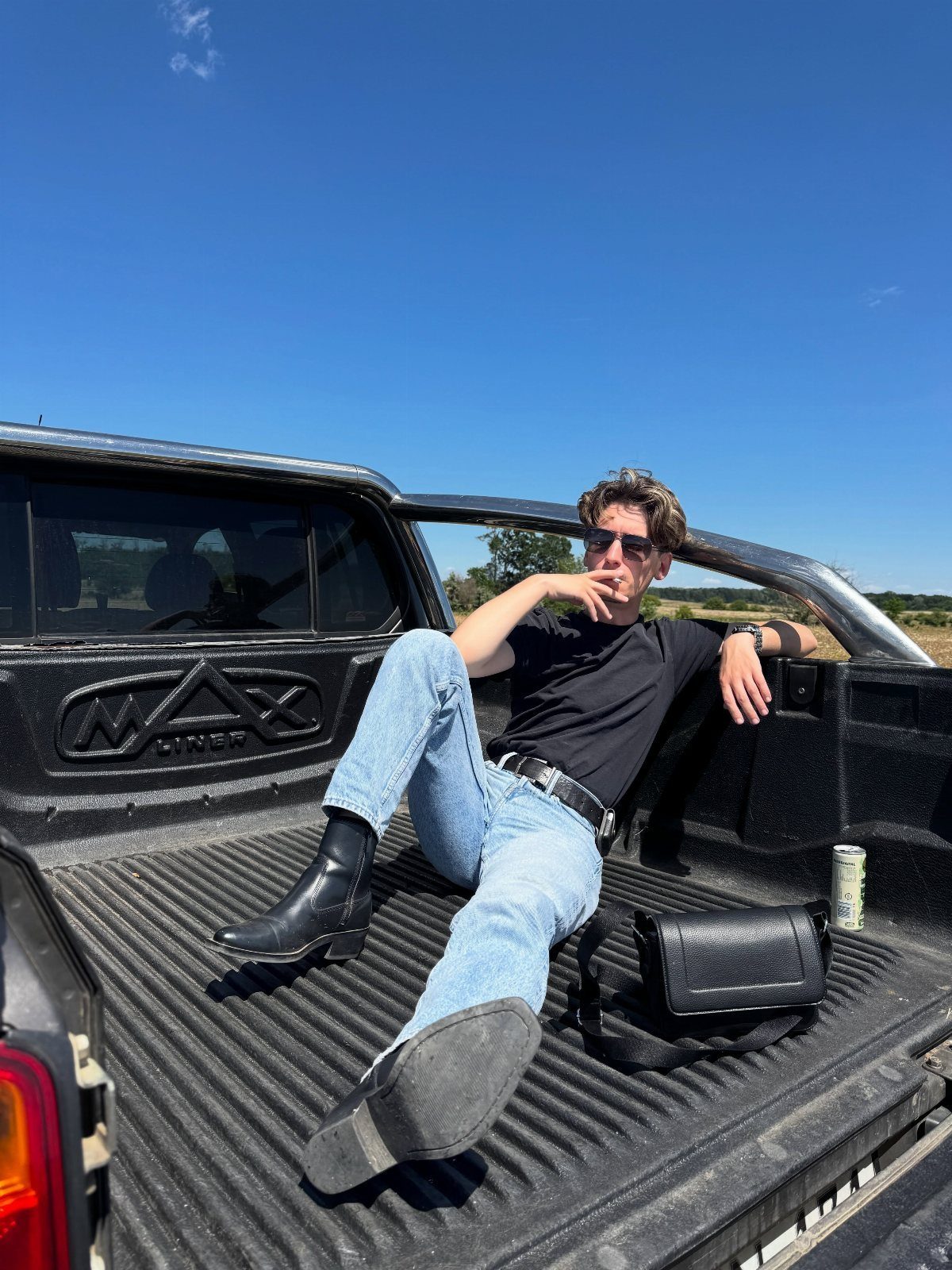
Rugged casual is a black tee, light blue jeans, and black leather boots. It asks for sturdy pieces that look better a little broken in.
Choose a tee heavy enough to hold its shape and jeans that fit straight through the leg, not skinny. The boots carry the weight, so leave them a bit scuffed.
Sunglasses are the only extra I would add. This works on a plain weekend, no occasion needed.
10. Western Cowboy Style
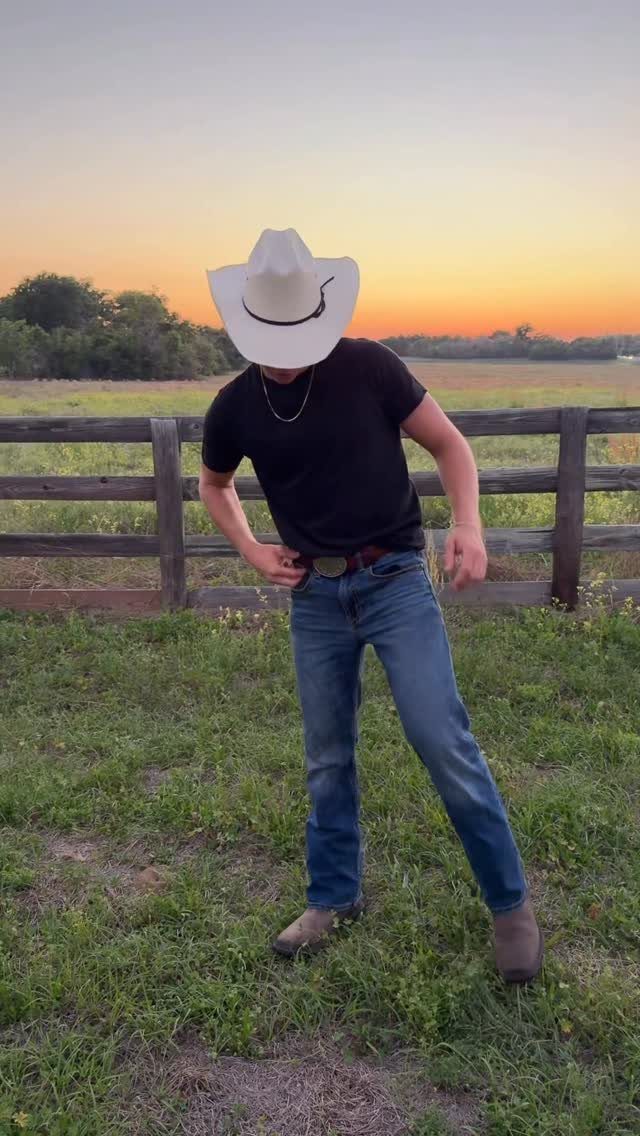
Western style starts with the hat. A white cowboy hat does more than any other piece, so everything else can stay plain: a black tee, blue jeans, and boots.
Add a belt, since it ties the jeans and boots together. Leather works best.
I would pick one Western piece beyond the hat and stop there. Hat, boots, and a belt buckle all at once can tip into costume.
11. Grunge Aesthetic
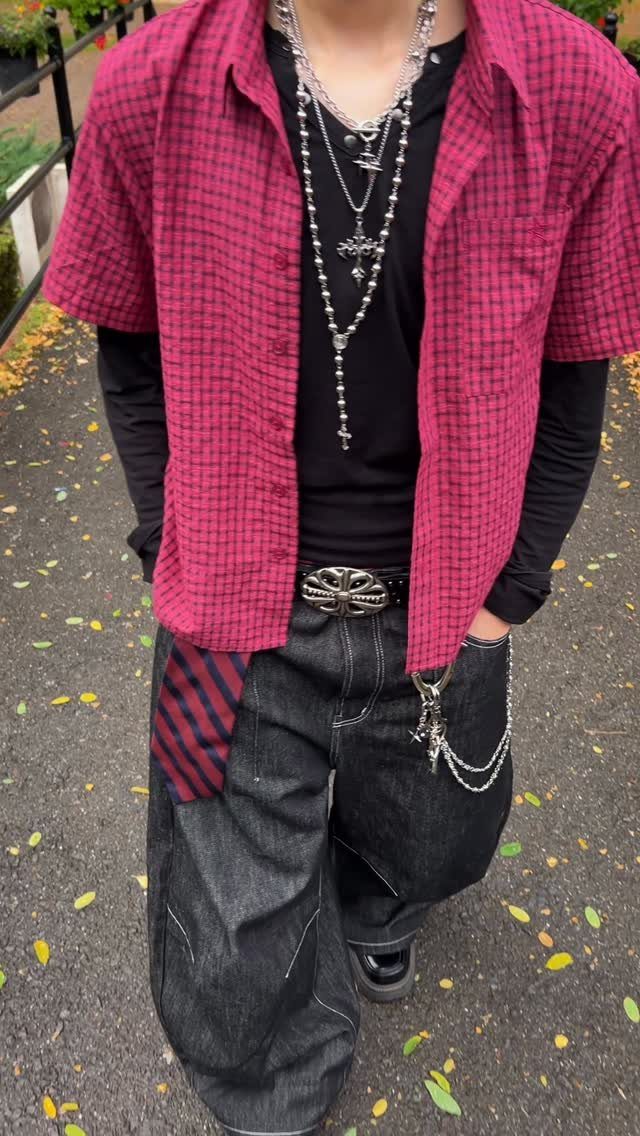
Grunge is about layering shirts that do not match: a pink checkered shirt over a black long sleeve, with baggy black jeans below. The looseness is intentional.
Silver chains and a wallet chain add the edge. Keep the metal all in one tone so the pile of pieces still looks like one outfit.
I like dark denim here because it grounds the lighter plaid on top. Let the shirts hang open and wrinkled; ironing works against it.
12. Double Denim Look
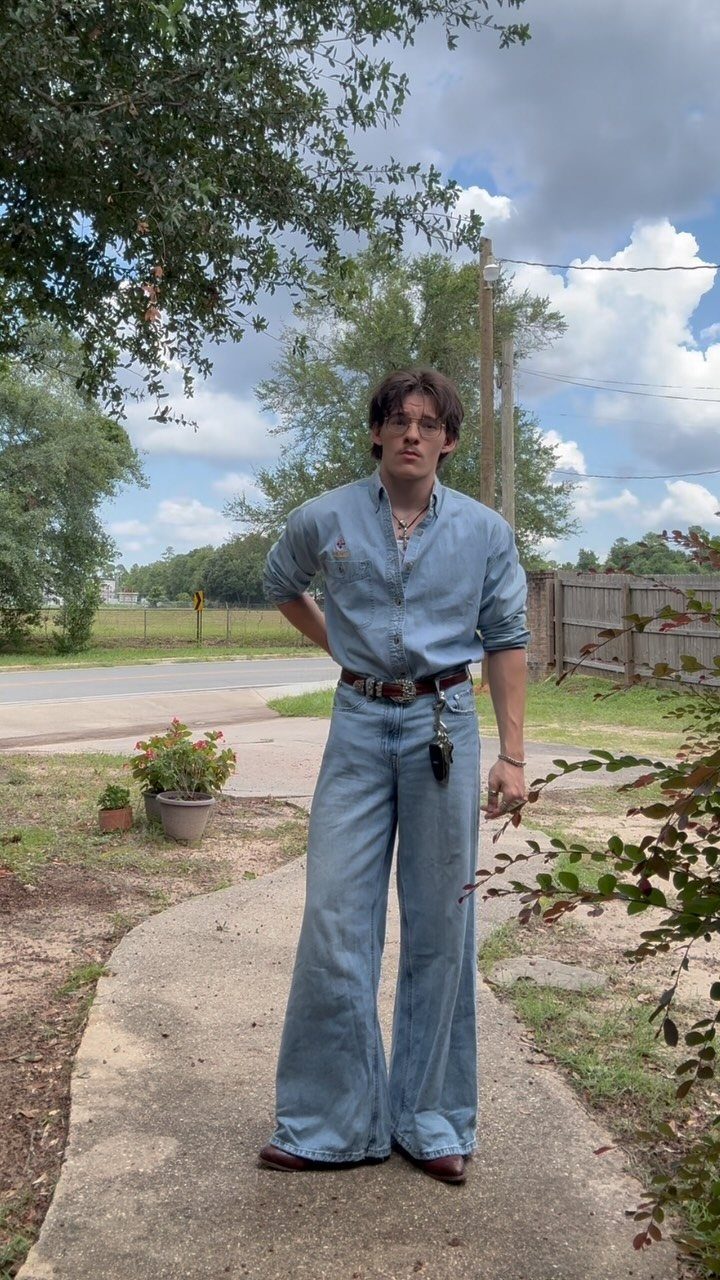
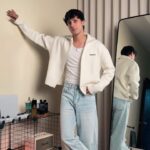
Matching denim from head to toe only works when the 2 pieces are different washes, or at least clearly intentional.
A light blue denim shirt with flared light-wash jeans leans on a retro, decades-old feel, and the flare is what sets the look apart from plain matching denim.
Tuck the shirt in and add a leather belt, so the waist reads as a clear line. Boots under the flare finish it.
Keep the shirt fitted, since the wide leg already supplies volume. Glasses work fine; skip anything else loud.
Styling and Presentation
Build each outfit on a neutral foundation of navy, grey, white or black, then let one other piece carry the color.
Once that foundation sits right, add color one piece at a time, so you can see when it is enough.
Before you pick anything, think about where you are going.
The venue and the event set the dressiness level, and the outfit should match both. A backyard party and a client dinner call for different shoes, even if the shirt stays the same.
Match your belt to your shoes. It is a small habit that makes an outfit look planned.
Fit does more than any brand. Clothes should be neither too big nor too tight, and a tailor can adjust off-the-rack pieces, especially jackets and suits.
Keep accessories classic: a watch, or cufflinks for dressier events.
One well-chosen detail beats several. A quiet extra gives people something to ask about, and simple jeans look better when one thing is clearly good.
Frequently Asked Questions
What are the types of fashion styles for men?
Common men’s styles include smart casual, minimalist, business casual, streetwear, vintage, preppy, old money, rugged casual, western, grunge and double denim.
Blokecore is another style: a soccer jersey worn as an everyday top, usually with plain jeans or track pants and clean sneakers.
Each one has a few signature pieces, like loafers and a quarter-zip knit for smart casual or baggy trousers and bold boots for streetwear.
What is the 3-3-3 rule for men’s fashion?
I don’t have a verified definition of the 3-3-3 rule to give you, so I won’t guess at one. Add color one piece at a time so you can see when it is enough.