These ideas run from denim jeans and chinos to polos, henleys and plain solid-colored tees, with a tone-on-tone look to finish, and the effort stays low at every step because each look rests on a few pieces that fit.
Fit is the rule that picks your starting point: if your clothes skim your shoulders and torso, any of these works, and if they don’t, a tailor comes before a new purchase.
One detail shows how far a single piece can carry: pleated chinos in light grey feel a step dressier than jeans with no stiffness at all.
1. Denim Jeans
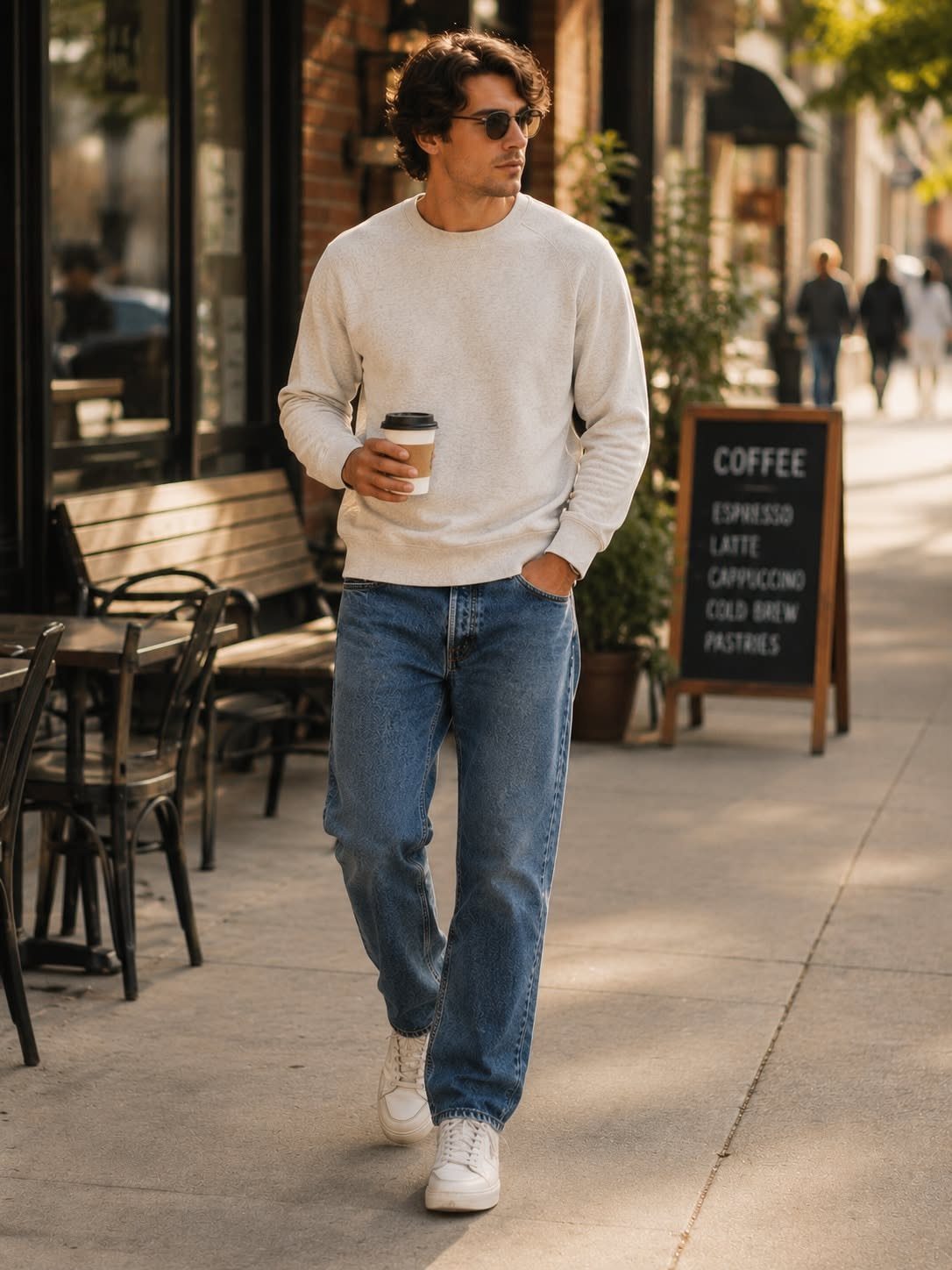
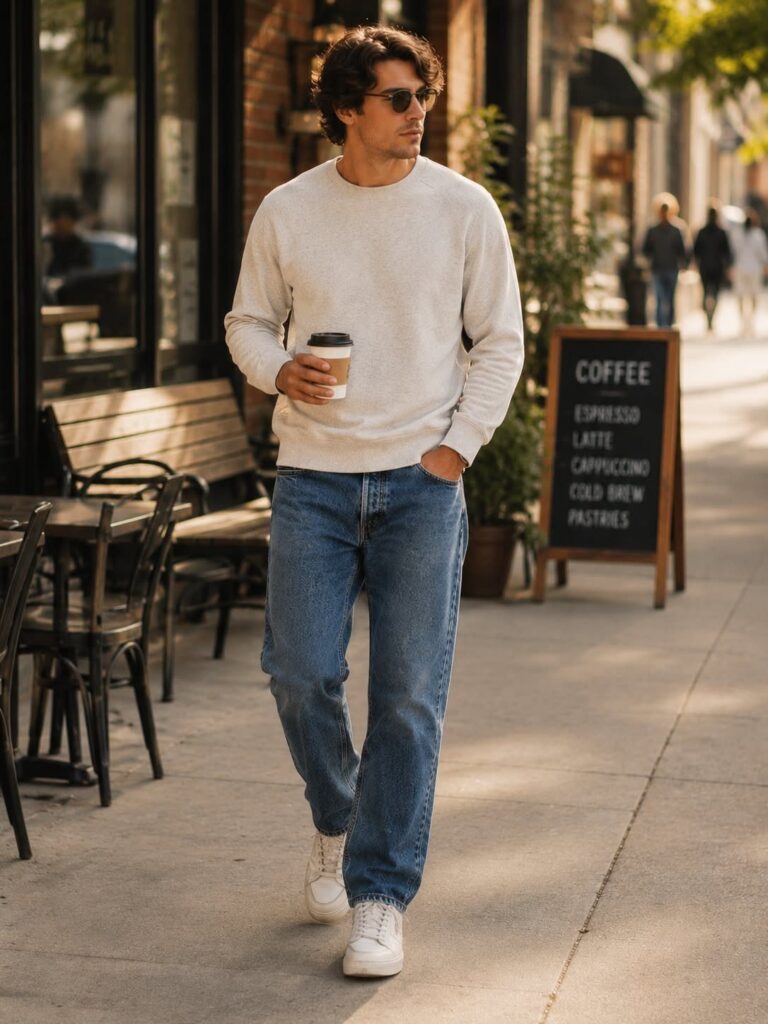
A mid wash in blue denim gives a casual elegant outfit its simplest base, and a cream sweater on top proves it. The 2 colors sit close enough that nothing fights.
Keep the rest of the look quiet: white sneakers, no heavy distressing, no loud stitching. Jeans that look clean and fit cleanly read sharper than any pair with rips, so I would spend on fit before anything else.
2. Chinos
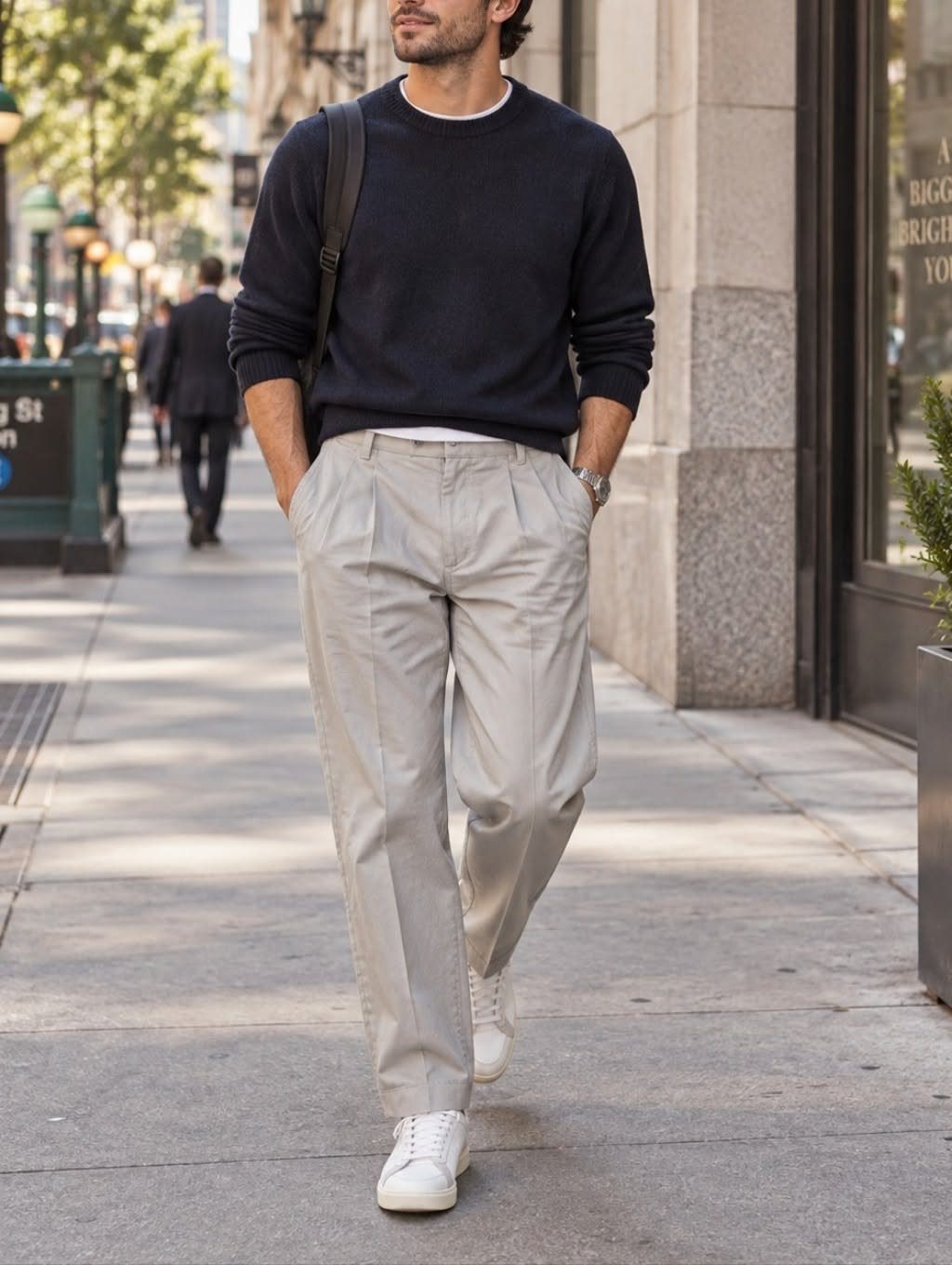
Pleated chinos in light grey give you a trouser shape that feels a step dressier than jeans, without any stiffness. The pleat adds room through the hip and a bit of old-school polish.
Navy on top is my pick here. Pairing a dark piece with a light one balances the look, and a white tee under the sweater brightens the neckline.
White sneakers finish it. Leather loafers would work too, if the day calls for more.
3. Polo Shirts
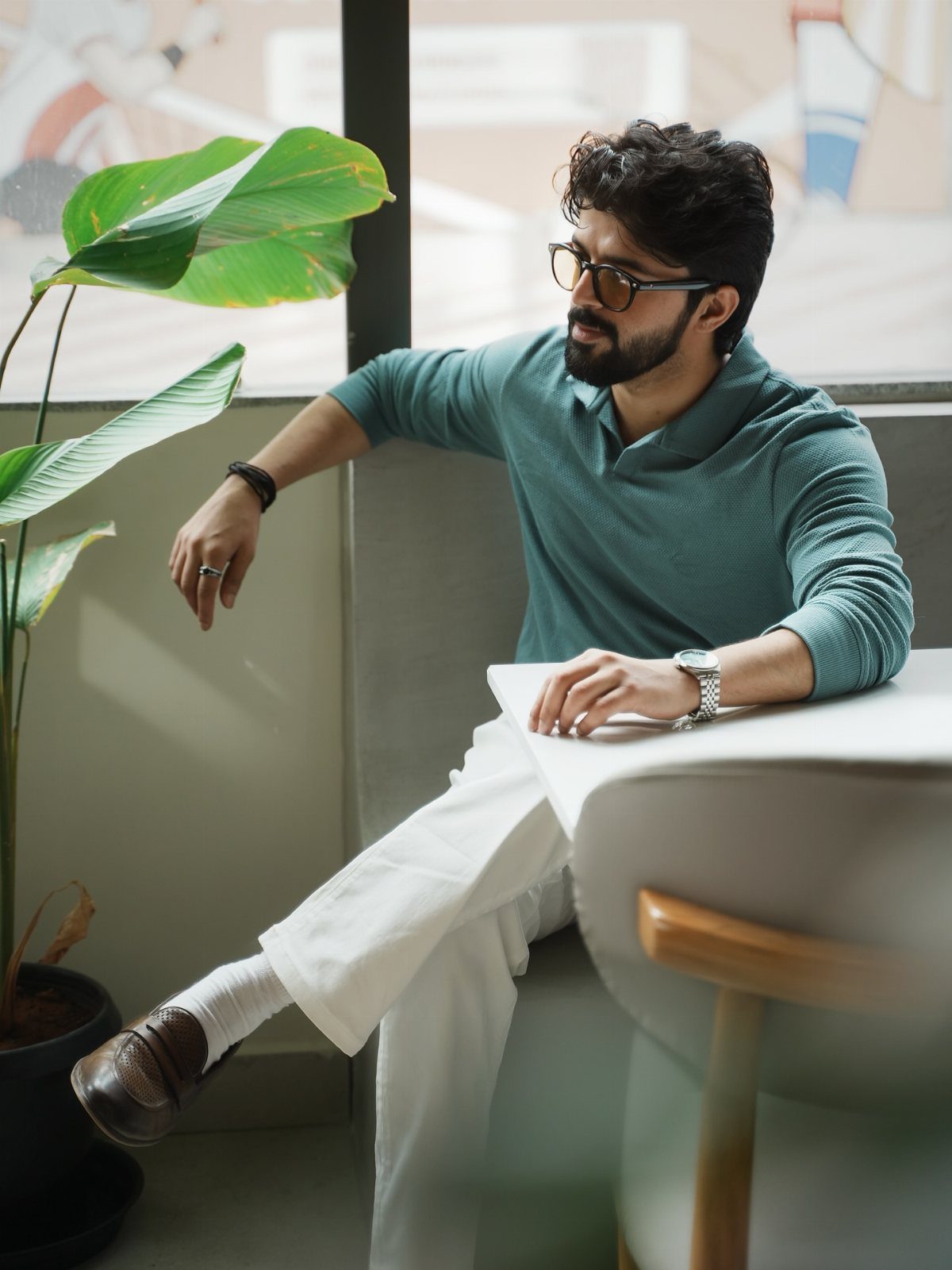
A knit polo is what I reach for when a tee looks too plain and a button-down feels like too much. The textured fabric and soft collar do the dressing up for you.
Teal is a bolder color than most men try, but it holds up fine next to white trousers, which let it stand alone. Add loafers and the outfit works for a long lunch or a casual date.
Long sleeves suit cooler days. Push them up a little once it warms.
4. Dress Sneakers
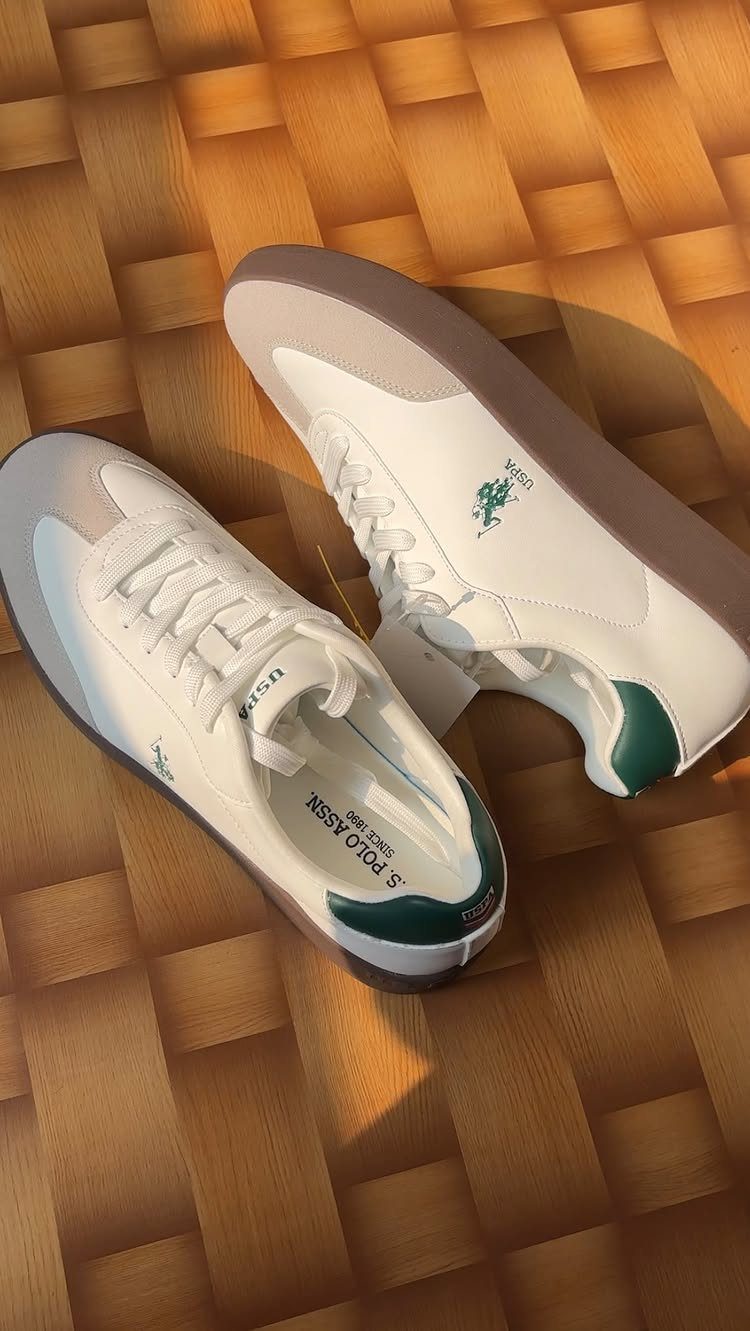
White leather-style sneakers with a tan sole and a small accent color are the dressy end of the sneaker rack. Low profile, clean lines, and no bulky padding are what make them pass next to chinos or dark jeans.
A touch of green at the heel works well, though I would keep everything else in neutrals so it reads as a detail.
Wipe them down often. A scuffed white sneaker undoes the whole look.
5. Lightweight Jackets
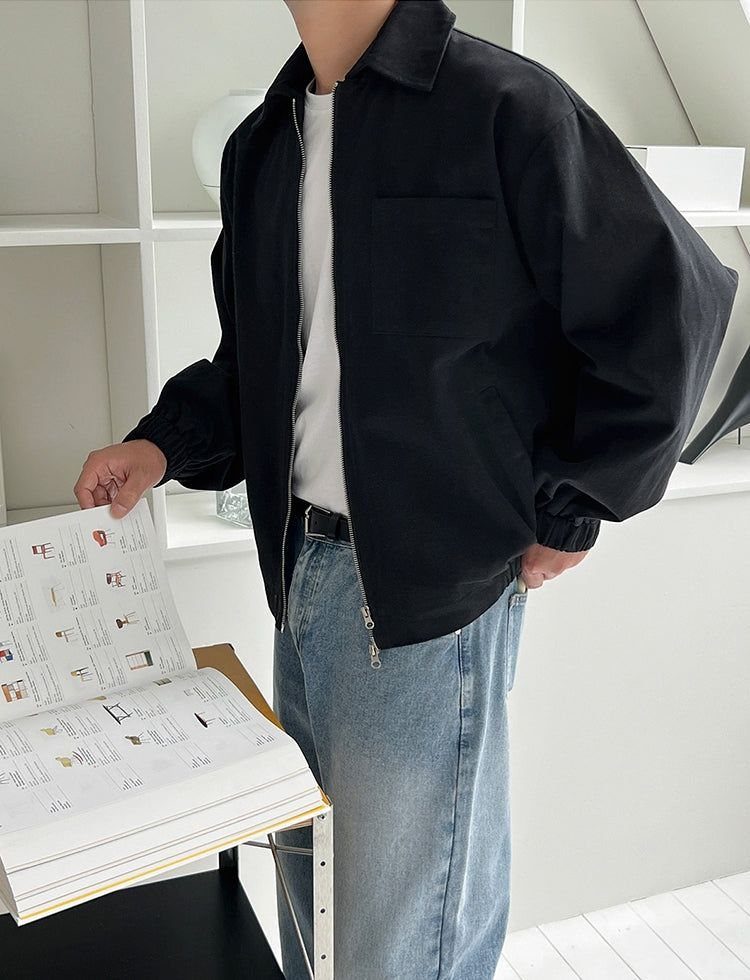
A black zip-up jacket worn over a white tee and light blue jeans is about as simple as layering gets. The dark outer layer gives the pale pieces underneath some structure.
Choose one with a clean collar and no big logos. Keep it slim through the body so it sits close without pulling across the shoulders.
Zipped halfway, it looks relaxed. Zipped to the top, it looks sharper.
6. Knitwear
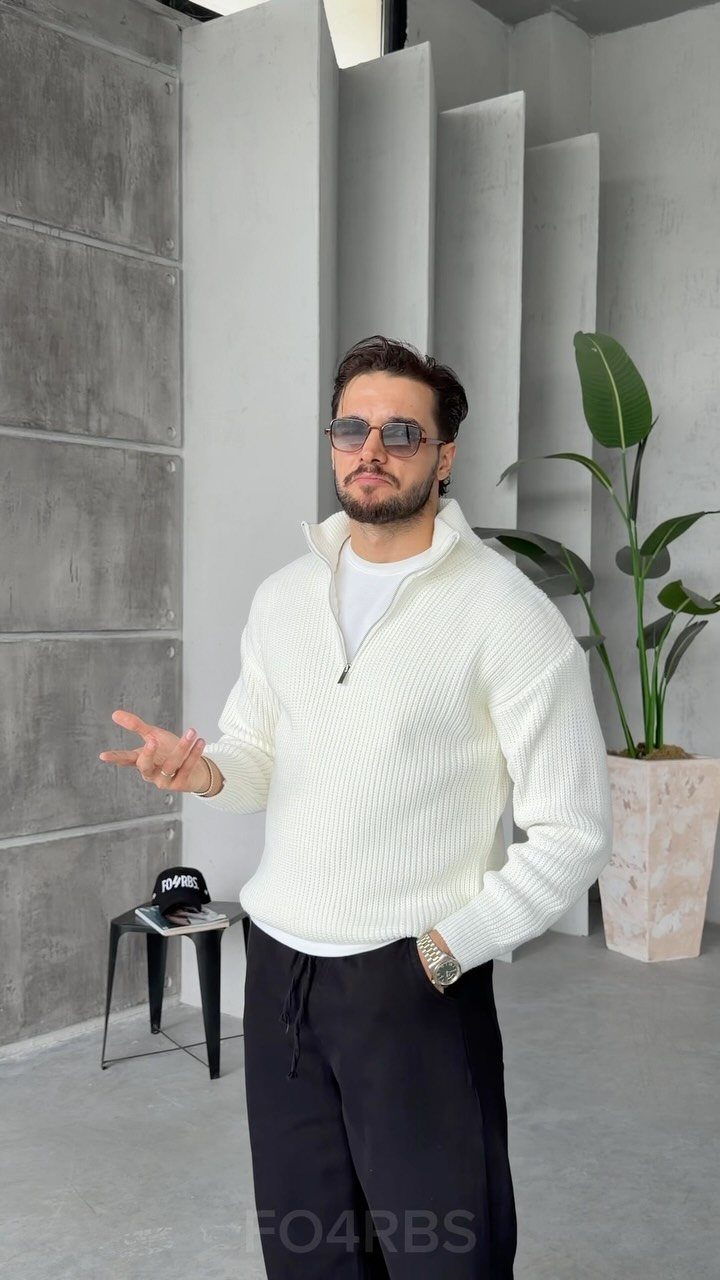
A white quarter-zip knit does the job of a jacket without the bulk. Worn over a white tee with dark trousers, it gives you a collar-like neckline and some texture, which is where the polish comes from.
Look for a tight, even knit that holds its shape, and pick a fit that skims the torso. Sunglasses and a plain pair of dark trousers are enough to finish it.
White shows wear fast, so a grey or navy version is the easier daily choice.
7. Fit
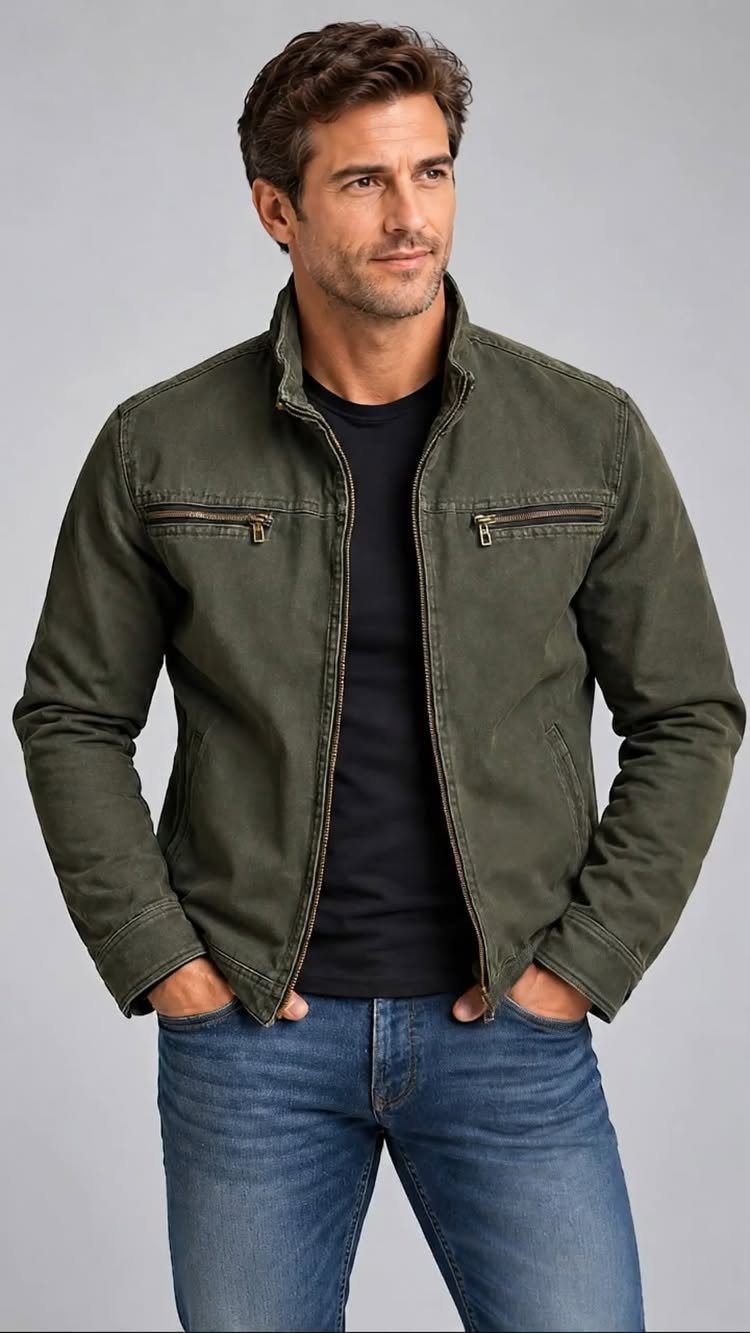
Olive jacket, black tee, blue jeans: 3 plain pieces, and the outfit still looks sharp because nothing is too big or too tight. Fit does that work here.
Check the shoulder seam first.
It should sit at the edge of your shoulder, and the jacket should close without pulling across the chest. Jeans should follow your leg without clinging.
A plain outfit like this has nothing to hide behind, so a baggy sleeve or a stretched tee shows right away.
Taking in one jacket or hemming one pair of pants costs far less than buying new pieces to replace everything you already own.
8. Color Top with Neutral Bottom
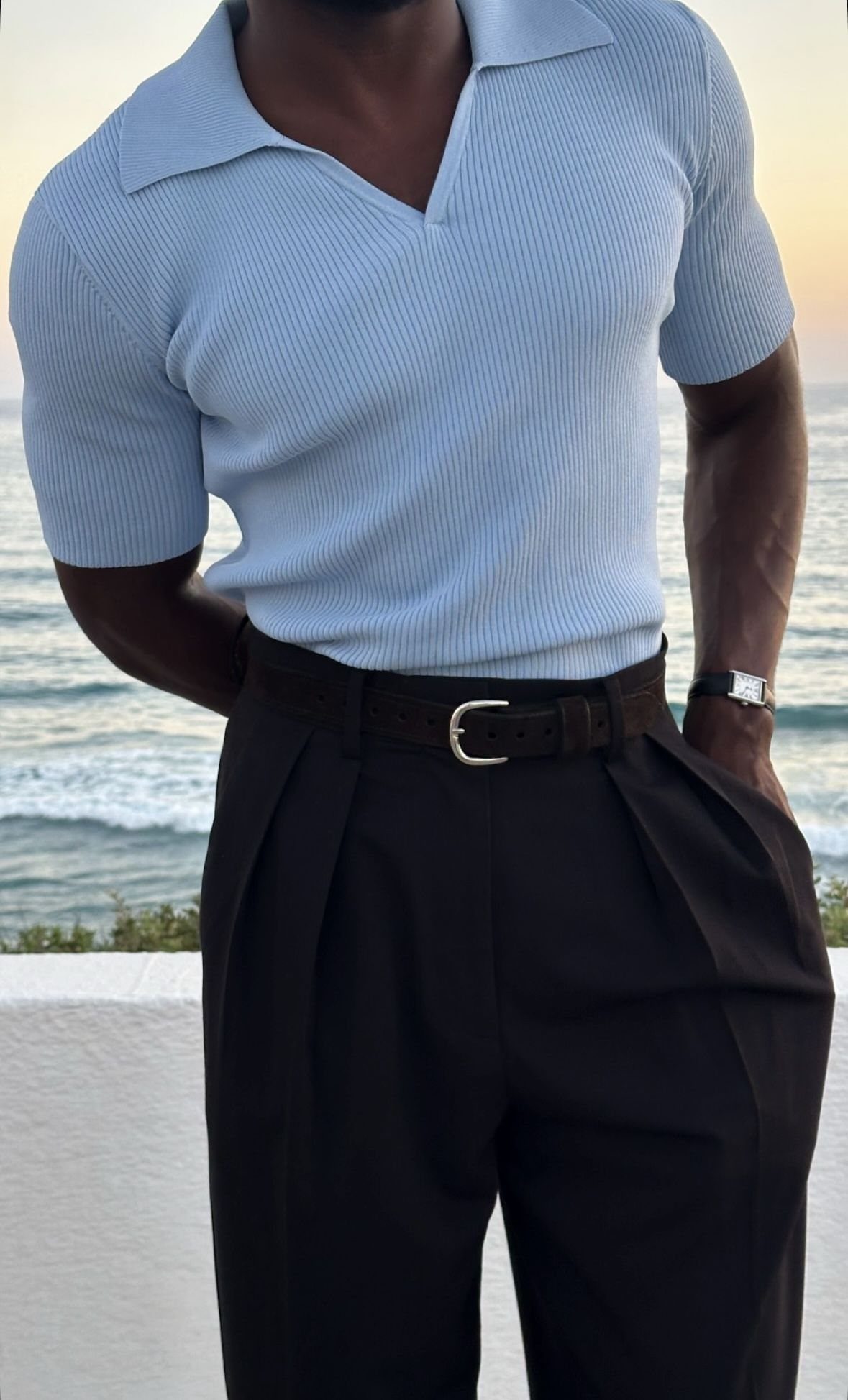
Light blue is an easy way to bring color into an outfit without risk, as long as the bottom half stays quiet. Dark brown pleated trousers do that job, and the ribbed texture of the polo adds interest.
Tuck the shirt and wear a belt, which makes the look read as dressed rather than just casual. Keep the belt close to the trouser color.
Stick to one color on top. If the polo is the only bright piece, it carries the outfit by itself.
9. Pattern on Top
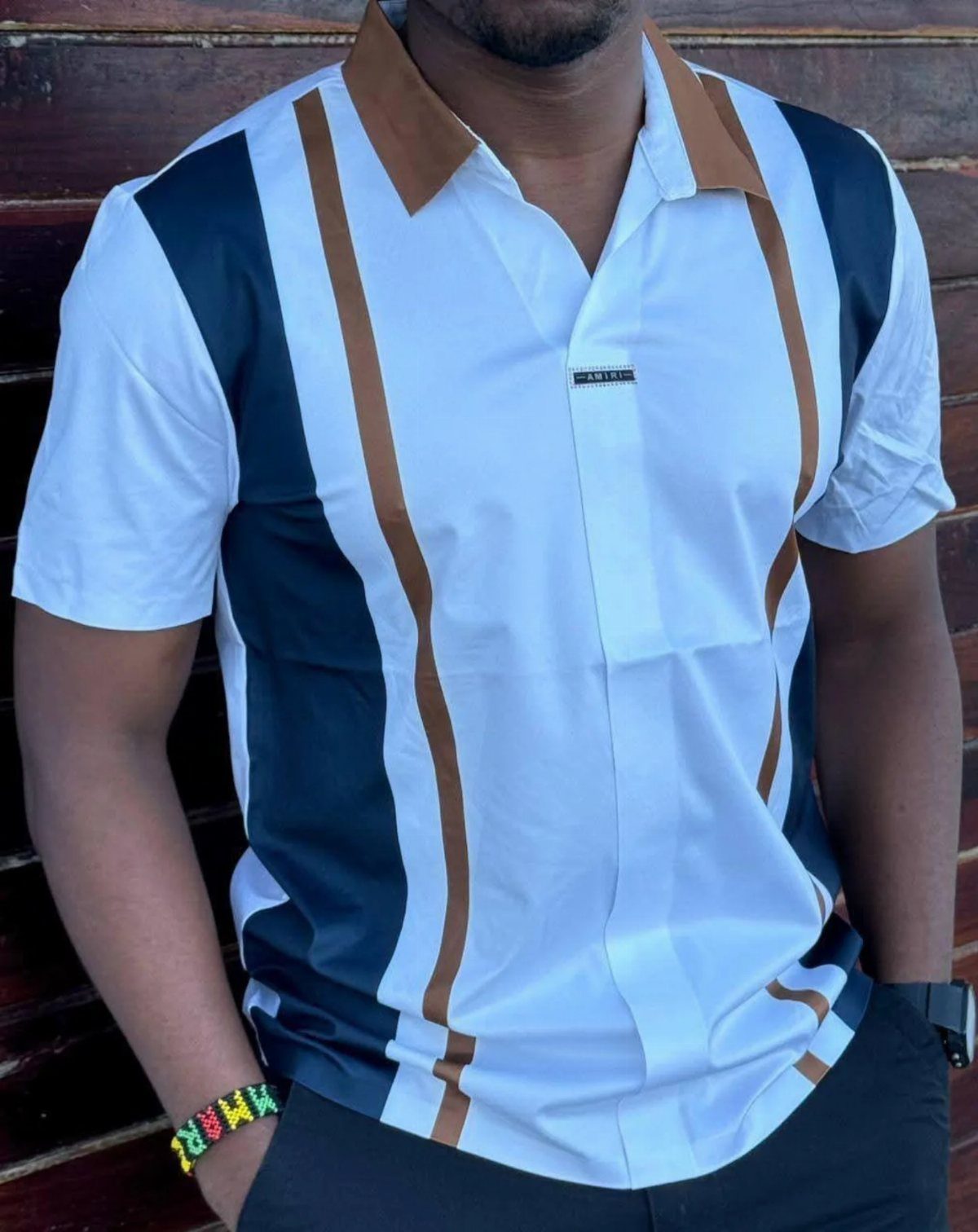
A striped shirt already carries the pattern, so the pants, shoes and jacket can stay plain.
Dark trousers are the right partner. They give the pattern a solid base, so the shirt looks intended rather than busy.
Short sleeves keep it casual, and a collar keeps it neat.
I would skip a patterned belt, tie, or pocket square with it. One pattern is enough.
10. Plain Solid-colored Tees
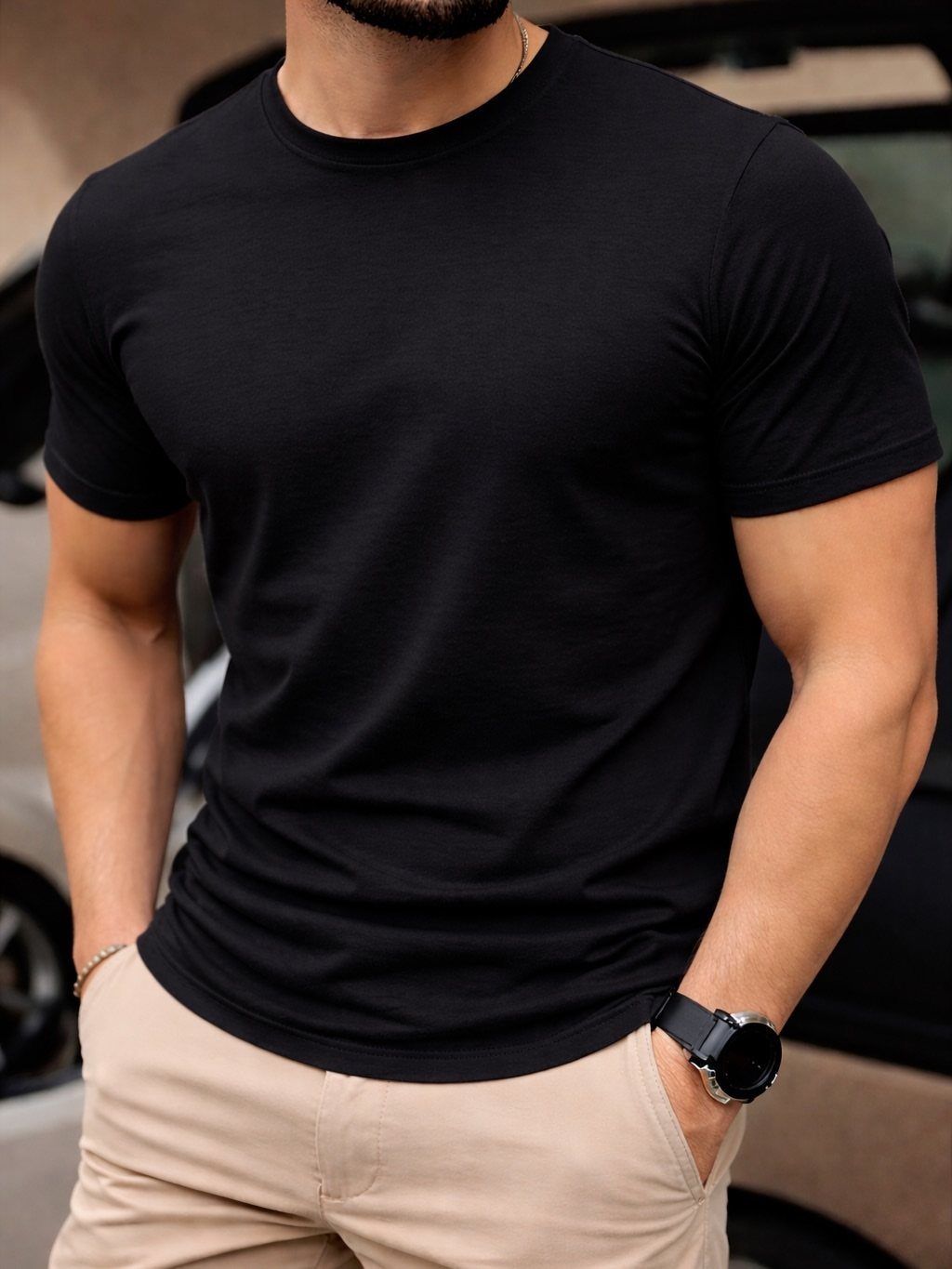
A plain black crewneck is what I would hand to any man still wearing graphic tees. It looks grown-up with no effort, and it pairs with khaki trousers without any thinking.
Fit decides everything.
The sleeves should hug the upper arm, and the hem should land around mid-zipper so it can stay untucked. A tee that clings or hangs loose loses the effect.
Add a simple watch and you are done. Buy two or three of the same tee, because a plain one only looks good when it is clean and crisp.
11. Casual Uniform
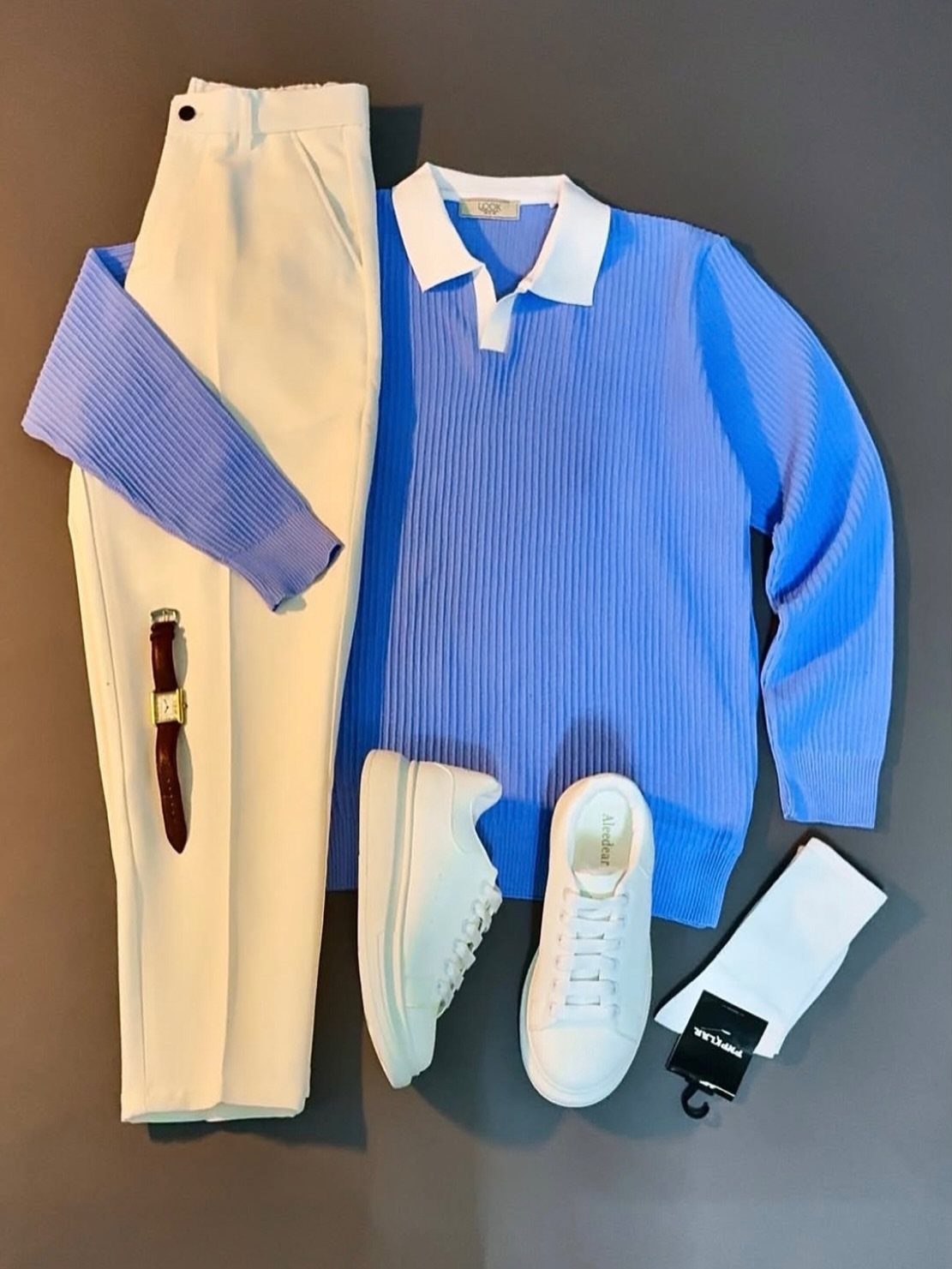
Blue ribbed polo, white trousers, white sneakers: that is a whole wardrobe decision made once. A casual uniform works because you stop choosing every morning and still look put together.
Repeat the formula in different colors.
Swap the blue for another shade, or keep the white bottoms and change the top. A brown leather watch and a brown belt tie it together, and matching them keeps things tidy.
White trousers need washing more often than you would like, so keep a second pair ready.
12. Tone-on-tone
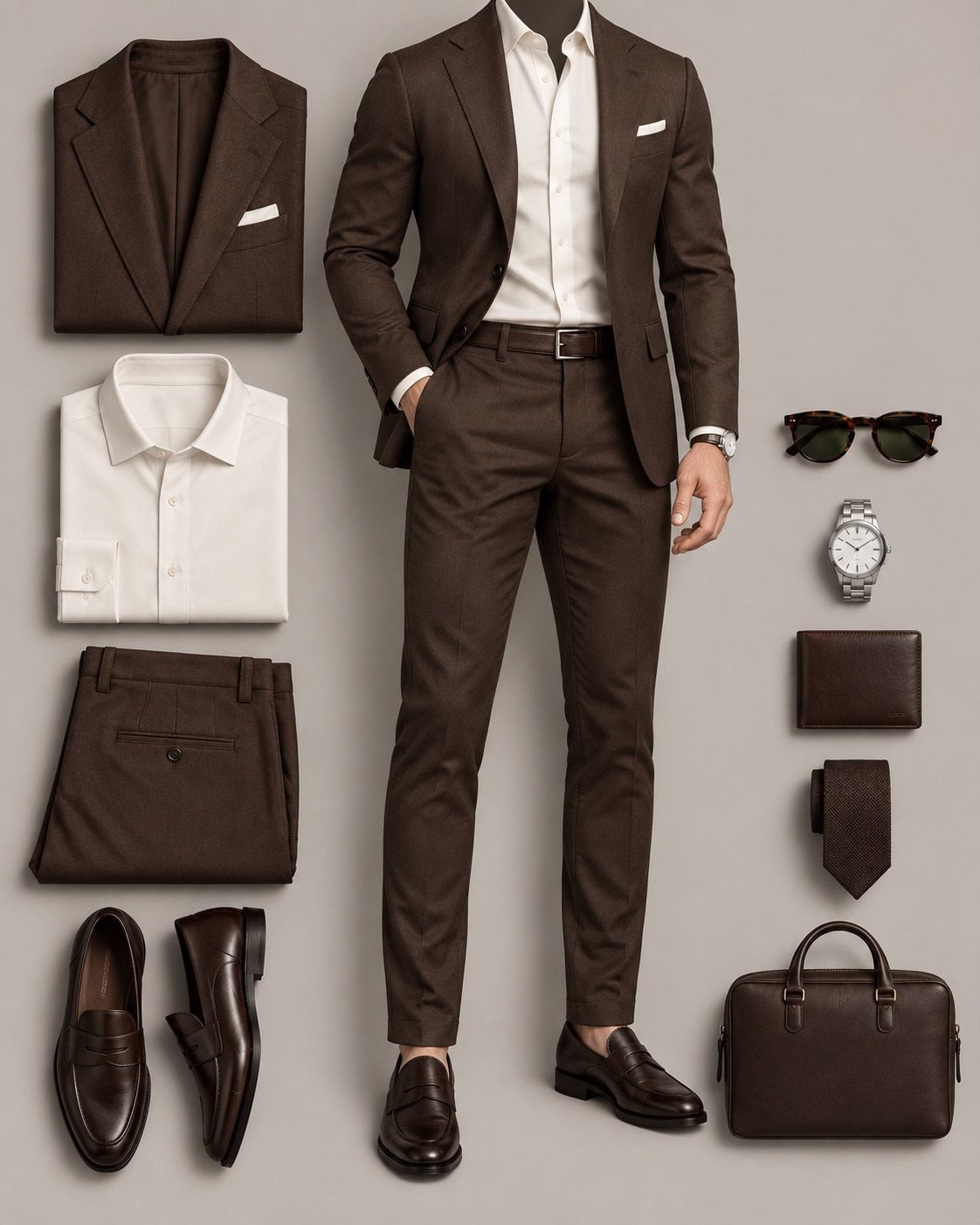
A brown suit with a white shirt, brown loafers and a tie in a nearby shade is how tone-on-tone works: the colors differ only slightly, so the eye reads one smooth look.
Vary the depth instead of matching exactly.
A lighter shirt, a darker shoe, a tie one step off the suit. Exact matches look like a uniform, while small shifts look deliberate.
A white shirt stops a tone-on-tone look from going flat.
13. Neutral Top with Neutral Bottom
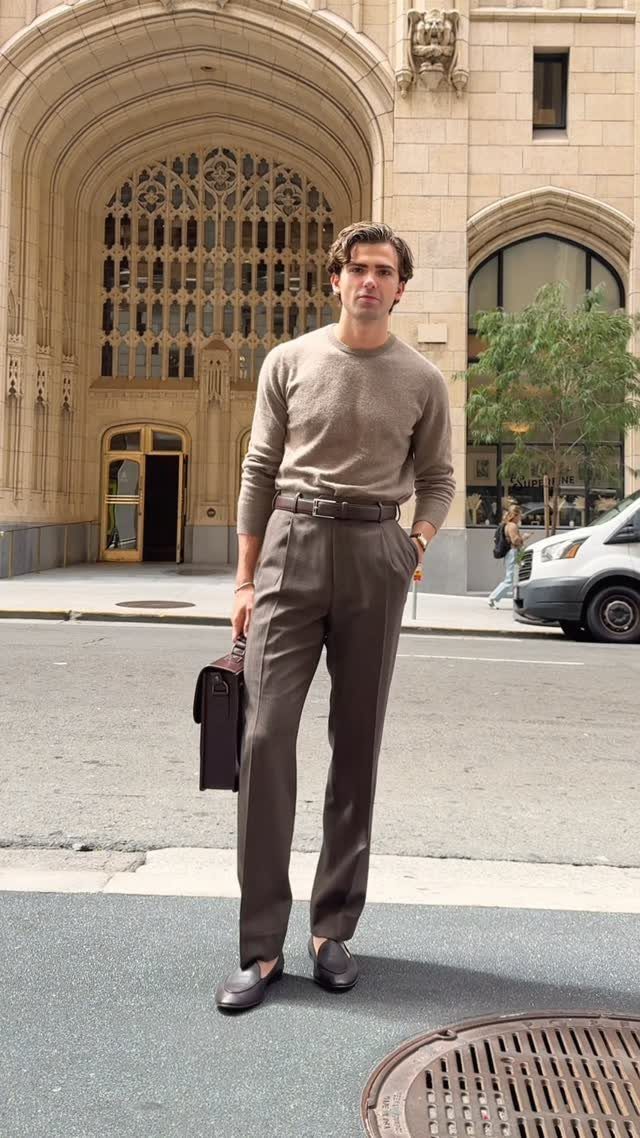
Beige on top and brown below stay in one warm family, so nothing competes and the look stays calm. A crewneck sweater tucked into tailored trousers reads as dressed without a jacket.
Keep the 2 pieces a clear step apart in depth. Beige lighter than the brown gives the outfit a top and a bottom instead of one flat block.
A leather bag in a similar brown ties it together. Tuck the sweater and add a belt.
14. Henleys
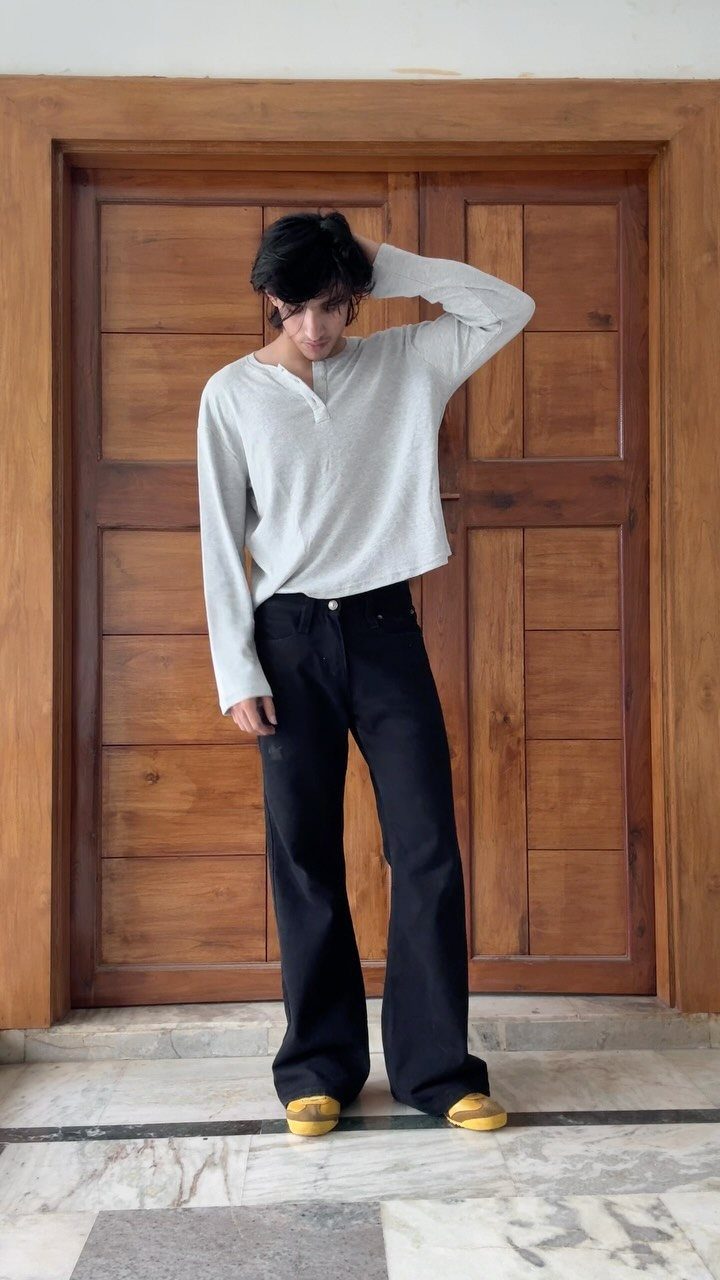
Comfortable and classic is the short case for a Henley: a placket with a few buttons and no collar, which sits between a tee and a polo. Light grey is a quiet color that looks good against dark bottoms.
Black wide-leg trousers give a henley some contrast and a relaxed shape, and the fuller leg balances a fitted chest and sleeves. Keep the shirt slim enough that the volume stays in the legs, not on top.
The yellow shoes are a bold move, and I like it.
Long sleeves push up easily once the day warms.
Importance of Fit
Fit matters more than price: a modest shirt cut to your shoulders and torso looks better than a pricey one that billows around you. Spend your money on fit before fabric or label.
Get measured once, and accept the body you have rather than the one a size chart assumes. Buying for your real shape saves you from a closet of almost-right pieces.
Find a good tailor. They do more than suits: nearly any garment can be improved, from shirt sleeves to trouser hems.
How snug your clothes should be depends on the look you want. Casual doesn’t have to mean tailored, but it should never mean shapeless.
Comfort and Personal Style
Wear what feels right to you. If you feel self-conscious in a piece, it shows, and no price tag fixes that.
Skip the latest streetwear if it isn’t how you want to dress. Comfort is where confidence starts.
Fewer graphics, logos and embellishments make an item look smarter, and they make it easier to mix with everything else. A plain sweater of good quality works across far more outfits than a loud one.
Judge casual clothes by the same standards as formal ones: material, construction and fit. Those 3 details separate pieces that last from pieces that merely fill space.
Avoiding Trends
Trends fall out of favor soon enough, so spend your real money on pieces that will last. A solid bomber jacket will outlive a novelty T-shirt by years.
Limit yourself to a single trendy piece per outfit, say a logo baseball cap, and keep everything else classic. That way a trend adds interest without dating the whole look.
A color that’s in style is worth trying, but I’d pass on neon and on any shade that feels like a throwback to disco-era wardrobes.
Timeless is the safer bet. Skip the trend chase and your clothes won’t look dated a few seasons later.
Frequently Asked Questions
How to style casual outfits for men?
Build the outfit from a few plain pieces that fit well, such as a mid wash jean, a cream sweater and white sneakers. Keep to one color or one pattern on top and let the bottom half stay quiet.
Shoulder seams should land right where your shoulder ends, and jeans should skim the leg without gripping it; get those 2 things right and the rest of the outfit gets easier.
What is not allowed in the smart casual dress code?
Anything sloppy or loud falls outside smart casual: heavily distressed or ripped jeans, big logos, graphic tees, and scuffed sneakers.
Neon shades and clothes that are too baggy or too tight also work against it. Clean jeans, a knit polo, a plain sweater and tidy white sneakers stay on the right side of the line.
When is casual style acceptable?
Casual style works in many settings today, from work to social events, as long as the clothes look clean and fit well. A tucked shirt and a belt push the same outfit toward dressed-up.