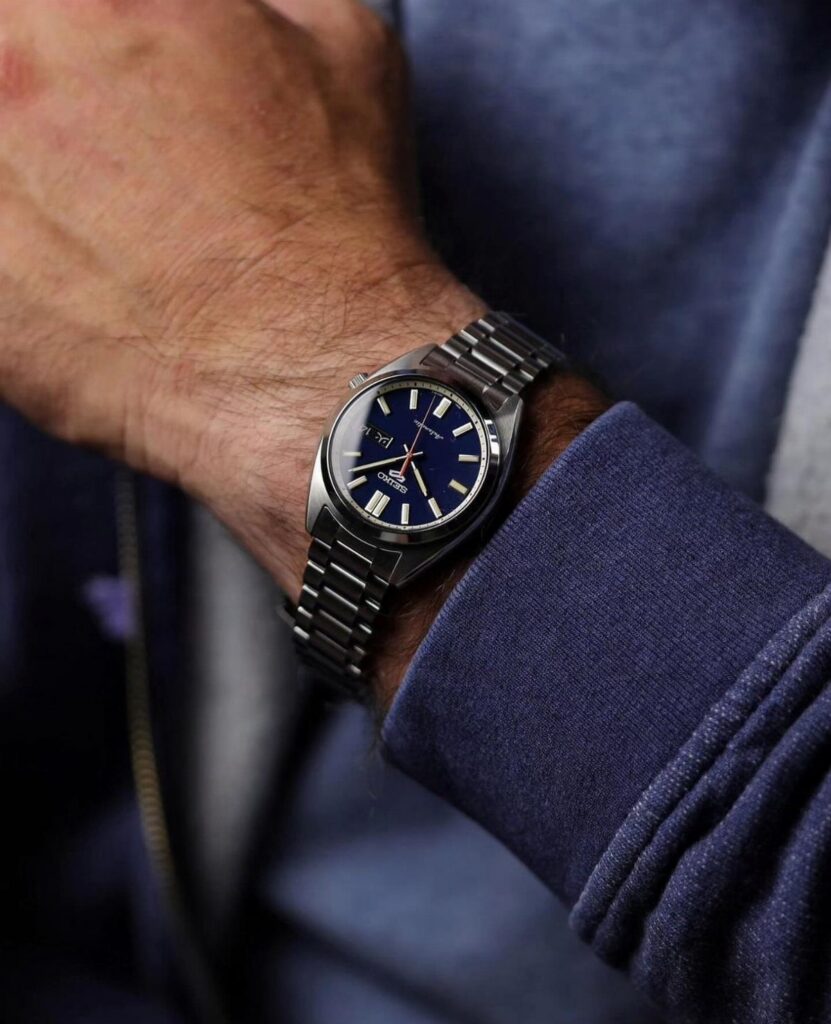
Casual style runs from a watch on a plain wrist to a leather jacket over wide jeans, and the effort stays low at both ends.
Your own wardrobe decides where to start: if you already own a few pieces that fit, add one layer or one accessory, and if the fit is off, fix that first, since a tailor can take in a shirt’s sides cheaply.
Every idea below is built from pieces that mix, so one swap, like brown trousers under a crewneck sweater, changes how the whole outfit reads on a normal day.
1. Watches
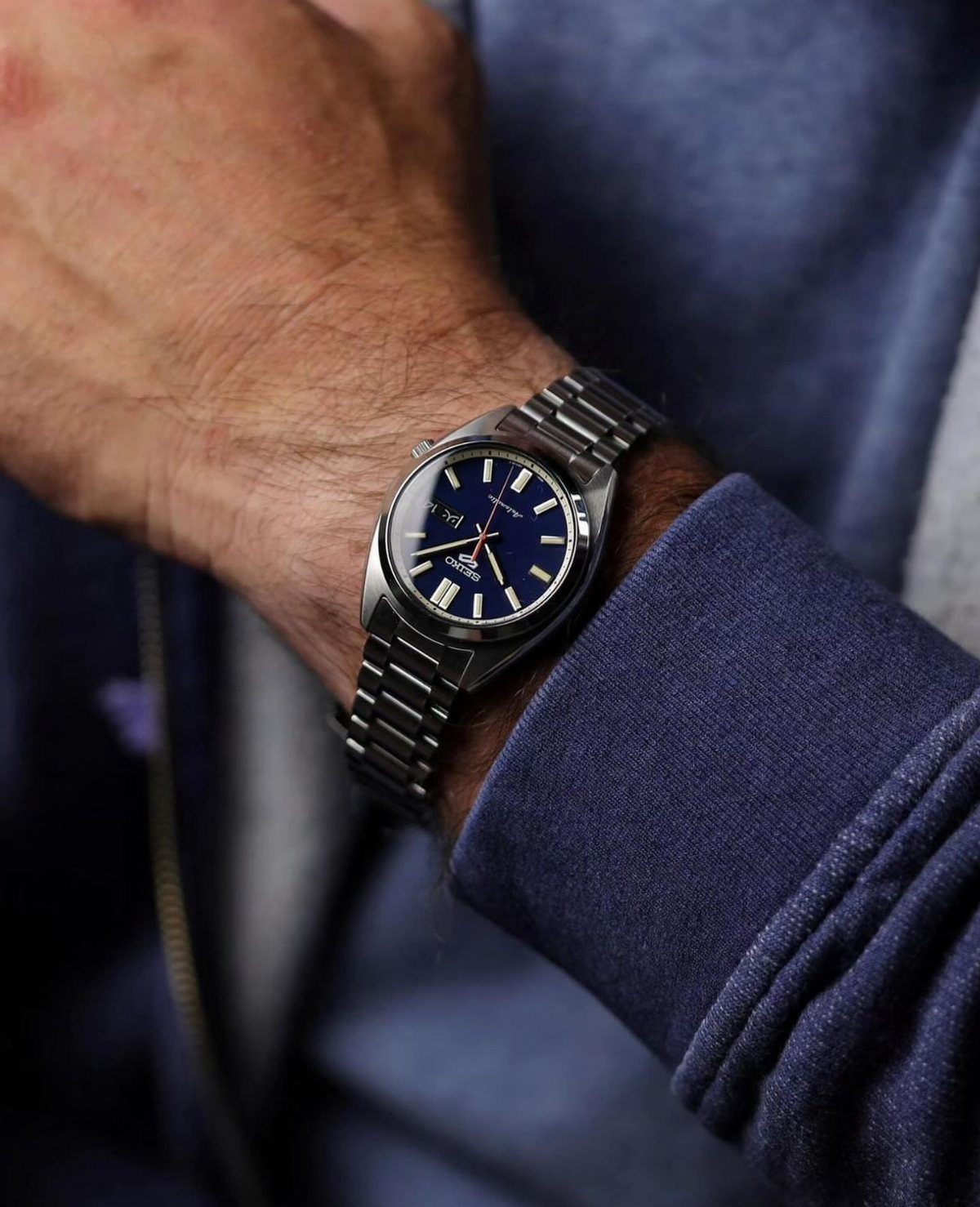
A steel watch with a blue dial does more for a plain sweatshirt than any extra layer would. The metal catches light, and the blue sits easily against casual knits and denim.
Watches are a deep hobby, and one short entry can’t cover it. For now, pick one simple piece and wear it on a normal day.
2. Smart Casual Definition
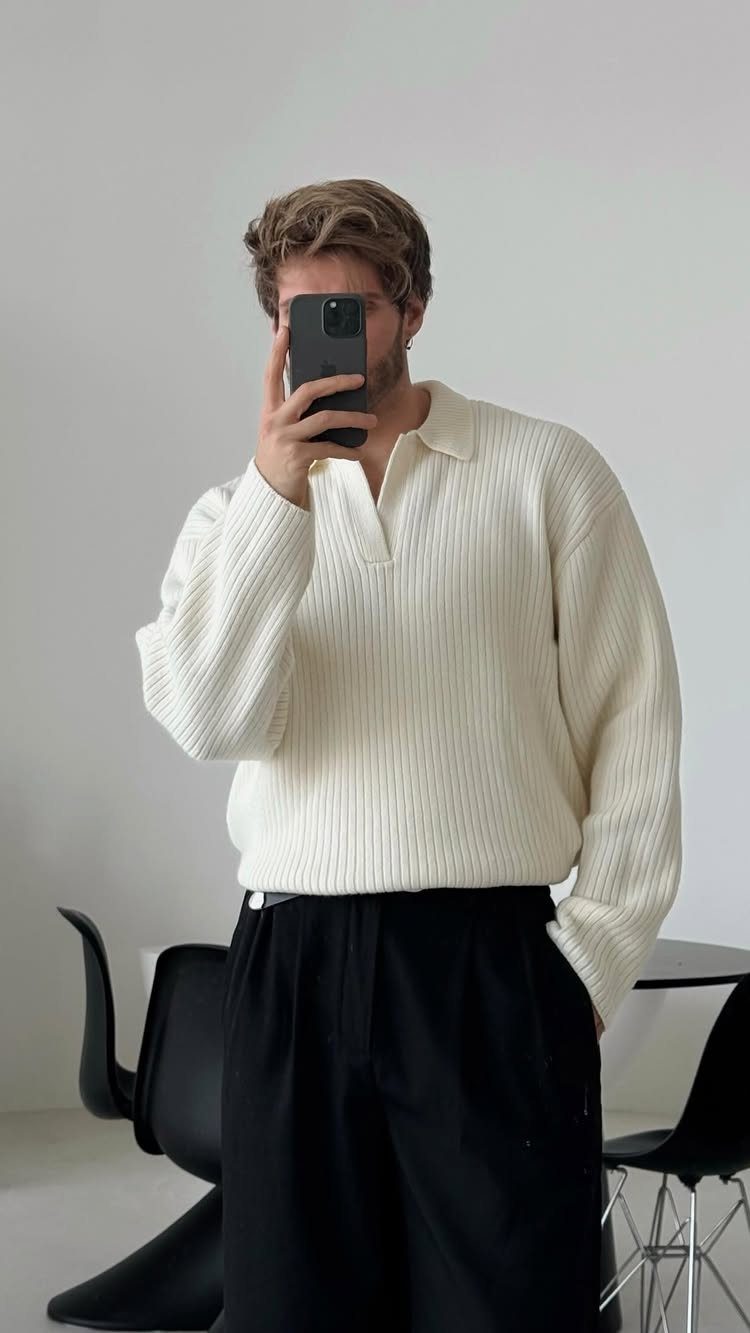
Smart casual works on a simple split: something soft on top, like a knit polo, and something sharp below, like pleated trousers.
The polo collar adds structure that a crewneck lacks, and the ribbed texture reads as considered without trying hard.
For a first attempt, keep the palette to 2 colors. A neutral light top with dark trousers is hard to get wrong, and the trousers do the dressing up.
Swap sneakers for loafers if the room calls for more polish.
3. Fit Is Key
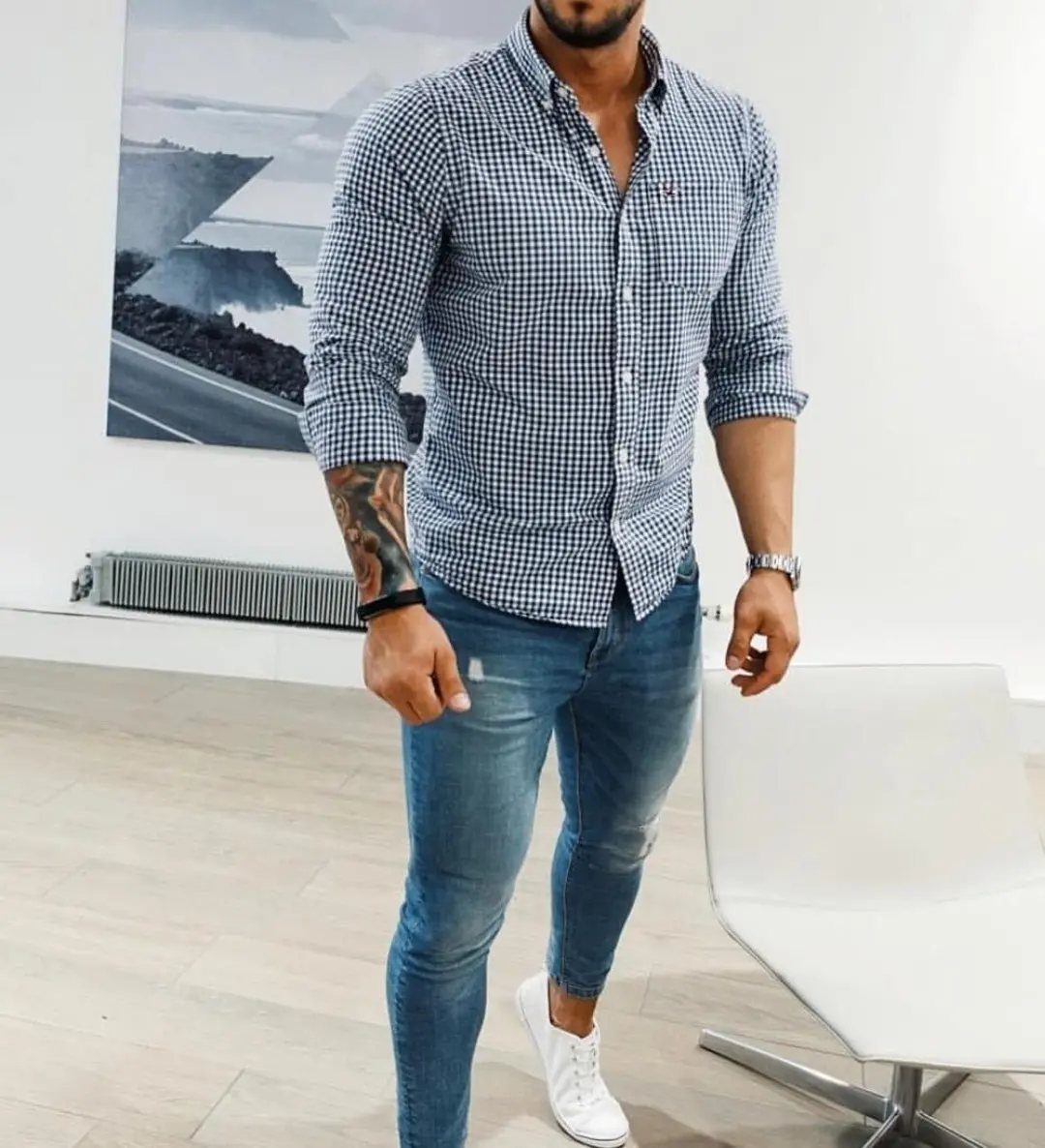
Fit decides whether a cheap shirt or an expensive one looks better, and a gingham button-up that follows the shoulders and chest proves it.
Seams should land at the edge of your shoulder, and the fabric should skim your torso without pulling at the buttons.
Tight jeans work when the shirt is equally close. Mixing a snug top with baggy pants, or the reverse, makes either piece look like a mistake.
If a shirt is nearly right, a tailor can take in the sides cheaply.
4. Casual Footwear
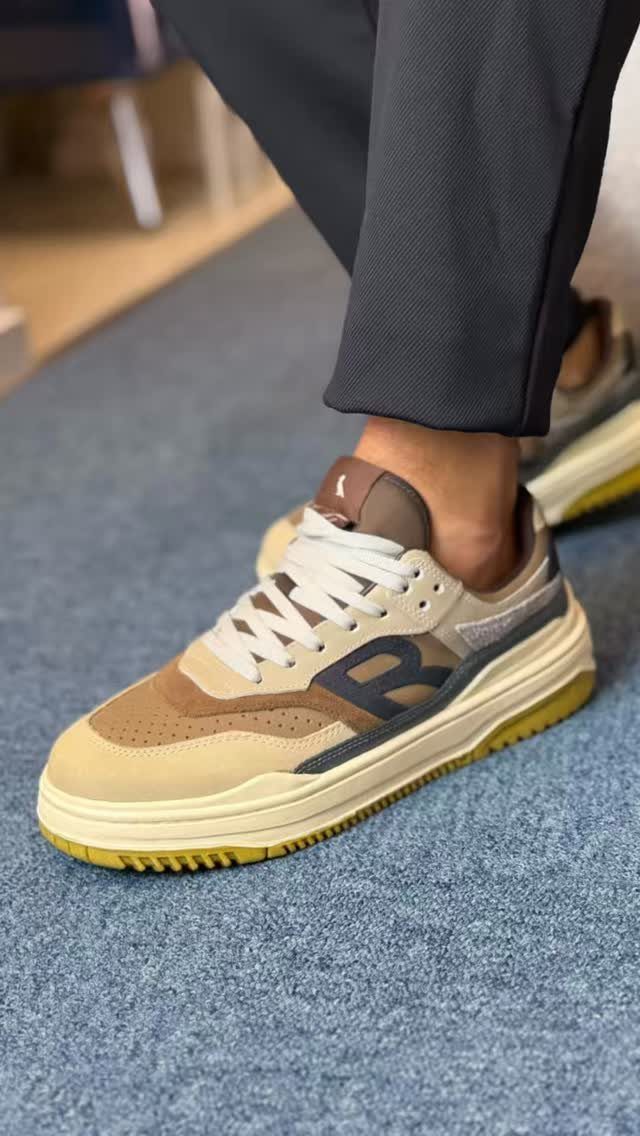
Suede sneakers in tan and brown with white laces are softer than leather and dressier than canvas, which makes them useful across many outfits. Earth tones go with navy, black, olive and denim without any thought.
I’d pick a color-blocked pair like this over bright white if you want shoes that hide scuffs better. Cropped trousers show off the shoe, so check that your socks match your pants.
Suede dislikes rain, so a protective spray is worth buying.
5. Well-Fitting Jeans
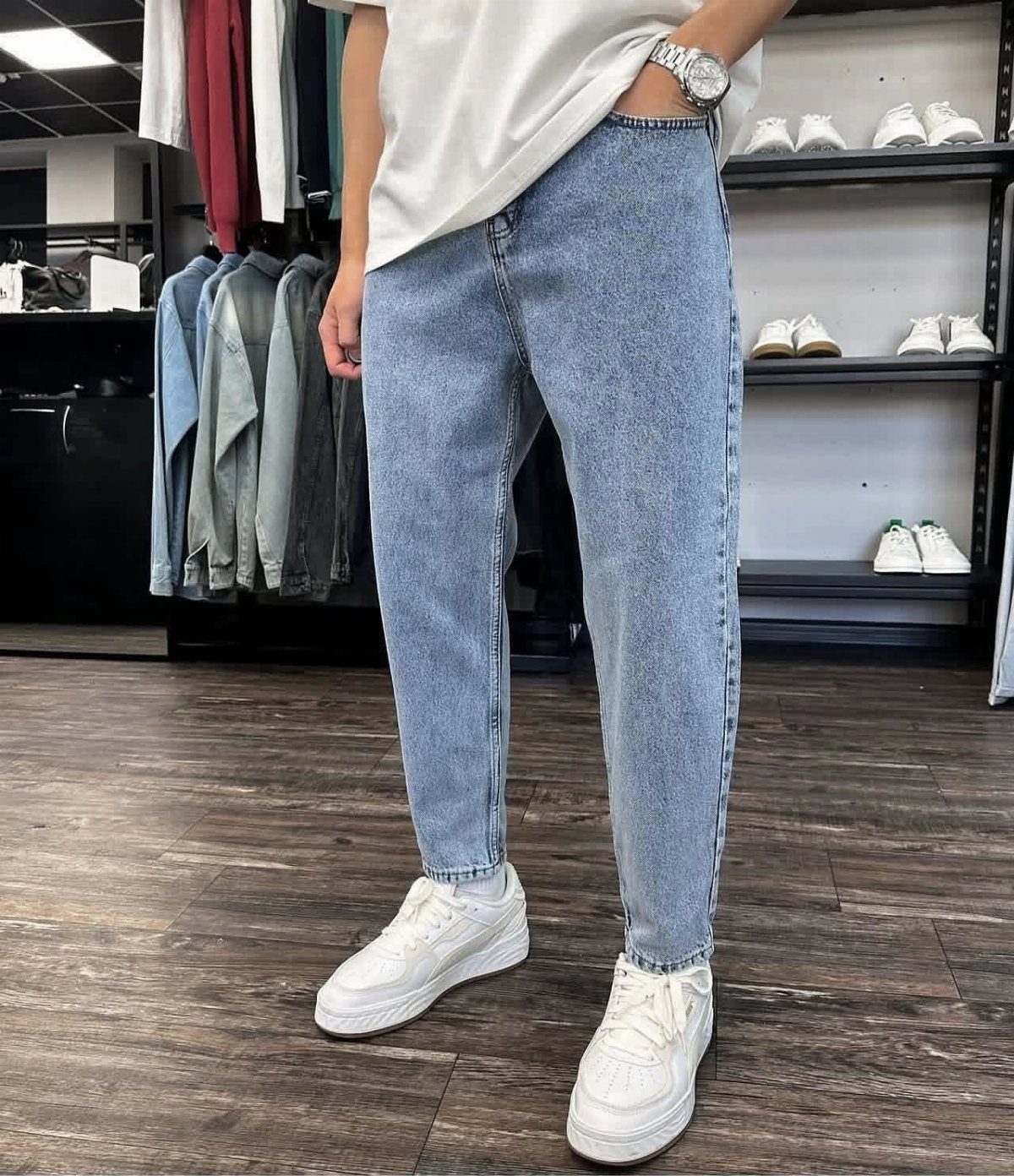
Light-wash tapered jeans give a white tee and white sneakers some contrast without adding a single extra piece. Tapered means roomy through the thigh and narrower toward the ankle, which flatters most builds and keeps the hem off your shoes.
Check the waist first, since a belt can’t fix a bad rise. Then check the length: the hem should sit at or just above the ankle bone for a clean line.
Dark wash is dressier; light wash is the easy weekend version.
6. Casual Style Definition
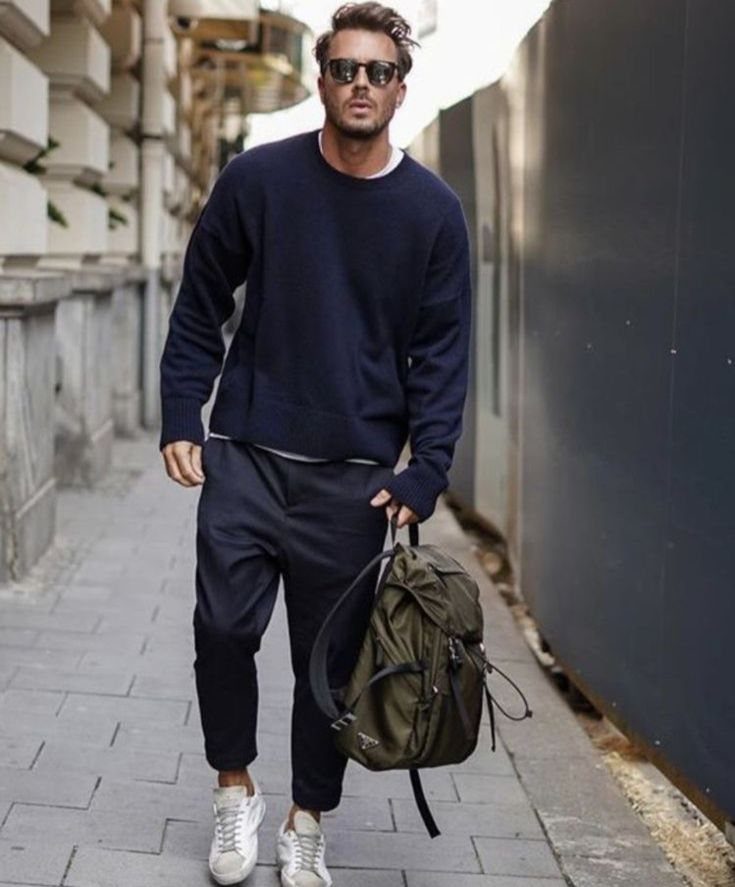
Every piece is something you already know how to wear, and none of it fights the others.
Stick to dark neutrals on the bottom and let one top piece carry the color.
Comfort comes first here, but trousers instead of sweatpants keep the outfit looking intentional.
7. Button-Down Layered Over T-Shirt
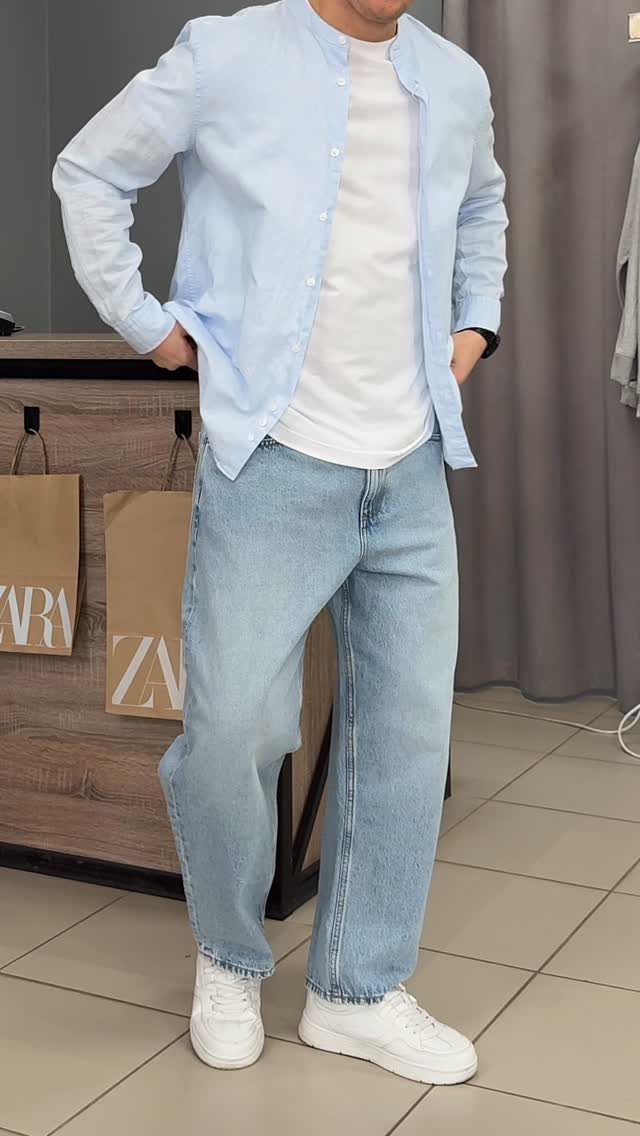
An open button-down over a white tee is the easiest layer I know. Light blue over white over light-wash jeans stays in one color family, so nothing needs matching.
Leave the shirt unbuttoned and untucked, and check that the hem ends around mid-fly, so it doesn’t swallow the tee. Rolling the sleeves to the forearm keeps it relaxed.
White sneakers finish it. A plain white tee also works as a clean base under a darker shirt.
8. Crewneck Sweater with Brown Trousers
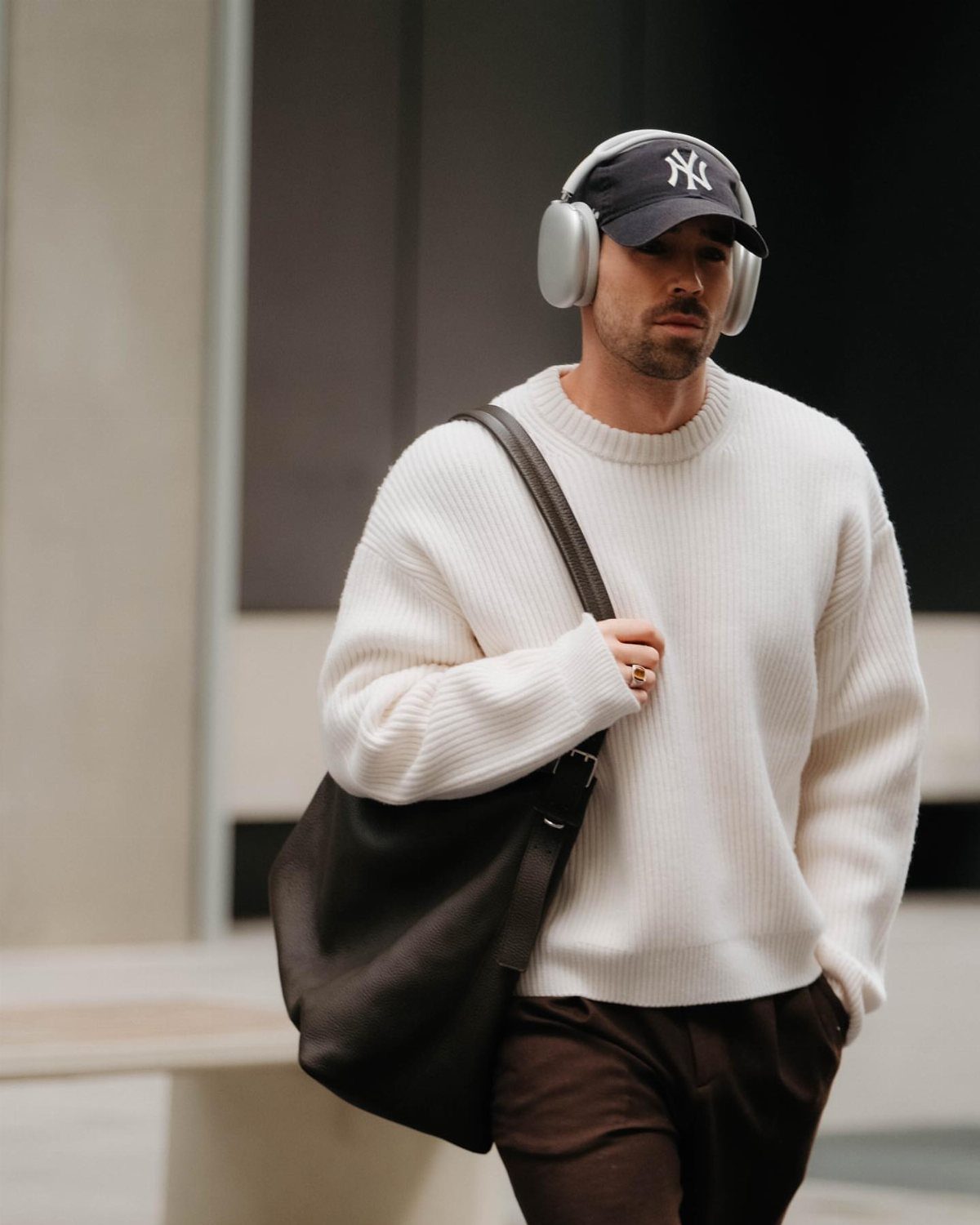
Ribbed knit gets its interest from texture, so the color can stay quiet. An off-white crewneck with dark brown trousers is a pairing I like more than the usual gray and navy, because brown feels warmer against cream.
Pick a rib that sits close to the body and a trouser that is straight, not skinny. A baseball cap keeps the look casual, and a dark leather bag ties back to the brown.
Black trousers are the safer swap if brown feels like a risk.
9. Leather Jacket with Wide Jeans
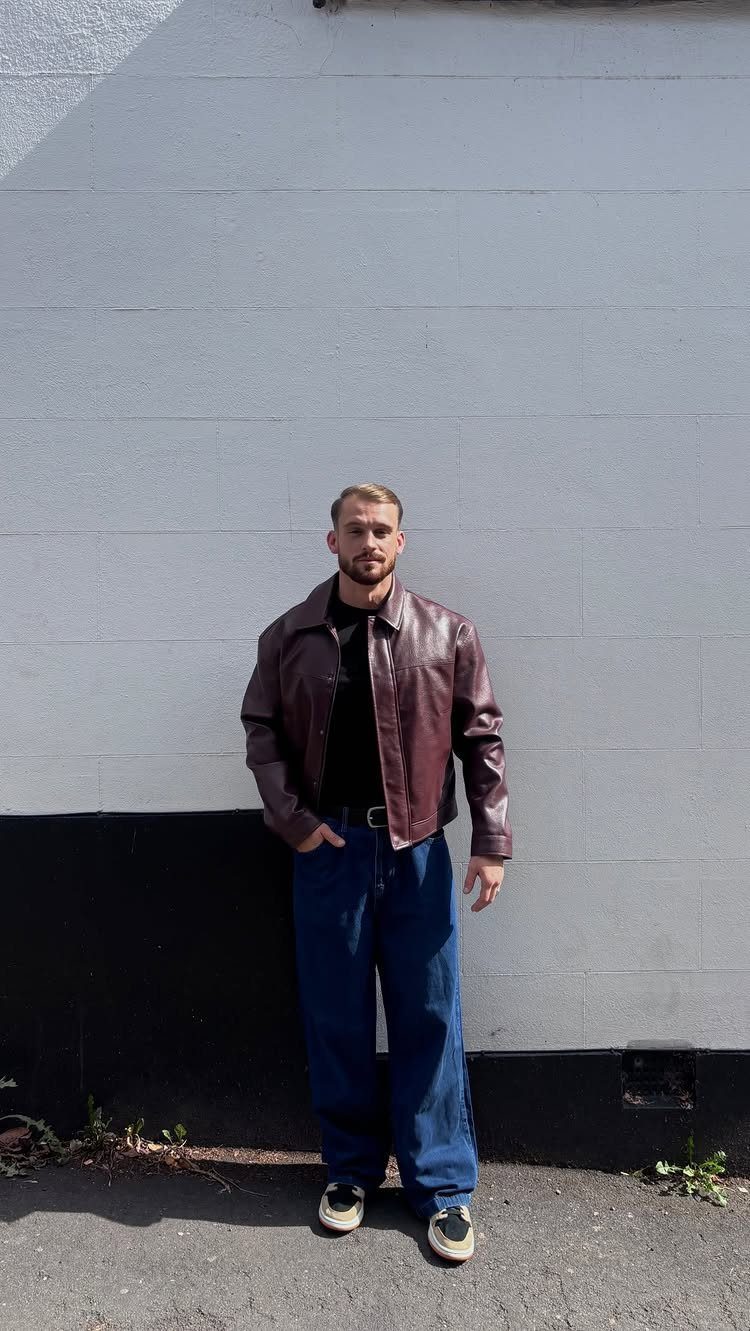
A deep maroon leather jacket is a stronger move than black, and it still works with almost anything dark. Keep the shirt black and let the jacket be the one color in the outfit.
Wide-leg jeans balance the jacket’s structure, since a boxy top and a straight leg can look stiff together. Let the hem fall to the top of your sneakers without piling up, so the shoe still shows.
Try the jacket on with your usual shirt first. The shoulders should sit flat, with no pulling across the back.
Maintaining Your Casual Wardrobe
Wash casual clothes by the care label, and do it regularly. The label tells you what the fabric can take, so a sweater and a pair of jeans rarely belong in the same load.
Storage depends on the piece. Hang button-ups and jackets so the shoulders hold their shape, and fold t-shirts and sweaters, since a hanger can stretch knitwear out of line over time.
Fix small problems right away. A loose button or a small rip is a quick job at home or a cheap one at a tailor, and it only gets worse when you keep wearing the piece.
A clean, well-kept basic looks sharper than a pricier one that has been neglected. That is the whole case for maintenance: it costs little and shows on a normal day.
Frequently Asked Questions
What exactly does smart casual mean?
Smart casual means pairing something soft with something sharp: a knit polo on top with pleated trousers below, for example. A polo collar gives the chest and neck a shape that a plain crewneck can’t hold on its own.
Stick to 2 colors, say a pale gray knit over dark navy trousers, and let the trousers carry the polish. When the setting leans dressier, loafers in place of sneakers close the gap fast.
Are jeans okay for business casual?
Jeans pass at most offices when the fit is clean and the denim is intact, with no tears, worn-through knees or fraying hems.
Keep them slim, straight or moderately tapered, dark in wash and hemmed. Jeans that are too tight look wrong, and a dark wash reads dressier than a light one.
What is considered business casual?
Business casual is a broad category today.
Gray flannel trousers sit comfortably in that range, and so do well-fitted dark jeans. I’d start with medium gray slacks, because that shade plays well with jackets in navy, green, burgundy or brown.
Some men push it too far with things like dressy sweatpants or dress shoes built on running soles, so a few basic rules help.