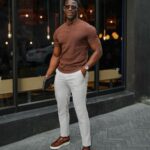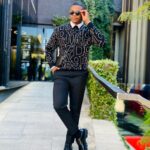
The 10 styles here run from business formal, where a navy suit and a visit to the tailor do the work, to tactical techwear, a black hooded jacket with olive cargos that I would keep off office and date days.
Fit is the one thing every style shares, so a size that sits right on your shoulders matters more than which look you choose.
1. Smart-casual Style
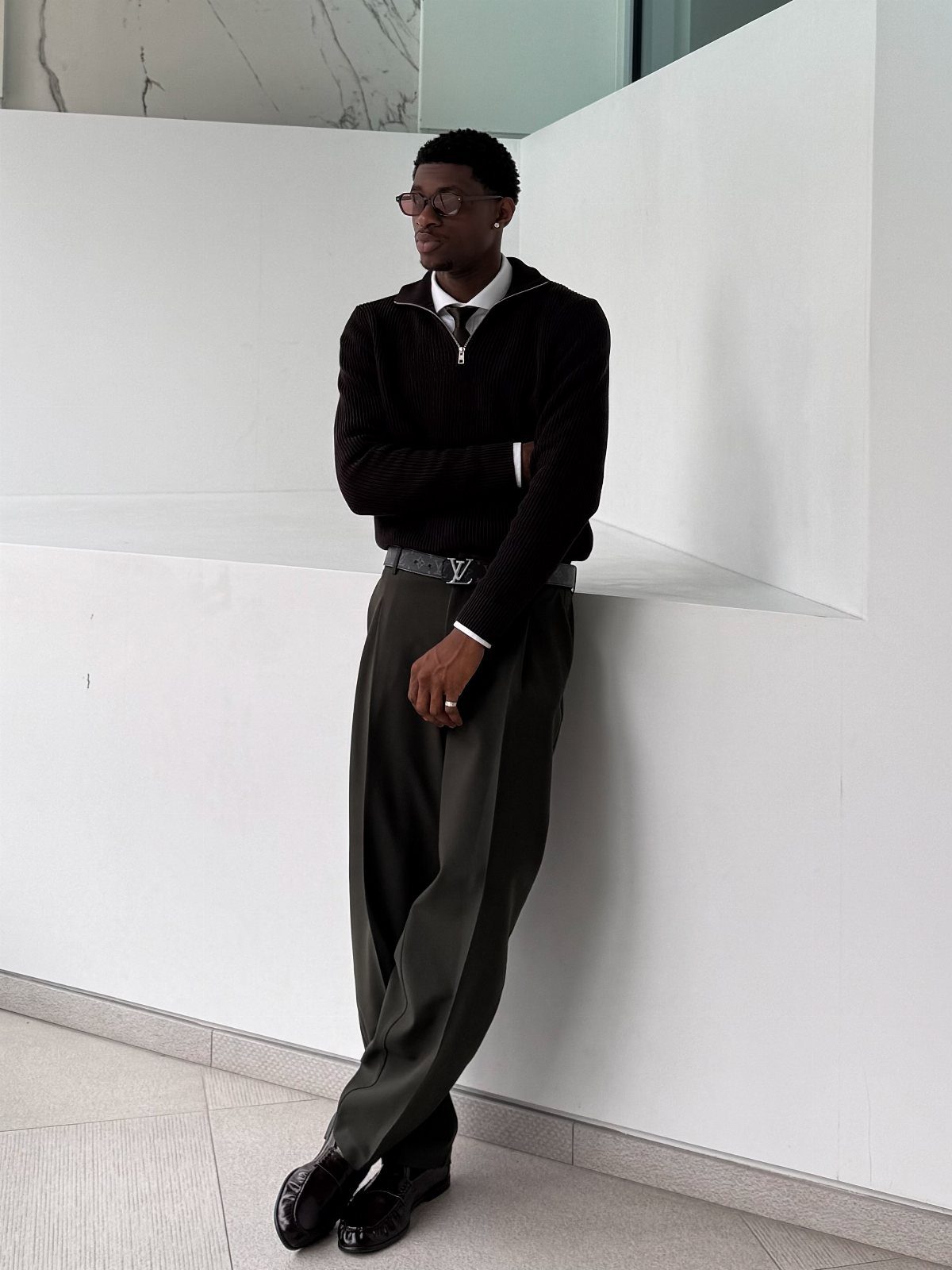
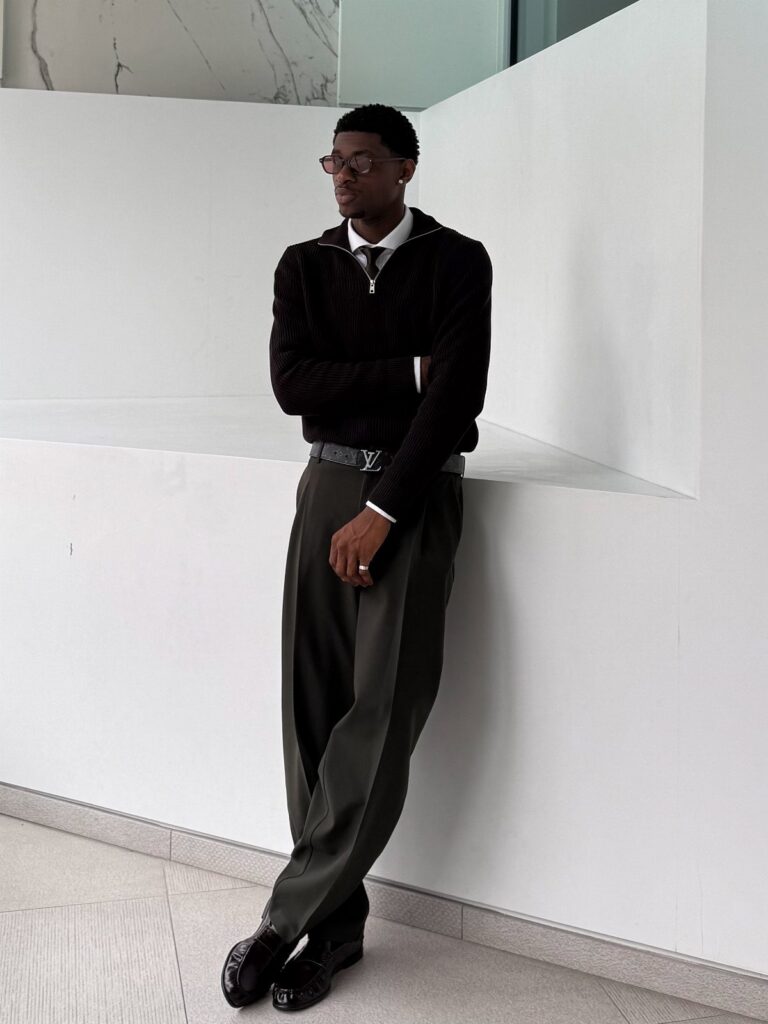
Smart-casual works because one dressy piece anchors the outfit and the rest relaxes around it. A tie under a dark half-zip sweater is the easiest way to dress up knitwear, and loafers take the stiffness out of it.
Keep the palette dark and close in tone, so the tie and trousers read as one deliberate look. Let the sweater do the talking, and keep every other piece quiet enough that it can.
Pleated trousers give you room through the hip, which many men find more comfortable than a slim cut.
2. Streetwear Style
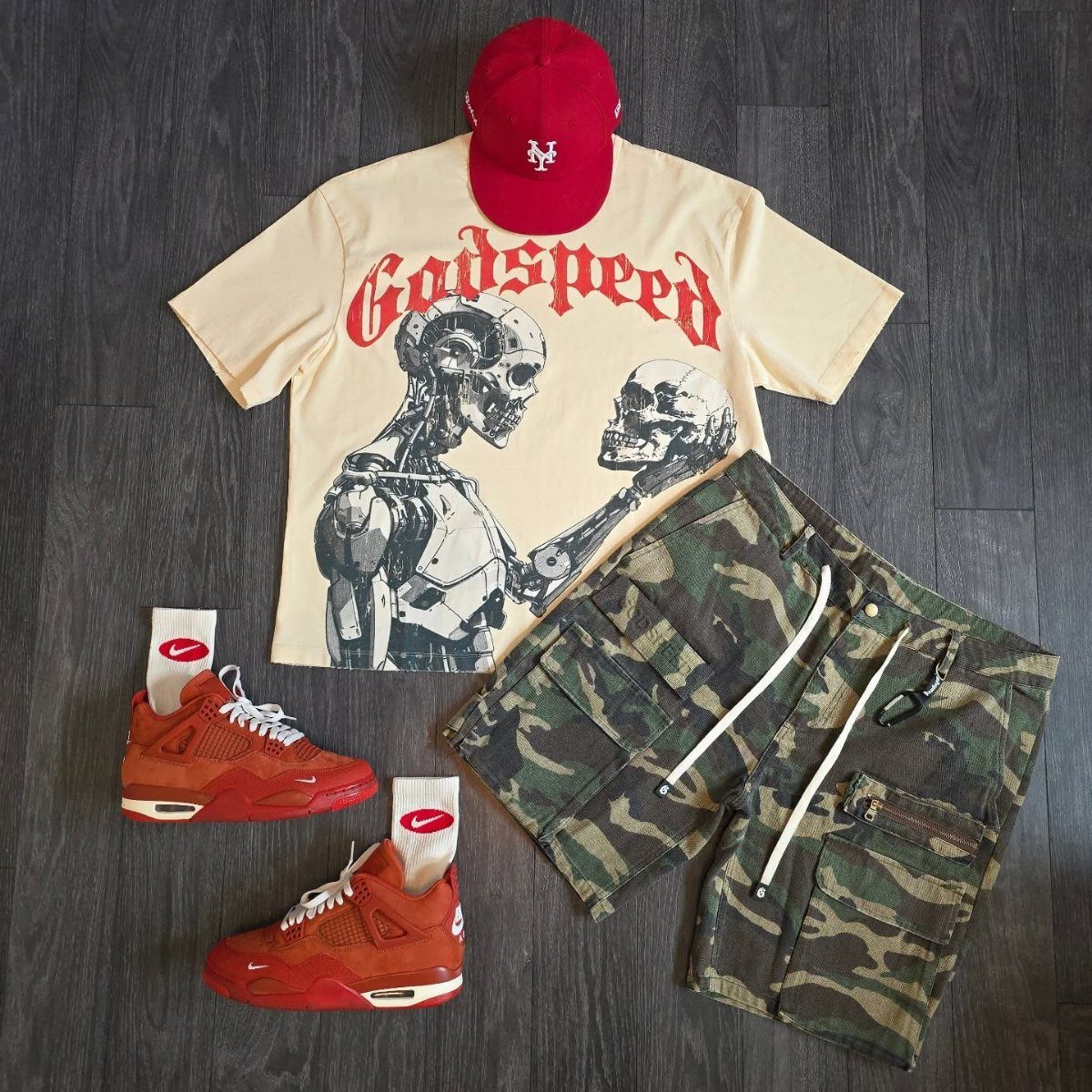
Streetwear is built on contrast: a loose graphic tee, camo cargo shorts and a team cap all pull in different directions, and the outfit still holds together. A cream tee is the easiest base because it quiets the camo.
Pick one color to repeat. Red on the cap and the sneakers ties the top to the bottom, so nothing looks random.
Crisp white socks are a small detail that matters. Keep the sneakers clean, since they are the loudest thing on you.
3. Minimalist Style
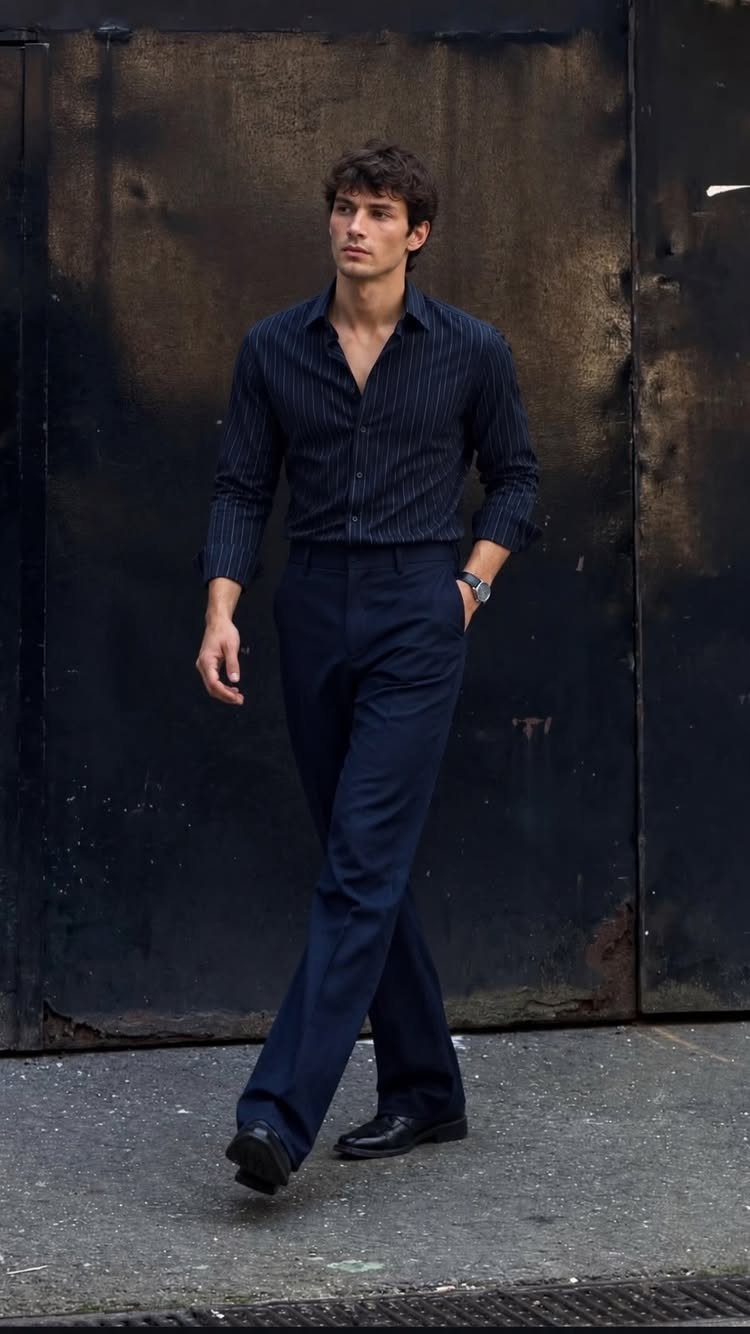
Minimalism asks for fewer decisions, not fewer clothes. Stay in one color family, like navy shirt over navy trousers, and a subtle pinstripe adds texture without breaking the line.
Tuck the shirt in and keep the trousers tailored, because the clean silhouette is the whole look. A plain wristwatch is all the accessory it needs.
I like this approach for work days when I do not want to think. The cost is that a poor fit has nowhere to hide.
4. Preppy Style
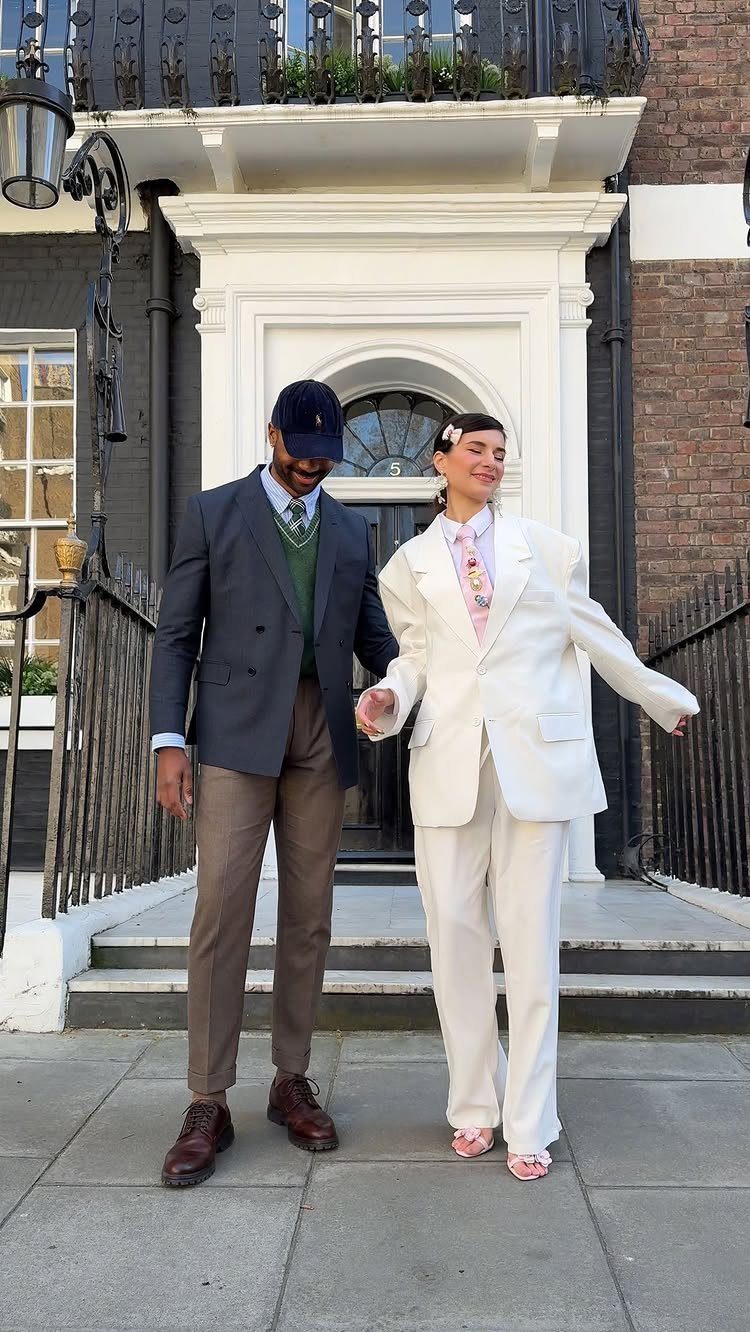
A cricket sweater vest over a collared shirt and tie is the quickest way to look Ivy League without wearing a full suit. Add a navy blazer and trousers, and you have layers that look neat but not stiff.
A baseball cap is the loosening move here. Keep the pieces simple and the fit clean, and the look reads as polished instead of dressed up for a part.
Stick to one or two colors beyond navy, such as the green vest. More than that and the look turns busy fast.
5. Gorpcore Style
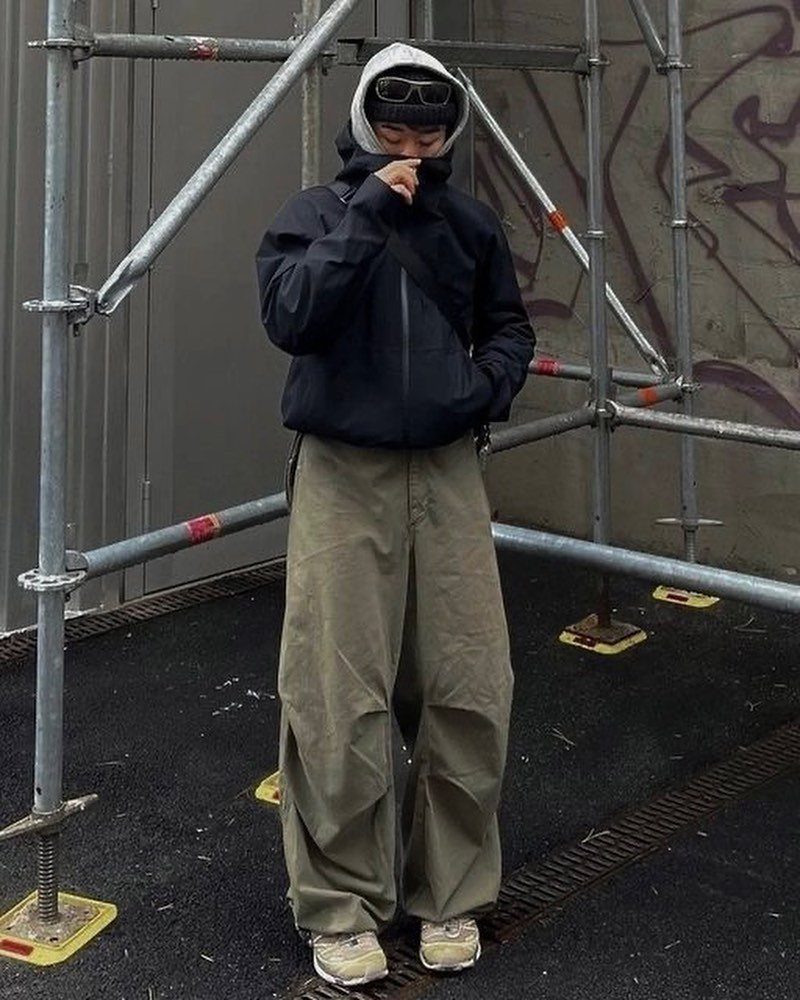
Gorpcore takes trail gear and wears it in town. A black technical jacket, wide olive pants and trail sneakers cover the basics, and a beanie finishes it.
Wide pants balance a bulky shell, so the outfit does not look top-heavy. Muted colors like black and olive are easier to mix than bright ones.
I would spend on the jacket and let the rest be simple. Sunglasses pushed up on the beanie are a small touch that suits the look.
6. Skater Style

Baggy is the rule in skater style: ultra-wide-leg jeans, an oversized striped henley and dark sneakers. Skateboarding culture of the 1980s and 1990s gave us this look, and its baggy shapes and sturdy basics still show up in everyday menswear.
Let the jeans stack a little at the ankle over flat-soled shoes. Dark sneakers hide scuffs, which suits anyone who actually rides.
Keep the top loose but not shapeless. A striped henley adds pattern without needing a graphic.
7. Business Formal Style
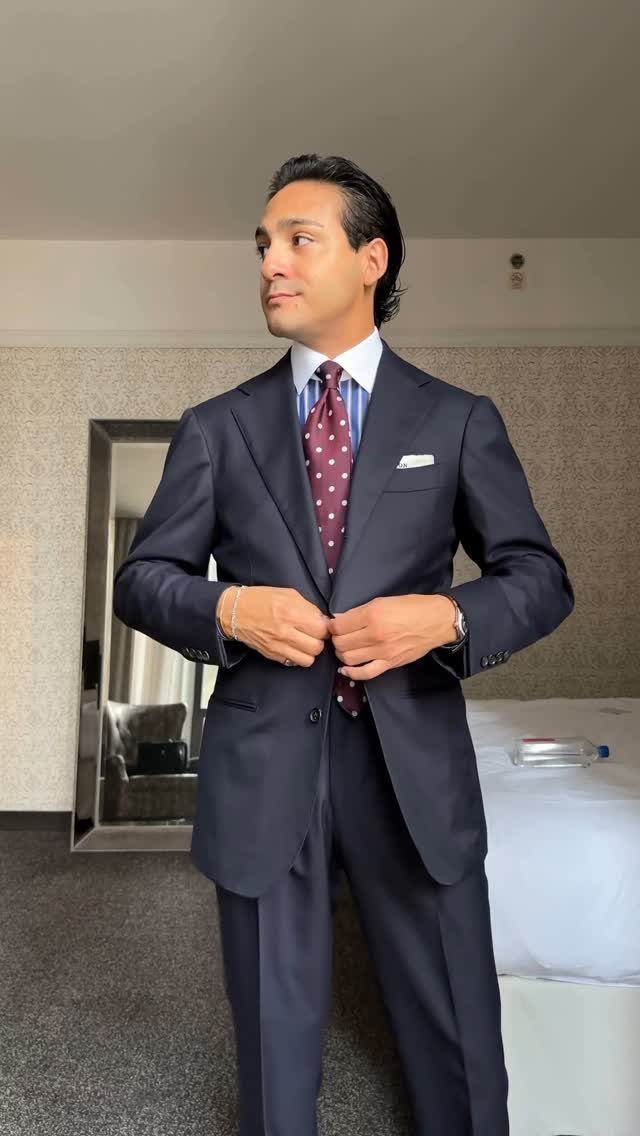
A navy suit is the safest base in business formal, and a contrast-collar shirt with a small-scale tie pattern adds character without breaking the rules.
Keep the shirt and tie quiet next to each other: stripes on the shirt work best with a simple dot on the tie.
Button only the top button on a two-button jacket, and check that the sleeves show a little shirt cuff. Fit matters more than price here, so a tailor’s visit is the best money you can spend on it.
I would pick navy over black. It works for more men and more rooms.
8. Grunge Style

Grunge layers a graphic tee over a long-sleeve shirt, then drops everything into wide black pants. The mismatch is intentional, and a loose, slightly slouchy fit is what makes it read right.
A red tee over white is an easy pairing, since the white sleeves frame the color. Add a plain belt so the baggy pants still have a waistline.
I like keeping the pants black and letting the tee do the work. Faded, worn-in pieces look better here than anything crisp.
9. Casual Y2K Style

Casual Y2K is relaxed on top and loud in the details. An open zip hoodie over a white tee, wide-leg blue jeans and tan boots give you an easy base, and the accessories carry the era.
Pick one or two: a tag pendant necklace and a belt with a chain are enough. A third Y2K piece tips the outfit into costume territory.
Let the jeans fall over the boots, and keep the tee plain white so the hoodie and jewelry stand out.
A distressed hoodie works, though I would let it be the only worn-in piece and keep the rest of the outfit clean.
10. Tactical Techwear Style
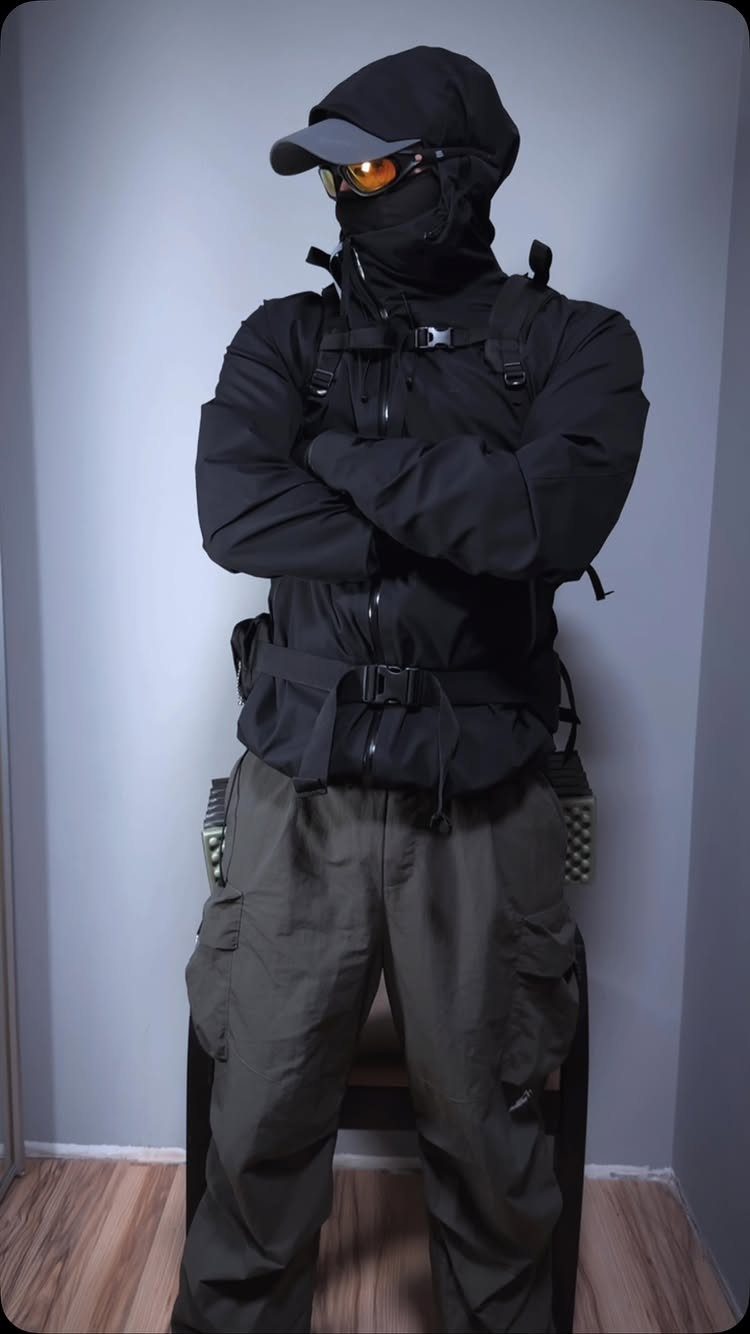
Tactical techwear works as a full system: a black hooded jacket, a cap, a face covering and loose olive cargo pants. The black top and olive bottom keep it cohesive, so the pieces stay functional-looking rather than random.
Loose cargos balance the bulk of a hooded jacket, and a cap keeps the layers from feeling heavy up top. Goggles and a backpack are extras you can add once the basics work.
This look is bold for an office or a date, so I would save it for casual days. Keep the palette to black and olive, and let the utility details speak.
Importance of Fit
Fit decides more than price does. A plain white tee and jeans that fit will beat an expensive suit that hangs off you, because extra fabric throws off your proportions and makes you look shorter and heavier than you are.
Many men buy a size up because it feels more comfortable, or because nobody ever showed them how clothes should sit. Try one size down in a tee or shirt and see whether the shoulders and chest settle.
Steam or iron anything that creases, and keep your shoes wiped down and your hair and beard tidy; a good fit falls apart fast without those. Those small details create polish more reliably than any single costly piece.
Building a Versatile Wardrobe
Build around neutrals: white, black, navy, olive, grey, khaki and brown.
They mix with each other without effort, so you stop worrying about color matching. They also make a good backdrop when you want to add one bolder piece.
Hold each item to a simple test: it should pair with at least 5 other things you own. A shirt that only works with one pair of pants is an orphan, and I would not buy it.
For a quick audit, spend 10 minutes in your closet and compare solid neutrals to patterns, graphics and bright colors. A ratio of 3:1 in favor of solid neutrals is a good target.
Dressing for Occasions
Before you pick a look, work out which occasions fill about 80% of your life. A job with client dinners and a week of freelancing at home plus weekend concerts need 2 different closets.
I sort every occasion into 4 levels, most formal first: formal (suits, black tie), business (a suit is optional), smart casual, and casual.
At night, a blazer, trousers that actually fit, polished shoes and a fresh haircut tell the host you took the evening seriously. If the invitation hints at something formal, a suit may be expected, so check it before you dress.
Frequently Asked Questions
What are the different dressing styles for men?
The main ones are smart-casual, streetwear, minimalist, preppy, gorpcore, skater, business formal, grunge, casual Y2K and tactical techwear.
They run from a navy suit at the formal end to baggy jeans and trail gear at the casual end. Formality is worth settling first, then you pick the look that matches the occasions you actually dress for.
What are the types of fashion for men?
Start with 4 formality levels: formal (suits, black tie), business (a suit is optional), smart casual, and casual.
On top of those sit aesthetics like streetwear, minimalist, preppy and gorpcore. Choosing the level first keeps the aesthetic from clashing with where you are going.
What is the 3-3-3 rule for dressing men?
It usually means owning 3 types of clothing: casual, smart-casual and formal.
That covers most situations without a big closet. I would add a check that each piece pairs with at least 5 other things you own, so the three groups mix well.