Which of these looks fits you depends on where the day goes: a desk, a city street, or a slushy sidewalk, and the list covers all three, from wool overcoats and smart outfits to rugged brown boots and a black hoodie with baggy jeans.
The ideas run from a dark olive herringbone overcoat and a charcoal wool topcoat down to a black hoodie with baggy jeans, so the dressy end suits offices and the loose end suits days with no dress code.
Salt and snow decide more than taste does, which is why the list closes on layering, footwear and quality fabrics: wool and other good cloth, plus boots that can handle the weather.
1. Wool Overcoats
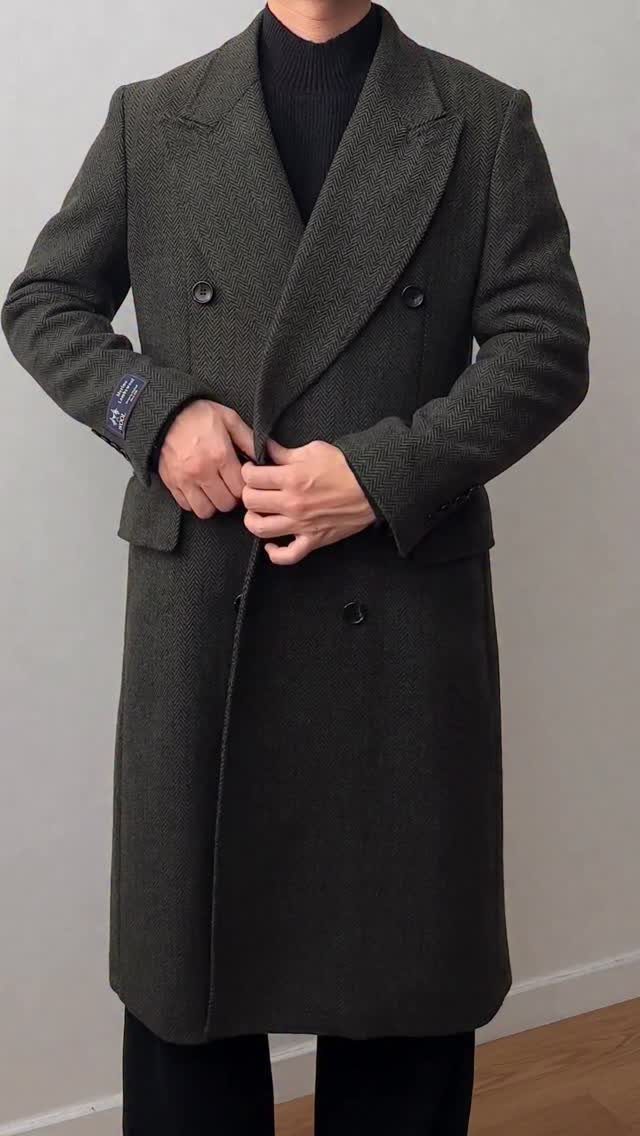
A herringbone overcoat in dark olive is a quieter choice than the usual navy or black, and the weave adds texture without adding a pattern. Double-breasted styling gives you an extra layer of cloth across the chest.
Keep everything underneath dark and slim. A black turtleneck with black pants gives the coat room to be the star, and that one piece is all the outfit needs.
2. Casual Winter Outfits
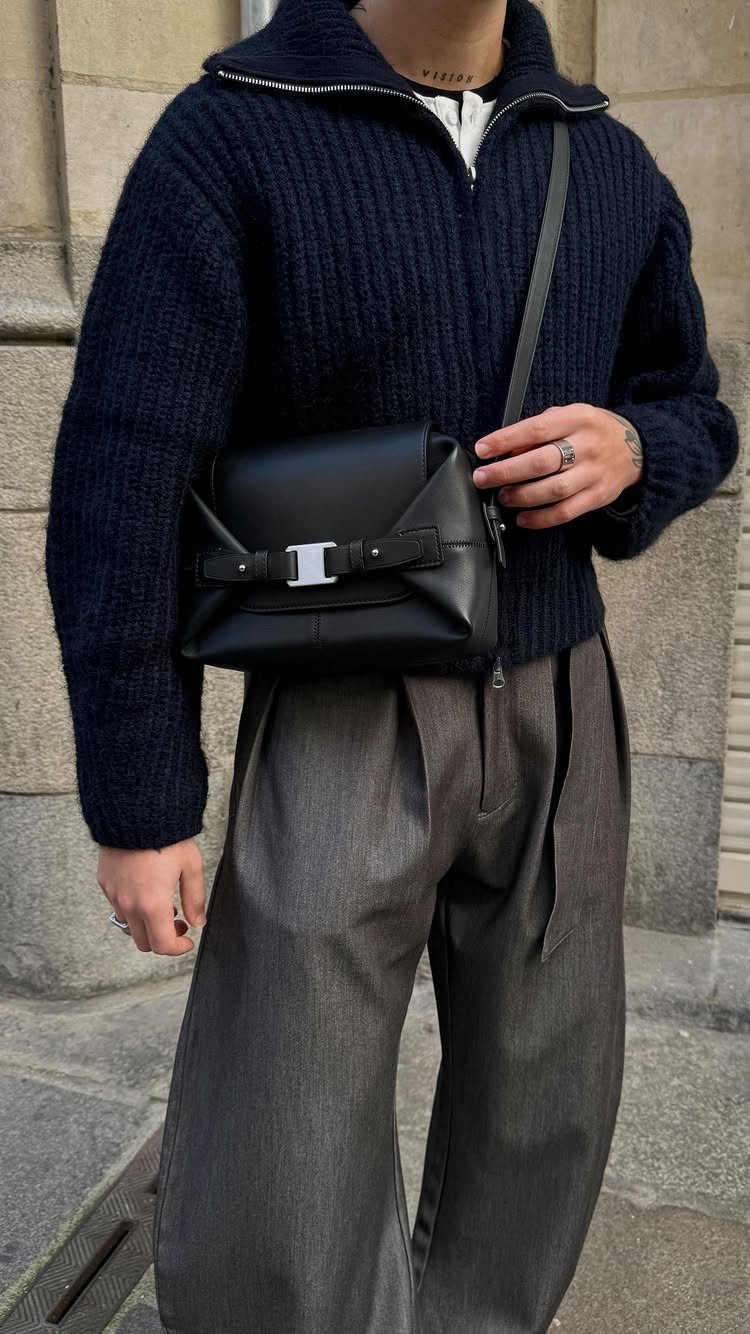
Comfort decides a casual winter outfit, and a chunky zip knit in navy does most of the job. A bulky sweater looks best to me with wide-leg trousers in grey, since the extra fabric below balances the volume up top.
Leave the collar open or zip it to the chin as the day changes.
Pleated trousers sit better over thicker socks and boots than skinny cuts do.
3. Smart Winter Outfits
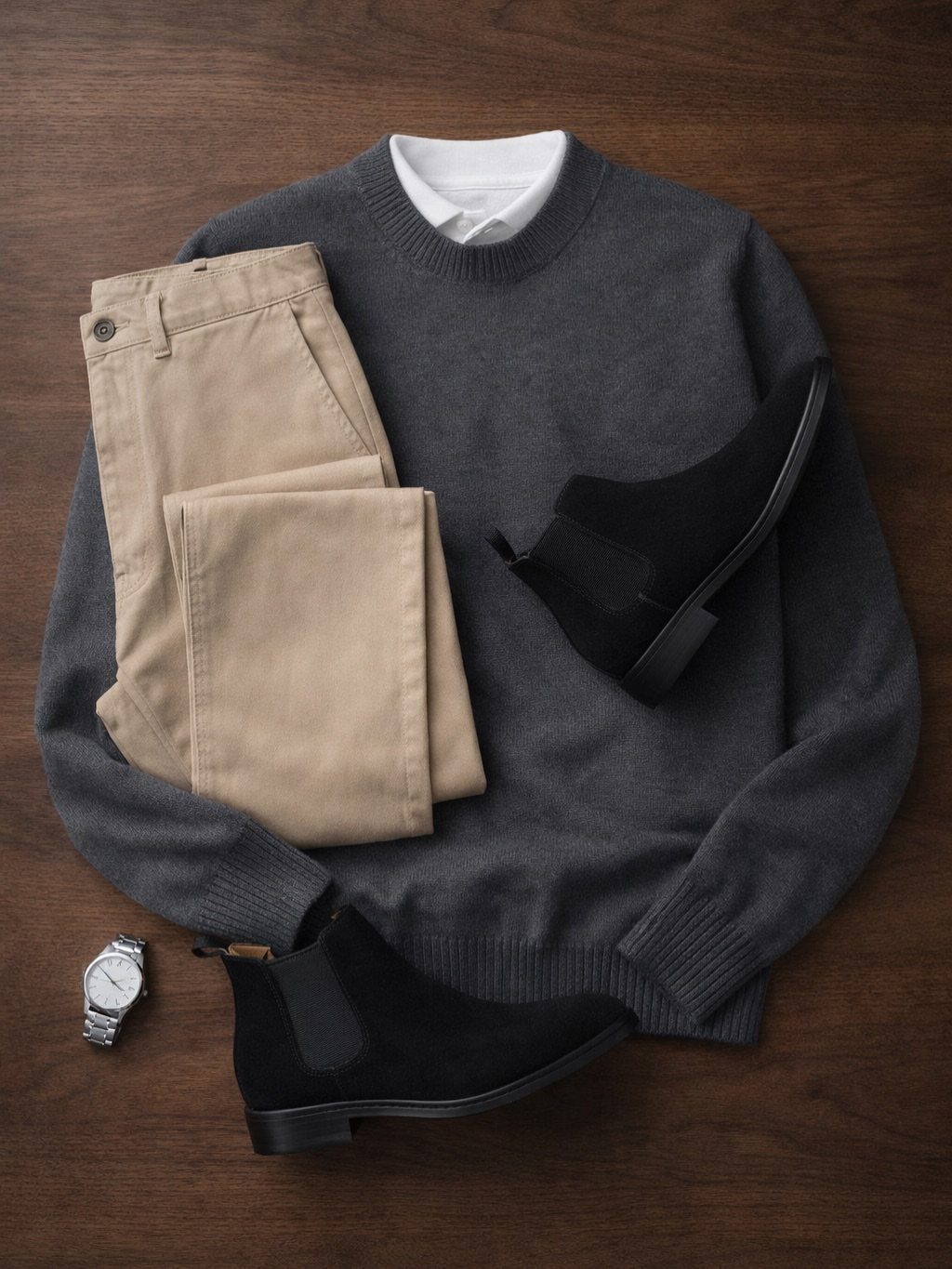
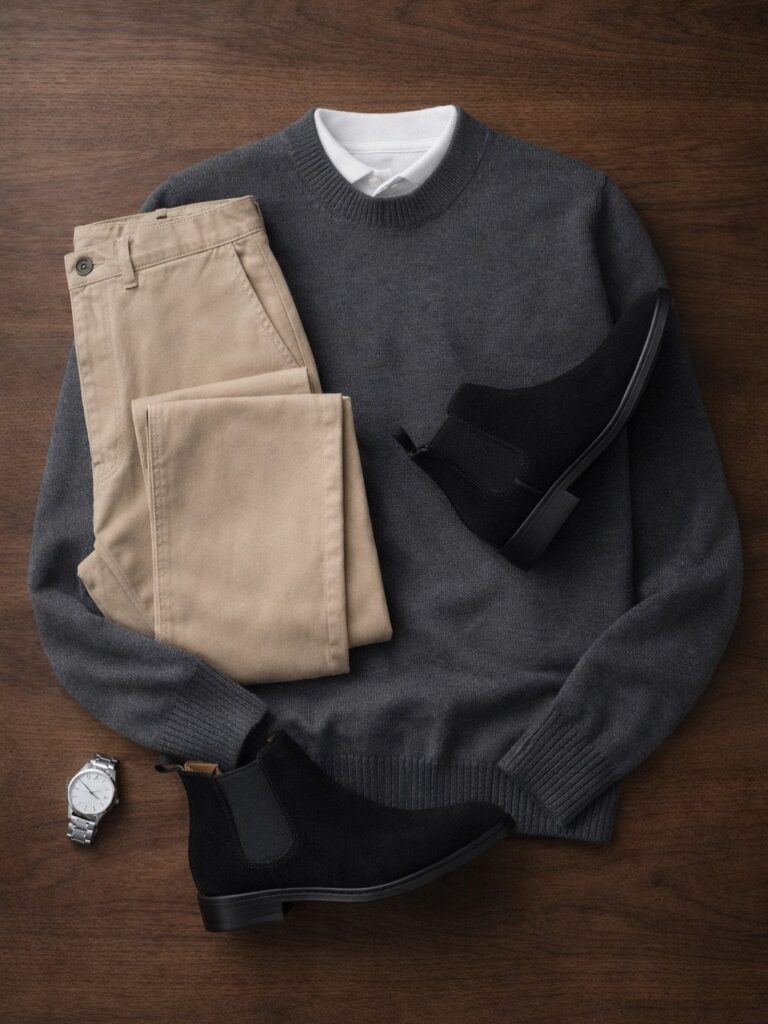
A grey crewneck over a white collared shirt is the simplest smart winter layer I know. The sweater adds warmth, and the shirt collar gives the look an office-ready edge.
Suede reads softer than polished leather, so the boots feel winter-appropriate while staying sharp.
A silver watch is enough for accessories. Keep the sweater fitted so the shirt hem doesn’t hang below it.
4. Dark Denim for Winter
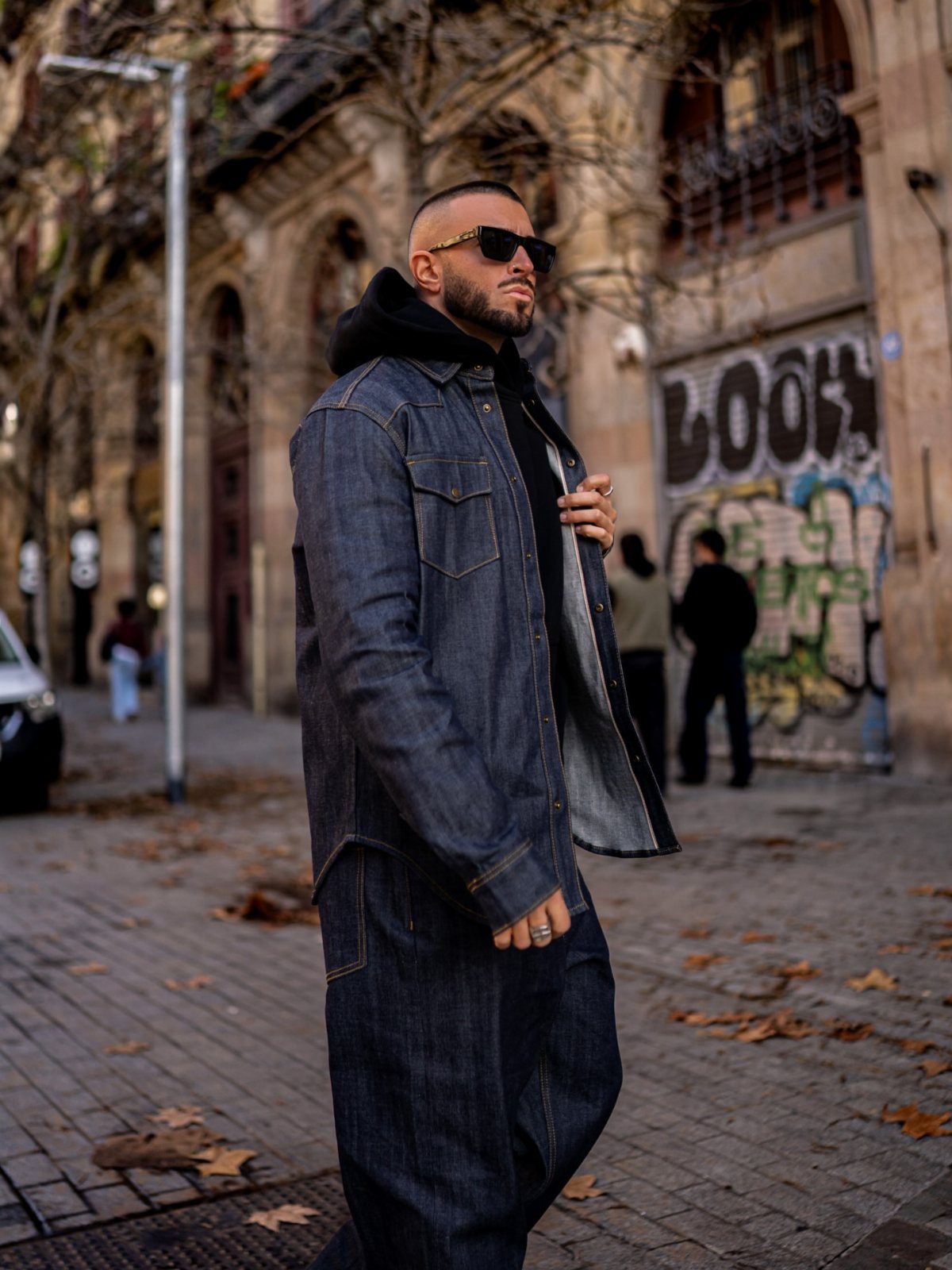
Matching dark denim, shirt and pants together, makes a full outfit that looks deliberate rather than accidental. Keep both pieces in the same deep wash so they read as one.
Underneath, a black hoodie adds warmth and keeps the palette dark, which suits winter well. Sunglasses and a cobblestone street are optional, but the dark tones hide the slush and salt that winter brings.
Skip any contrast stitching or fading; plain, uniform color looks best here.
5. Gilets and Sweaters

Under a quarter-zip, a shirt and tie turns a plain brown sweater into something you can wear to work.
Brown pairs well with black trousers and dress shoes, and the zip lets you adjust how much of the collar and tie shows.
Choose a knit thin enough to sit smoothly under a jacket. A gilet works the same way: a warm layer on the torso that doesn’t bulk up the sleeves.
6. Incorporate Patterns Sparingly
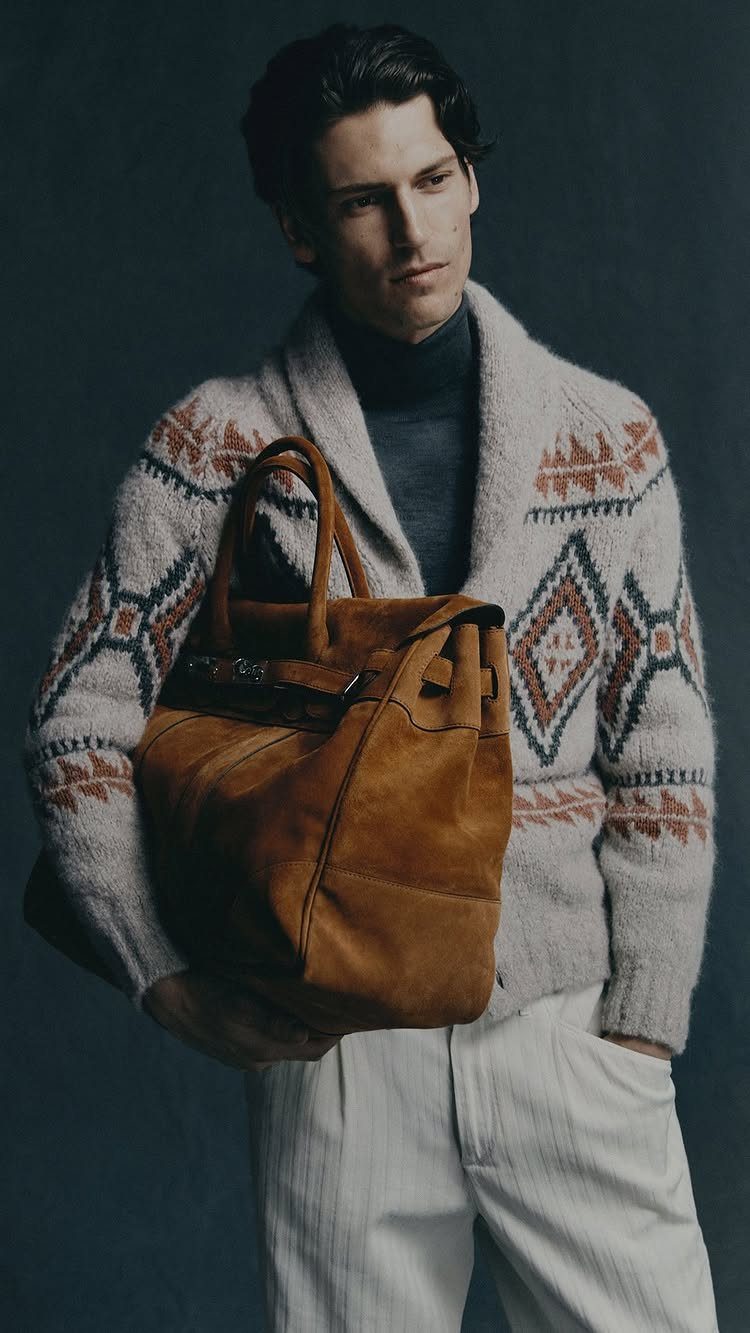
One pattern per outfit is my rule, and a knit shawl cardigan is a good place to put it. Everything around it stays plain: a dark turtleneck underneath and light trousers below.
The contrast lets the pattern stand out instead of competing with other pieces. A large brown suede bag adds a second texture without adding another print.
If the cardigan is busy, let everything else stay solid. If you’re unsure, pick a smaller pattern.
7. Brown Leather Jacket with Turtleneck
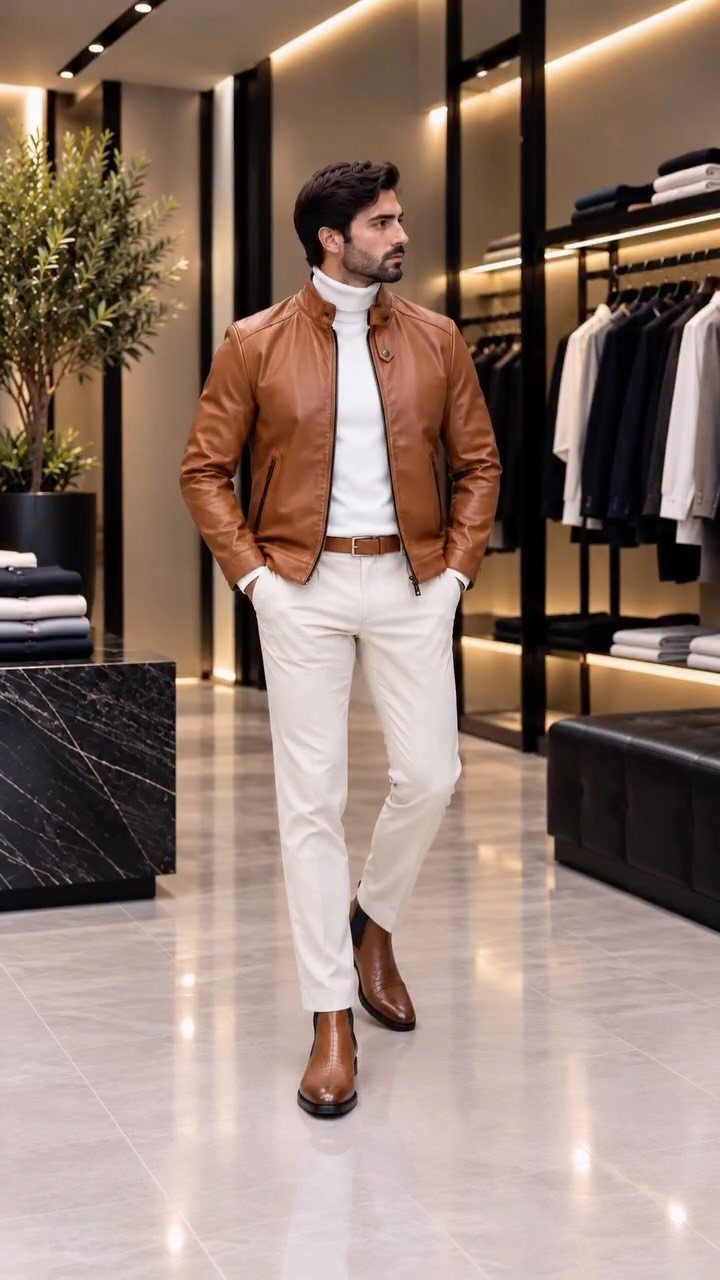
Brown leather over white is a high-contrast pairing, and the turtleneck is what makes it work. A smooth white knit gives the jacket a clean backdrop, so the leather’s color reads richer.
White trousers keep the palette to 2 tones, with brown boots tying back to the jacket. I like that restraint, though white pants and winter slush are a poor match, so save this for dry days.
A fine-gauge merino turtleneck works best here, since a chunky roll neck bunches up at the collar and stops the jacket from lying smooth.
8. Denim Jacket Layered Over Turtleneck
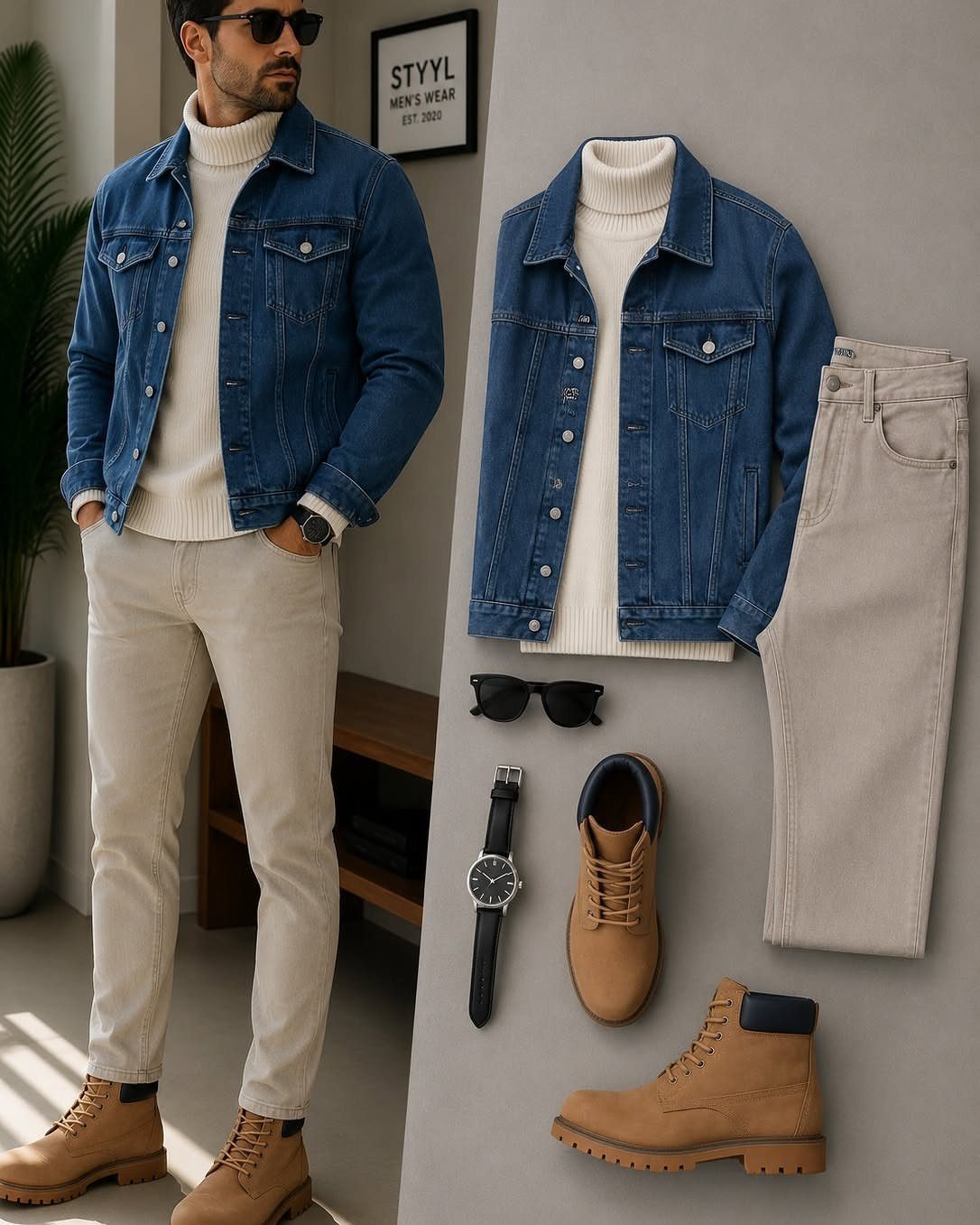
Denim over a white turtleneck is an easy way to get a jacket to do winter work. The knit covers your neck, and the denim blocks wind on top of it.
Beige trousers soften the blue and keep the outfit light. Boots finish it, and I’d pick brown or tan to stay warm in tone.
A watch and sunglasses are all the extras needed. If the day is bitter, a heavier coat can go over the whole thing.
9. Plaid Flannel Over Sweater
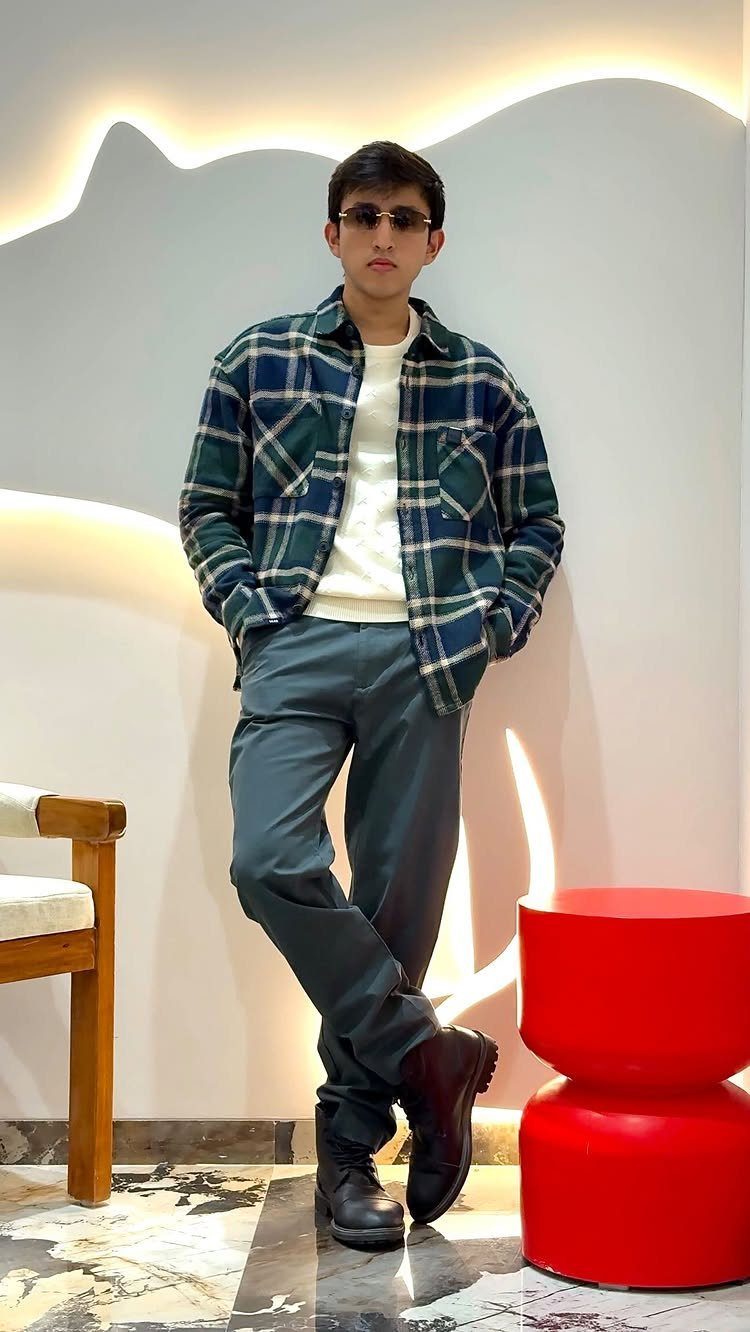
A plaid flannel worn open like a jacket gives a sweater a second, patterned layer without much bulk. Pick a flannel with a slightly roomier fit than your normal shirt so it sits over knitwear without pulling across the shoulders.
Keep the sweater solid and light, as one pattern is enough. Tailored trousers and black boots make it look planned rather than lumberjack.
Per its maker, this is one of 5 winter essentials worth owning.
10. Rugged Brown Leather Winter Boots
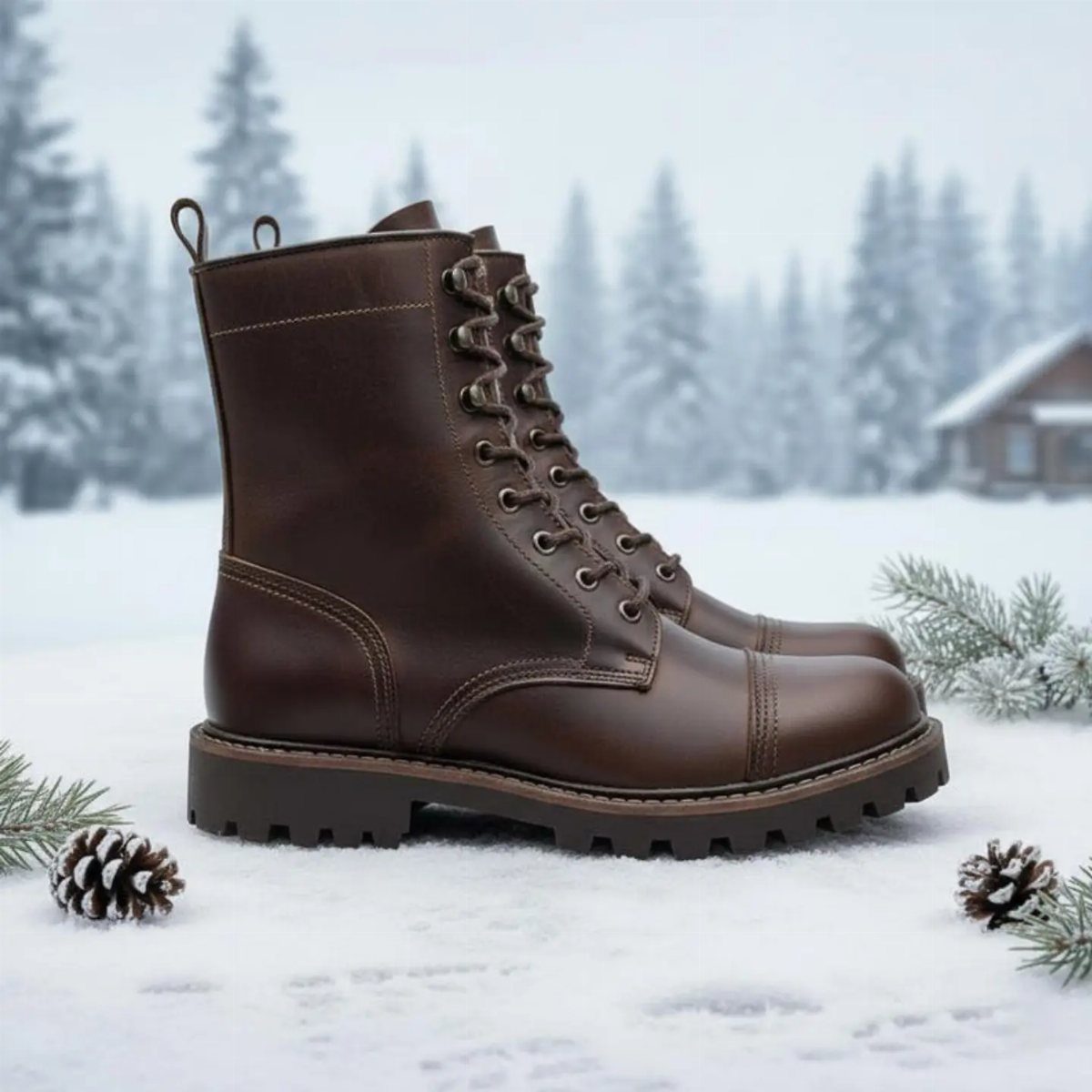
Tall brown leather lace-up boots are the sturdiest base for a winter outfit, and the leather looks better the more weather it sees. I prefer a lace-up to a slip-on because you can tighten it around the ankle.
Wear them with thick socks and pants that fall over the top of the boot, so snow stays out.
Buy a leather conditioner and a waterproofing spray before the first snowfall. Salt marks are far easier to treat early.
11. Black Hoodie with Baggy Jeans
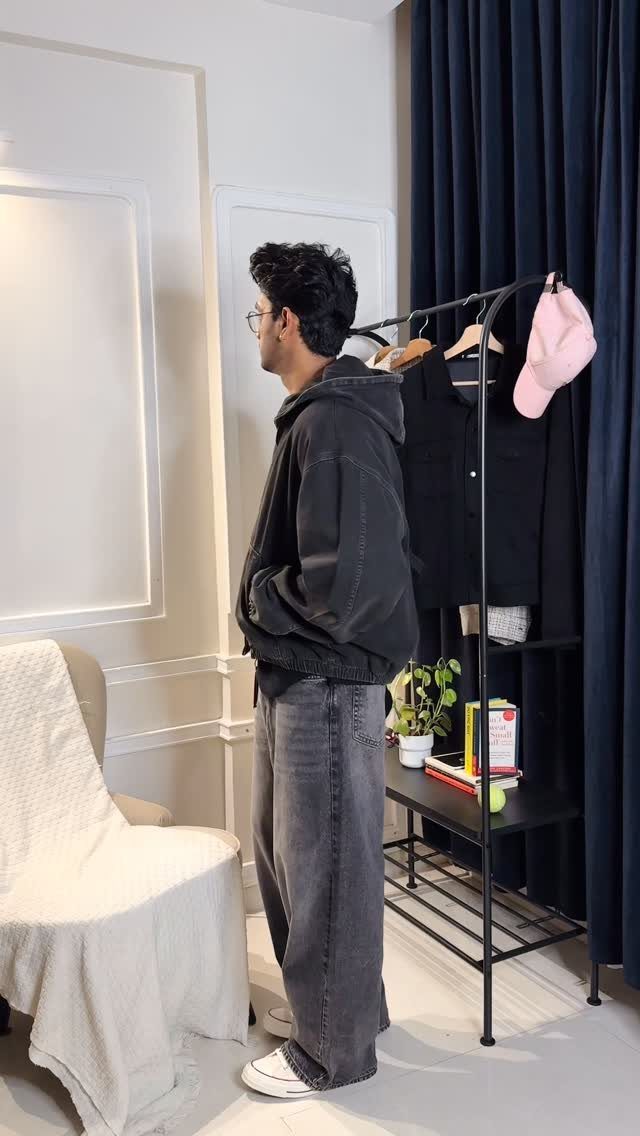
Pair an oversized black hoodie with loose gray jeans and you get about the most relaxed outfit a man can wear in winter.
The volume is the point, so let the jeans fall straight, with a little stacking at the hem.
White sneakers break up the dark tones and keep the bottom half from looking heavy. Grey denim is a softer partner than black, which would blur into the hoodie.
For real cold, add a coat that’s cut long enough to cover the hoodie’s hem.
Layering for Warmth and Style
A white polo makes a clean base layer, thin enough to sit flat under a sweater and plain enough to disappear.
It looks sharper than a plain T-shirt and still adds warmth, and it works under almost any sweater you own.
Dark brown or tan sweaters are the best middle layer. They trap heat and keep a slim profile, which is what stops a winter outfit from looking bulky.
For the outer layer, match the coat to the occasion. For polished settings I reach for a charcoal wool topcoat; for casual days, a suede bomber does the same job with less formality.
In serious cold, go to a heavier coat, but pick one that works with the layers beneath it instead of swallowing them.
Test the outfit at each stage.
If you take the coat off at lunch or lose the sweater indoors, what remains should still look finished. Each layer needs a practical job and a visual one.
Choosing the Right Footwear
Ankle-height boots are the safest cut. They protect your feet and keep a clean line under the trouser hem.
Dark brown leather Chelseas go with more of your closet than any other boot, from jeans to wool trousers. They look right with jeans and with dressier trousers, so one pair covers a lot of days.
Chukka boots add comfort and structure. I like them for weekends and relaxed office days.
If you walk a lot in slush, rain or mud, waterproof walking boots with non-slip soles are the practical call. They look less polished, so keep them for when the weather demands it.
Medium brown suede boots suit casual outfits. The texture adds interest when your clothes are close in tone.
For a polished look, a pair of Derby shoes still holds up in winter.
Importance of Quality Fabrics
Fabric does more for a winter outfit than any other choice. Merino, cashmere and wool insulate without bulk, so you can stay warm and still look sharp.
Nothing improves a winter wardrobe faster than a cashmere sweater. It feels soft and makes even a plain outfit look more considered.
Pair light, warm layers with outerwear built for the weather. A well-cut wool coat or a quilted jacket adds warmth without ruining your shape.
Finish with a wool scarf and leather gloves. They are small purchases, but they keep you warm and make the outfit look complete.
Buy fewer pieces in better fabric. A few that work hard all season beat a closet full of thin knits you never feel good wearing.
The best winter clothes for men aren’t nice-to-haves, they’re survival gear. Depending on where you are, winter is either coming, already being a menace, or never left (shout out to GQ’s small-but-mighty Alaskan readership).
— GQ
Frequently Asked Questions
What is the best style for men in winter?
Layered outfits in good fabric win.
Merino, cashmere and wool keep you warm without bulk, and a dark, slim base under a well-cut wool coat looks sharp on a normal day. Buy fewer, better pieces that each do real work all season.
What is the 3 layer rule for winter?
Think base, middle and outer layer. A white polo is a clean base, a dark brown or tan sweater traps heat in the middle, and a coat matched to the occasion goes on top.
Every layer has to earn its place twice: it should keep you warm, and it should look right on its own, so you still look put together once the coat or sweater comes off at the office.
What is the 3-3-3 rule for men?
I don’t have a rule by that name to give you.
The closest idea I trust is the 3-layer approach: a thin base, an insulating middle and a weather-ready coat. It keeps you warm and the outfit slim.
What boots should men wear in winter?
Dark brown leather Chelsea boots are the safest pick, since they work with jeans and wool trousers alike.
A boot that stops at the ankle covers the part of your foot that takes the weather and leaves the pant hem a clean, uncluttered line.
Slush, rain and mud call for waterproof boots with grippy rubber soles; they look a little rougher than leather dress boots, but dry feet matter more.