Climate and your weekly dress code pick the jacket for you: a parka or a longline quilted puffer only earns its bulk where winters are cold, while a bomber, a Harrington or a blazer with jeans covers mild days and the office.
Shoulder seams belong right at the edge of your shoulder bone, and that goes for every jacket here.
1. Biker Jacket
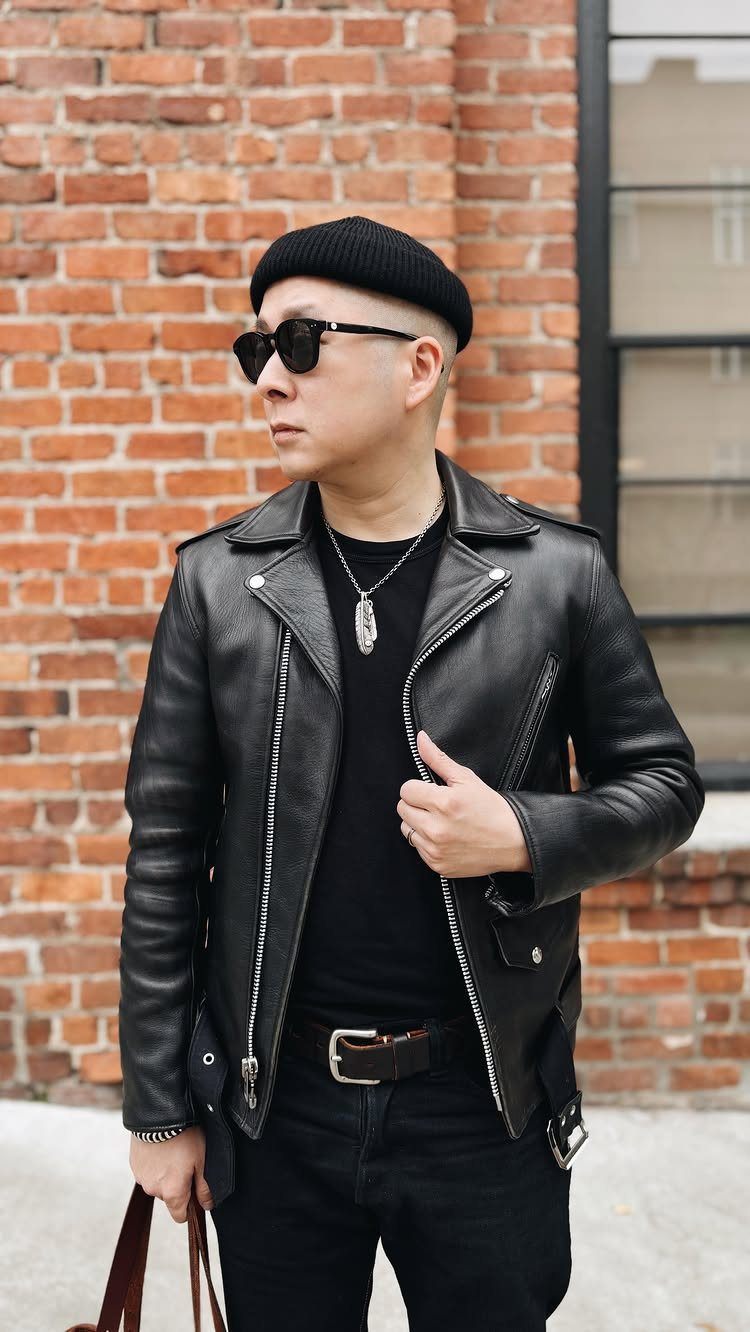
Black on black is the easiest way to wear a biker jacket, and it works because nothing competes with the leather. Keep the tee plain, the pants slim to straight, and let the belt tie the look together.
Sunglasses, a beanie and one piece of silver are plenty. Add more and the outfit turns into a costume.
2. Leather Jacket
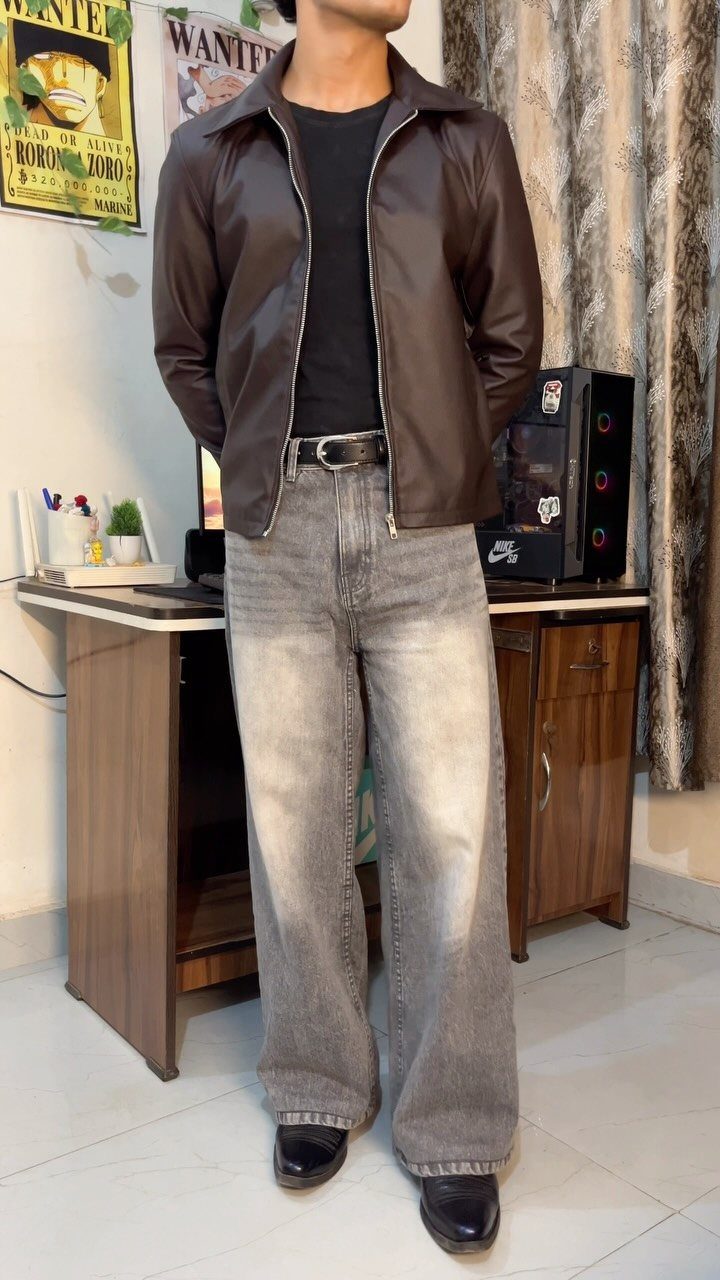
Brown leather softens the whole idea of a leather jacket. Against black, it reads warmer and less severe than the biker version.
Wide-leg jeans in faded grey balance the jacket’s trim shape, so the outfit doesn’t feel top-heavy.
I’d keep the shirt dark and plain, and finish with black boots. A zip-up front keeps it casual; that same jacket would also sit fine over a sharper shirt, which is what lets it cover both formal and informal days.
3. Blazer with Jeans
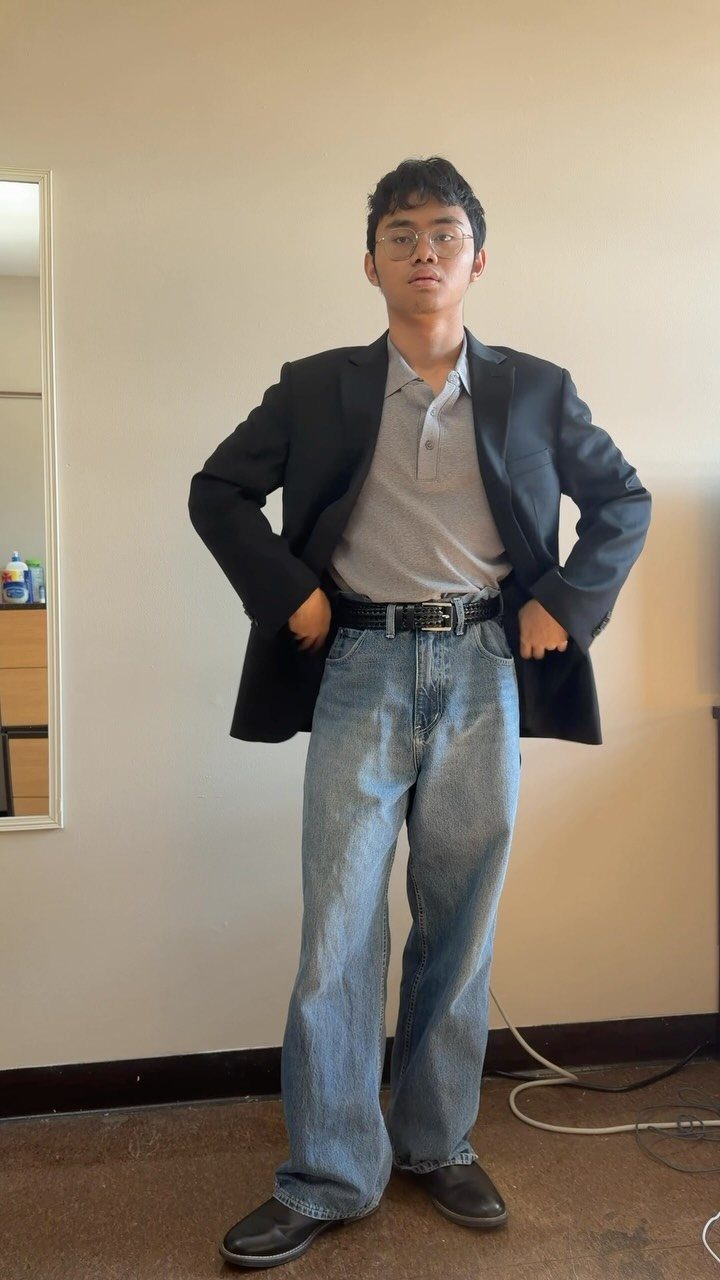
A black blazer over light blue jeans is the quickest dressed-up-but-relaxed outfit I know. The contrast does the work: dark on top, lighter denim below.
Swap the dress shirt for a grey polo, as here, and the blazer stops feeling like office wear. Pick jeans without heavy fading or rips so the 2 halves look intentional.
If the jeans are slim, keep the blazer trim too.
4. Parka
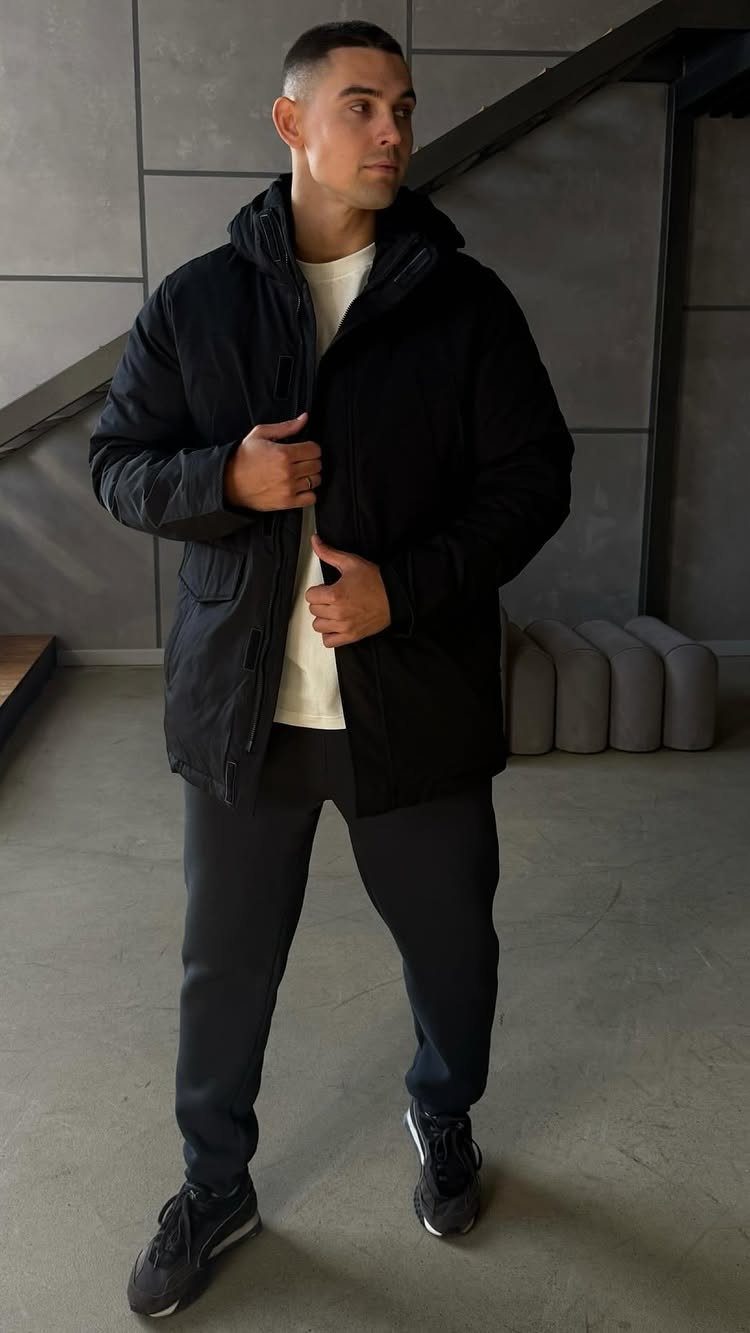
Long and hooded, a parka is built for cold, and a black one stays easy to style. Because the jacket covers so much, the pieces under it can stay simple: a white tee and dark joggers or trousers are enough.
Black athletic shoes keep the sporty feel consistent from top to bottom. I’d choose a parka that falls well below the waist, since the length is the point.
A parka adds bulk, so keep the bottoms slim to balance it.
5. Harrington Jacket
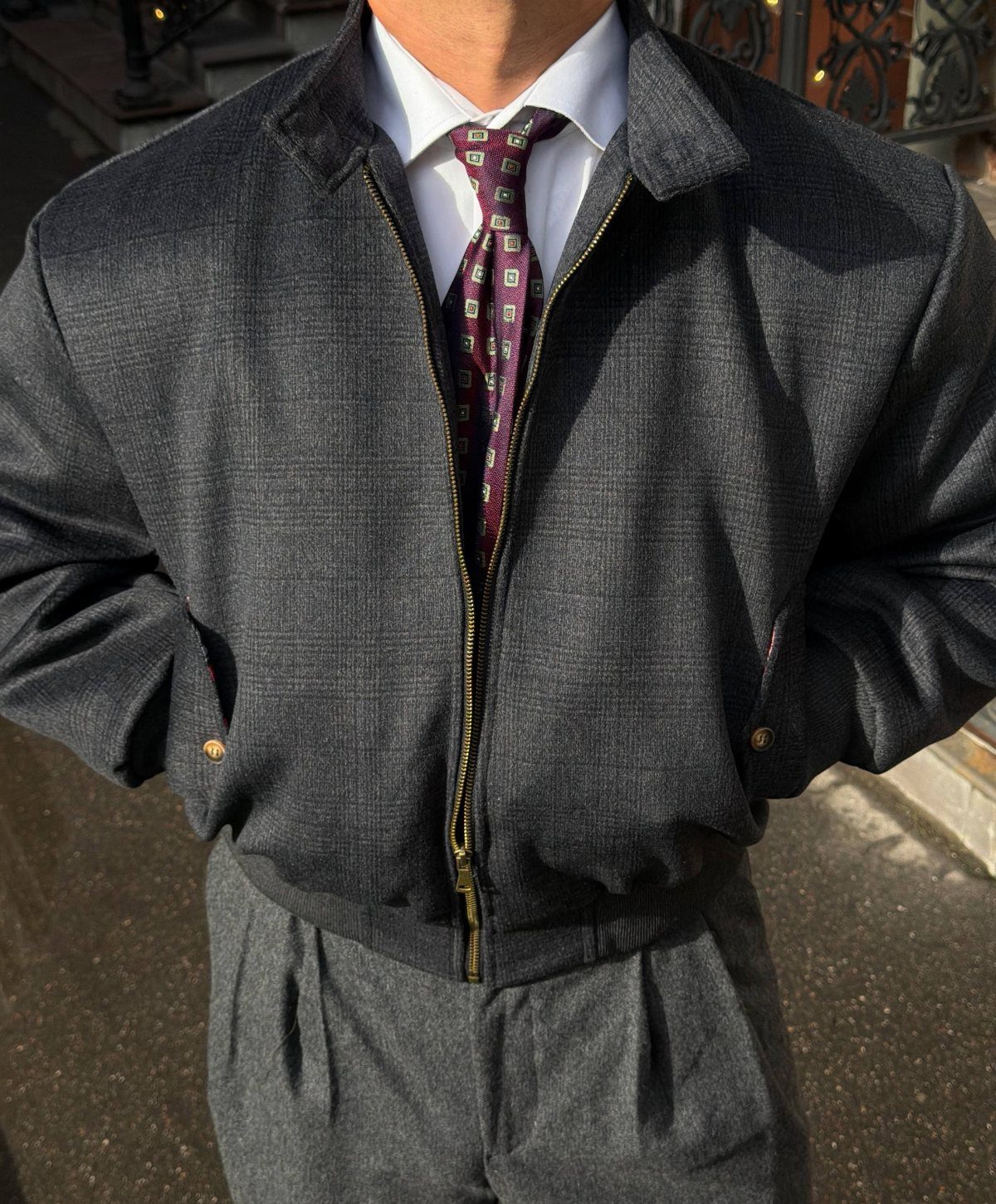
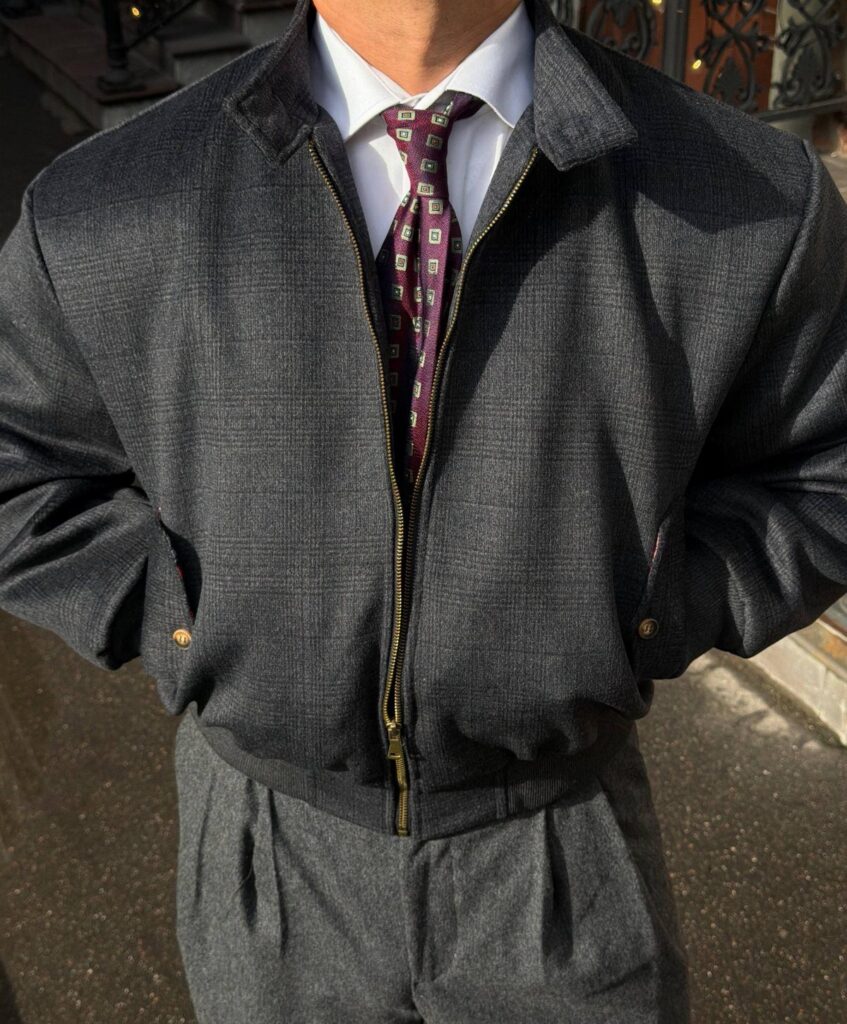
Most people wear a Harrington with a tee, but layering it over a collared shirt and tie is the better move. The jacket’s short, clean cut sits neatly on top of a shirt without bunching at the collar.
Grey plaid with matching grey pleated trousers gives you a sharp, almost suit-like outfit.
Skip the tie and it still works on a casual Friday.
6. Casual Bomber Jacket
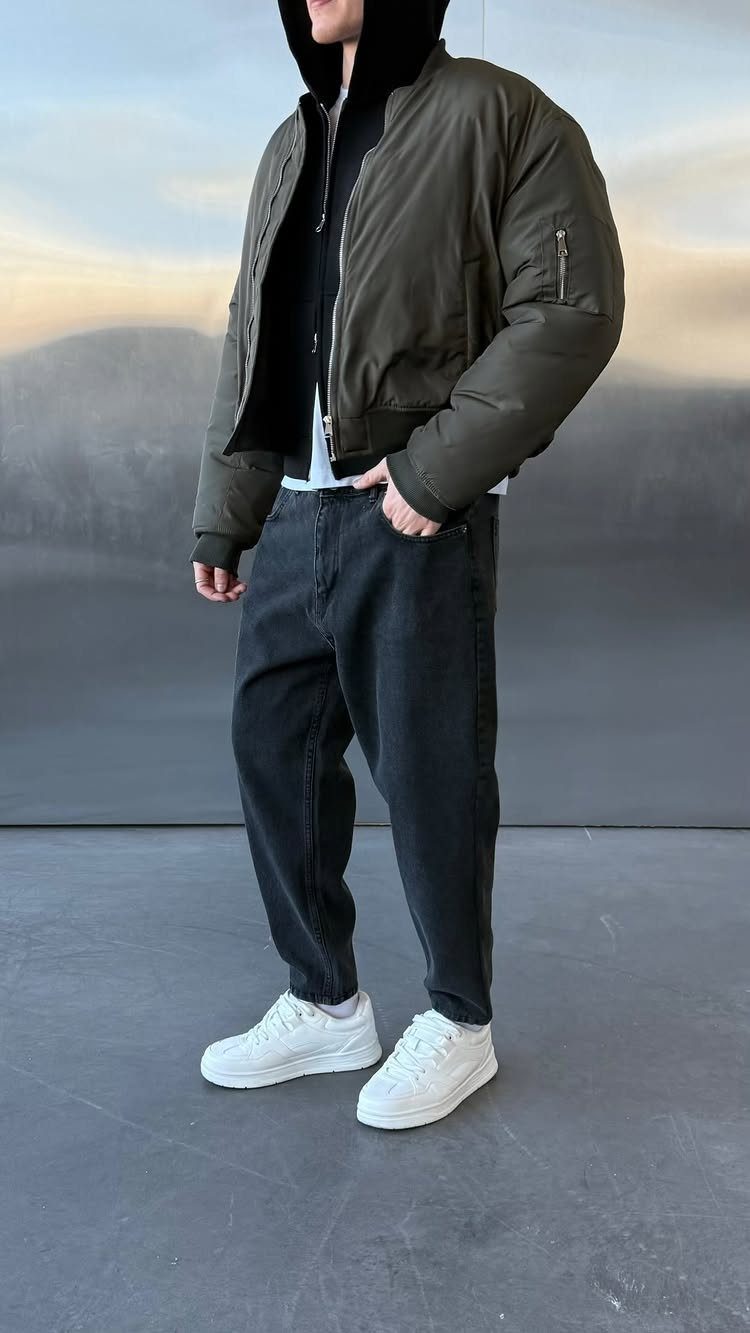
Olive is the bomber color I’d reach for first, because it sits between black and brown and goes with both. Over a black hoodie, it adds a clear layer without any fuss.
Loose washed black jeans and white sneakers keep the palette tight: one color on the jacket, and everything else neutral. The white shoes are what stop the outfit from going too dark.
A hoodie with a slim fit under the bomber keeps the shape neat.
7. Double Denim Jacket Outfit
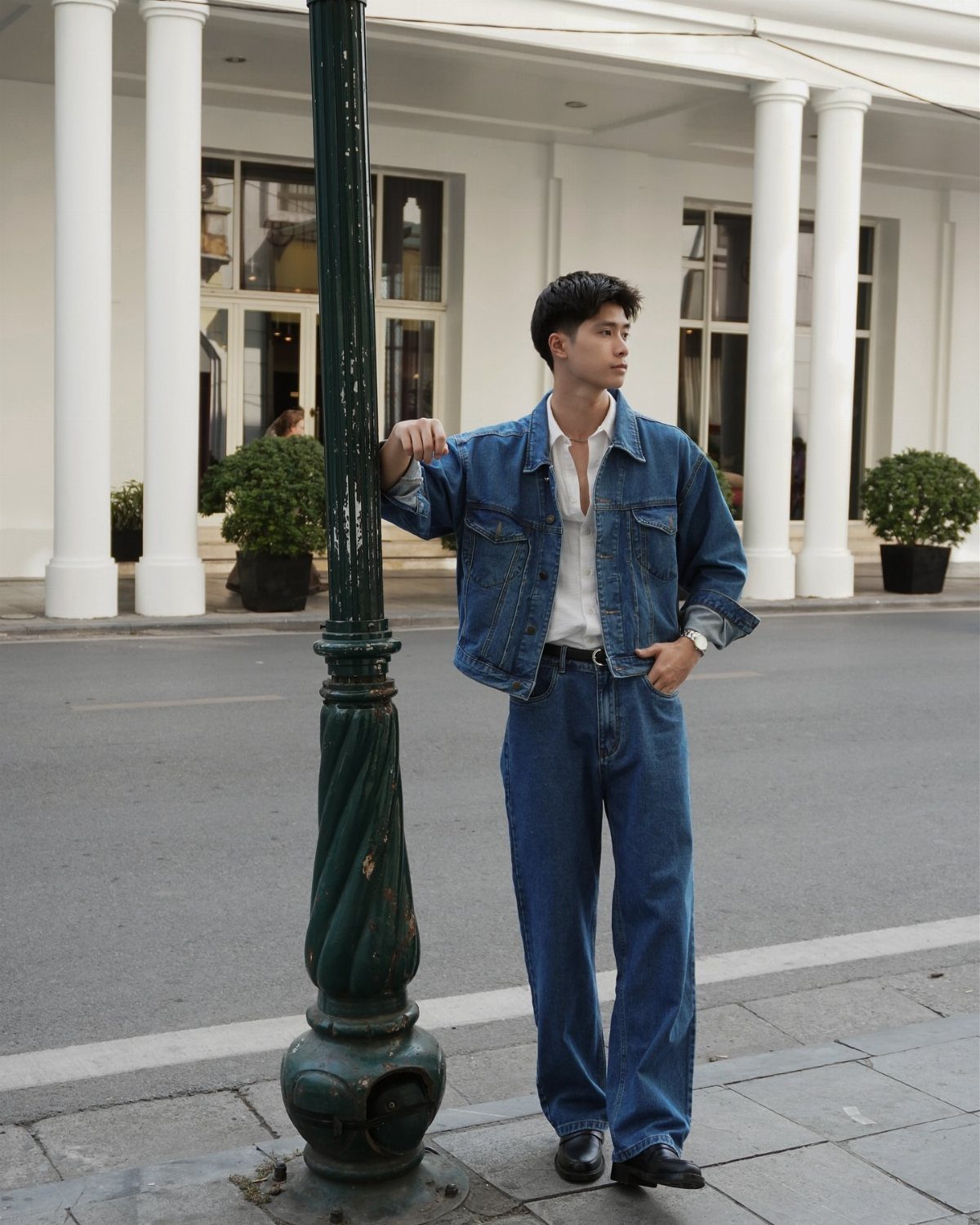
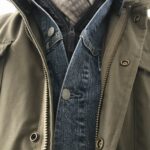
Matching denim works when the 2 blues sit close together, and a white shirt underneath keeps the pair from reading as a uniform. The white collar breaks up all that blue and sharpens the neckline.
I’d choose a classic trucker cut in a mid wash, with jeans in nearly the same shade. A big mismatch reads as a mistake, not a choice.
Keep the shirt crisp and the shoes simple.
8. Casual Puffer Jacket
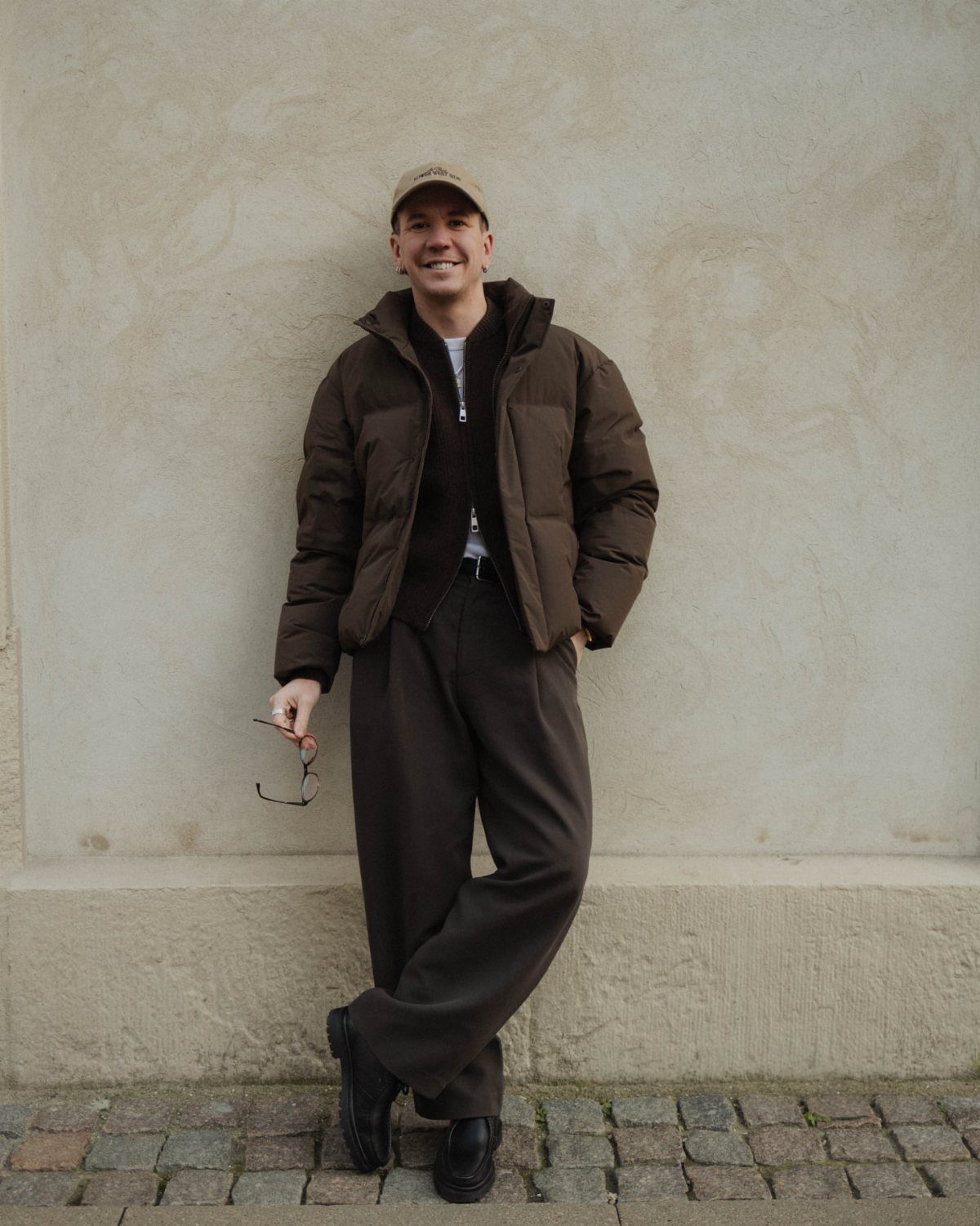
Brown puffer, brown trousers: staying in one color family makes a bulky jacket look planned. Wide-leg trousers in a neutral tone suit the volume on top, so the outfit reads relaxed instead of stuffed.
Dark boots anchor the bottom, and I’d add a cap in a lighter neutral, as here, to break up the browns.
Puffers add bulk, so let the trousers hang with some room rather than cling.
9. Double-Breasted Blazer with Trousers
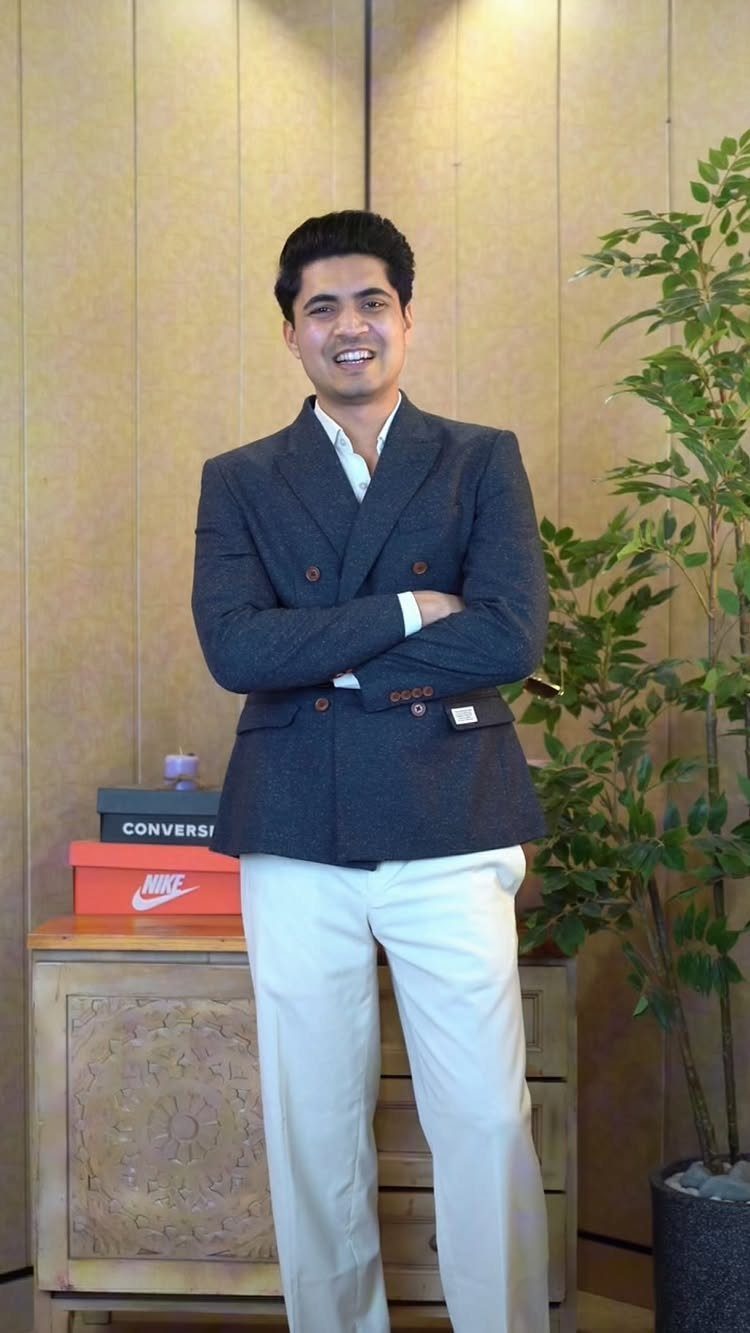
A dark double-breasted blazer with light trousers is a clean way to dress up without a full suit. The dark-over-light split does the styling for you, so the rest can stay quiet.
I’d keep the blazer buttoned and sharply tailored, since the overlapping front looks sloppy when it’s loose. Off-white or white trousers keep it fresh; sleek shoes finish it.
Sneakers work too if you want it looser.
10. Graphic Varsity Jacket
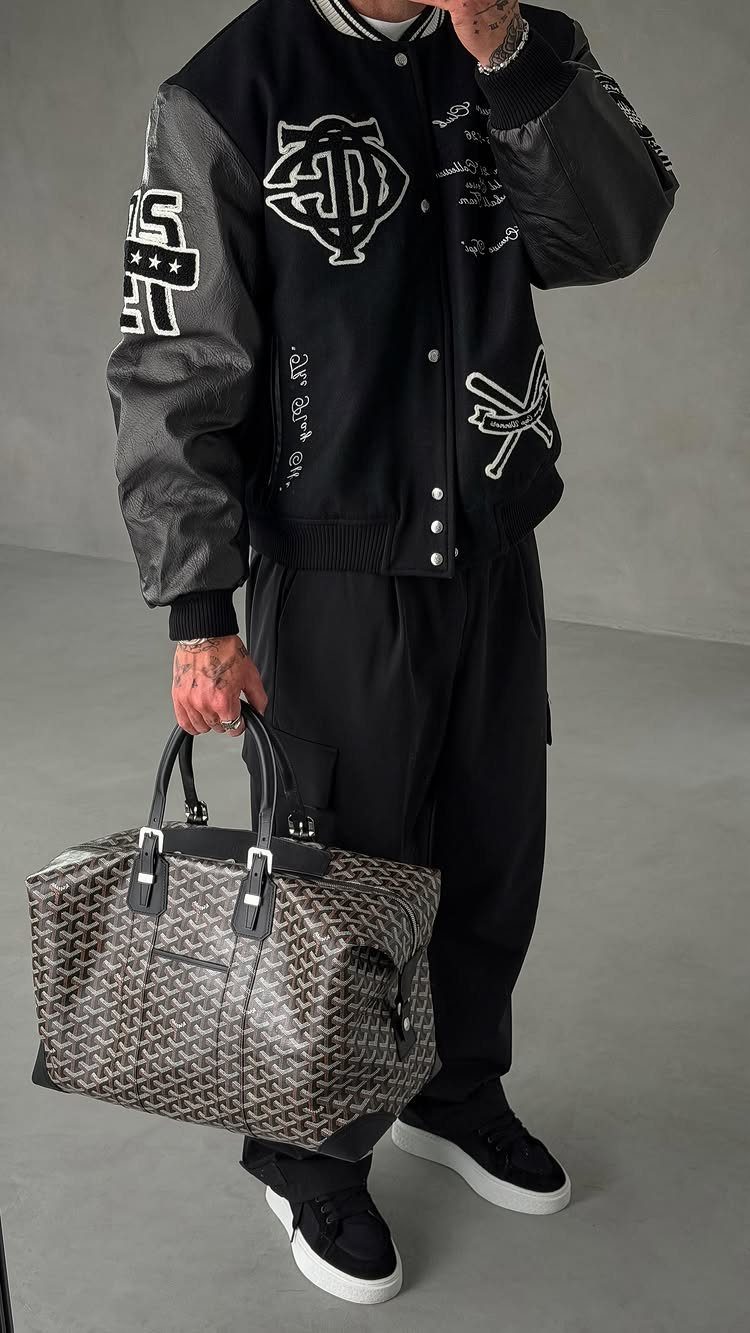
A black and grey varsity jacket with patches carries the whole outfit, so everything else should go dark and plain. Black wide-leg trousers and black sneakers let the graphics be the only loud part.
I’d pick a jacket with a few patches, not a dozen. Too many and it looks busy.
A plain tee underneath is enough, and a patterned bag, as here, is the one extra I’d allow.
11. Cropped Zip-Up Jacket
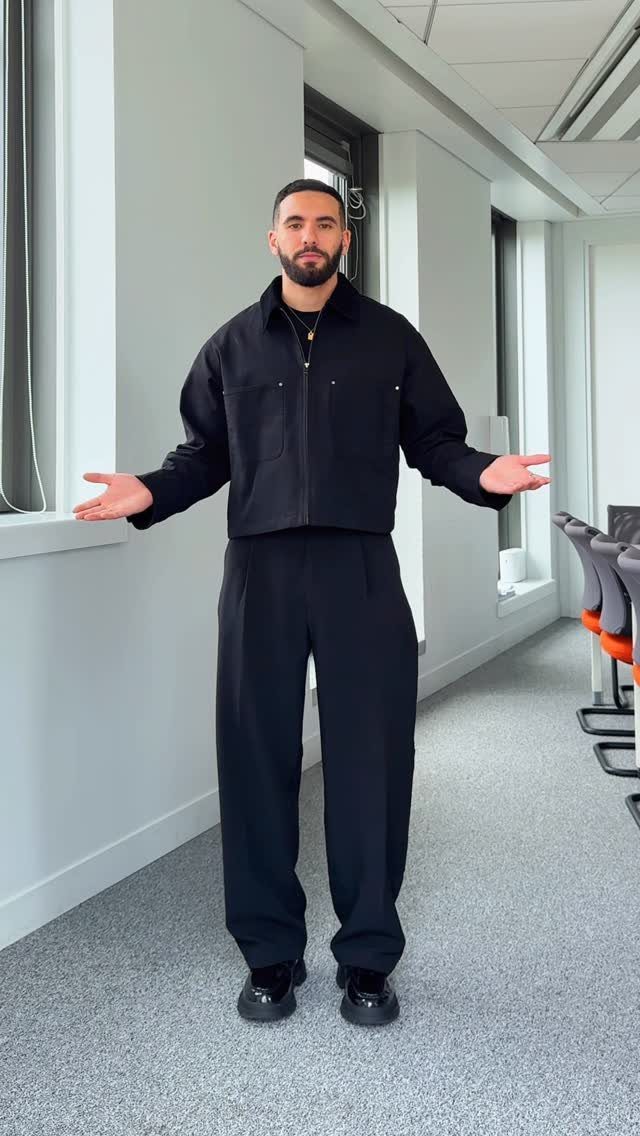
Cropped jackets stop at the waist, which makes them a natural match for wide-leg trousers: short on top, volume below. All black keeps the shape clean and the look minimal.
I’d choose trousers with a full, straight drape and polished black shoes, which lift the outfit toward office-ready. A zip front keeps it simple.
If the trousers are wide, don’t let the jacket run long, or the proportions fall apart.
12. Longline Quilted Puffer
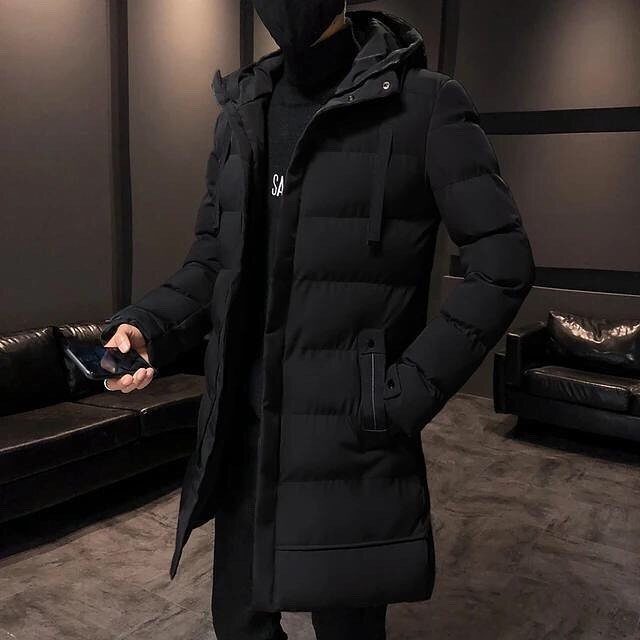
Knee-length and hooded, a black quilted puffer covers nearly everything, so it acts as the outfit’s main statement. Black hides wear and goes with any sweater underneath.
I’d wear it over a dark knit and slim trousers, which stops the length from swallowing you. Pick a hem that falls near the knee; that length is the reason to buy it.
Expect bulk, and keep the layers beneath thin.
General Styling Tips
Fit decides whether a jacket looks good, so settle it before color. Shoulder seams should sit at the edge of your shoulders, and the body should match your build rather than hang or pull.
Start your collection with neutral, versatile colors: black, olive, navy, grey. A field jacket is a good example of a piece that fits well and goes with almost anything.
Once that base is solid, bring in a more unusual tone if you want one. It will have plenty to pair with.
Check the climate too. A jacket that suits where you live gets worn constantly; a heavy one bought for a mild place hangs in the closet.
Layering Techniques
A vest keeps your core warm and leaves your arms free, so you skip the bulk of sleeves and still stay comfortable.
Over a long-sleeve shirt or sweater with jeans, it works for fall days. Over a collared shirt with chinos, it moves toward smart casual, and loafers or boots finish it.
For layering in general, buy by season. Once it gets cold, a waxed cotton jacket holds up over a sweater and a shirt, and the coating sheds light rain too.
I live somewhere cold, so my closet holds a few lighter jackets for layering and a few warmer ones for the deep cold.
Pick yours by what your weather actually asks for, and keep the price in line with how often you’ll wear it.
Occasion Suitability
Match the jacket to the evening. For a casual night out, a bomber over a graphic tee and black jeans works well for concerts or a bar, and high-top sneakers push it edgier.
Dress shoes or boots balance the sporty jacket with the dressier pieces.
Blazers handle smart-casual days, while a simple casual jacket covers everyday errands. Pockets matter more than people expect, so check that they’re deep enough for a phone and keys.
Learn which styles you like and which suit your build, then buy for those first.
Frequently Asked Questions
How should casual jackets fit for professional wear?
Check the seam first: it should land right where your shoulder ends, and from there the jacket ought to skim your torso, never bunching at the waist or straining across the back.
For business casual, go a little more structured; weekends allow a looser cut. Let about 1/4 inch of shirt cuff peek out past the jacket sleeve; it looks deliberate and finished.
What fabrics are used in casual jackets?
Cotton, linen and wool are the common choices. Cotton blends in a light weight are my pick for spring and fall, and a structured wool is what I reach for when the setting turns more formal.
How do I care for casual jackets?
I send most jackets to a dry cleaner only every 10–15 wears; more often than that wears the fabric down, and heavy daily use is the one reason to go sooner.
Between cleanings, hang it on a wide, shaped hanger so it can air out, and run a soft clothes brush over it to lift off dust and lint.
A breathable garment bag keeps dust off in the closet, and a handheld steamer will relax small wrinkles far more safely than an iron pressed straight onto the cloth.